Florida Playground Fencing: A Safer Plan for Every Play Area
A playground fence can protect play areas by stopping a child from reaching a pond, parking area, street, or neighboring property in seconds. In Florida, safety fencing for a supervised play area must account for water, heavy rain, heat, and year-round use in outdoor spaces.
Florida playground fencing should contain children without creating a climbing surface, pinch point, blind spot, or new entrapment hazard. Unlike a property-line fence, a playground fence installation starts with a site assessment. Local contractors can help identify site-specific, child-accessible risks beyond property boundaries.
Effective playground fence installation coordinates the fence, gates, and surfacing with the designated play zone. Verify local codes, permits, accessibility provisions, and HOA or facility rules before construction. This supports playground safety and children safety goals, but it doesn't replace adult supervision.
Start With the Hazards Around the Playground
Good playground fencing does more than mark a property line. It creates a controlled boundary where children can play while adults maintain clear sightlines for adult supervision.
Walk the perimeter before planning playground fence installation. Property boundaries may not mark the safest location near a pond, road, or shared access lane. If grades, drainage, or multiple access routes complicate the layout, ask qualified local contractors to walk the site with you.
Map water, traffic, and access points
In Southwest Florida, water hazards often include retention ponds, drainage canals, lakes, pools, drainage swales, and uncovered ditches. The U.S. Consumer Product Safety Commission, or CPSC, offers widely used safety guidance for fencing playgrounds near roads, ponds, streams, and cliffs. Use that guidance as a planning reference, then confirm current local rules before finalizing the design.
Mark every route a child may take toward those hazards. Also note parking areas, delivery routes, dumpsters, dog areas, maintenance yards, and neighboring gates. A fence should interrupt a child's likely route rather than simply follow the property line.
During playground fence installation near a pond or canal, provide enough setback from the hazard. A child who gets past the fence shouldn't immediately reach the water. Recheck that setback after grading and heavy rain. Keep benches, storage boxes, trees, low walls, and play equipment away from the fence line because each can become a climbing aid.
Separate active play from the perimeter
Play areas need breathing room. Keep them separate from traffic, water, service, and maintenance routes. Locate slides, climbers, swings, and freestanding equipment far enough inside the enclosure to reduce collisions during normal use or falls.
Don't attach perimeter fencing to playground equipment. A rigid fence can create a hard impact surface, while horizontal rails may invite climbing. The fence should remain a separate barrier. Leave a clear route around it for inspection and maintenance.
For a residential yard, the same idea applies. A play set placed against the back fence may look space-efficient, but it can turn the fence into part of the play structure.
Florida Playground Fencing Standards and Water Rules
There isn't one statewide law that sets a single design for every project involving playground fencing. School district policies, childcare licensing rules, municipal codes, site plans, zoning standards, and accessibility requirements may all apply. Before playground fence installation, ask the building department, school district, childcare authority, property manager, HOA, or facility owner which requirements apply. Local contractors can coordinate site measurements and permit questions, but they don't replace confirmation from the authority having jurisdiction.
The CPSC's Public Playground Safety Handbook is a useful playground safety planning reference. Its guidance and ASTM F2049 offer safety standards references, but they aren't automatically applicable legal rules. For barriers near hazards, the handbook points planners to local codes and ASTM F2049, the ASTM International standard for fencing around playground hazards. Use those references during playground fence installation, while confirming the applicable rules with the authority having jurisdiction.
Use the CPSC baseline for safer containment
For playground fence installation, the CPSC recommends a fence height of at least 4 feet above grade , measured on the side away from the play area. It also recommends no more than a 4-inch gap under the fence.
Vertical-member spacing matters, too. When horizontal rails are 45 inches or more apart, vertical openings should not exceed 4 inches. Decorative cutouts should be no larger than 1 3/4 inches. Local codes, facility rules, licensing requirements, or the property type may supplement or modify these recommendations.
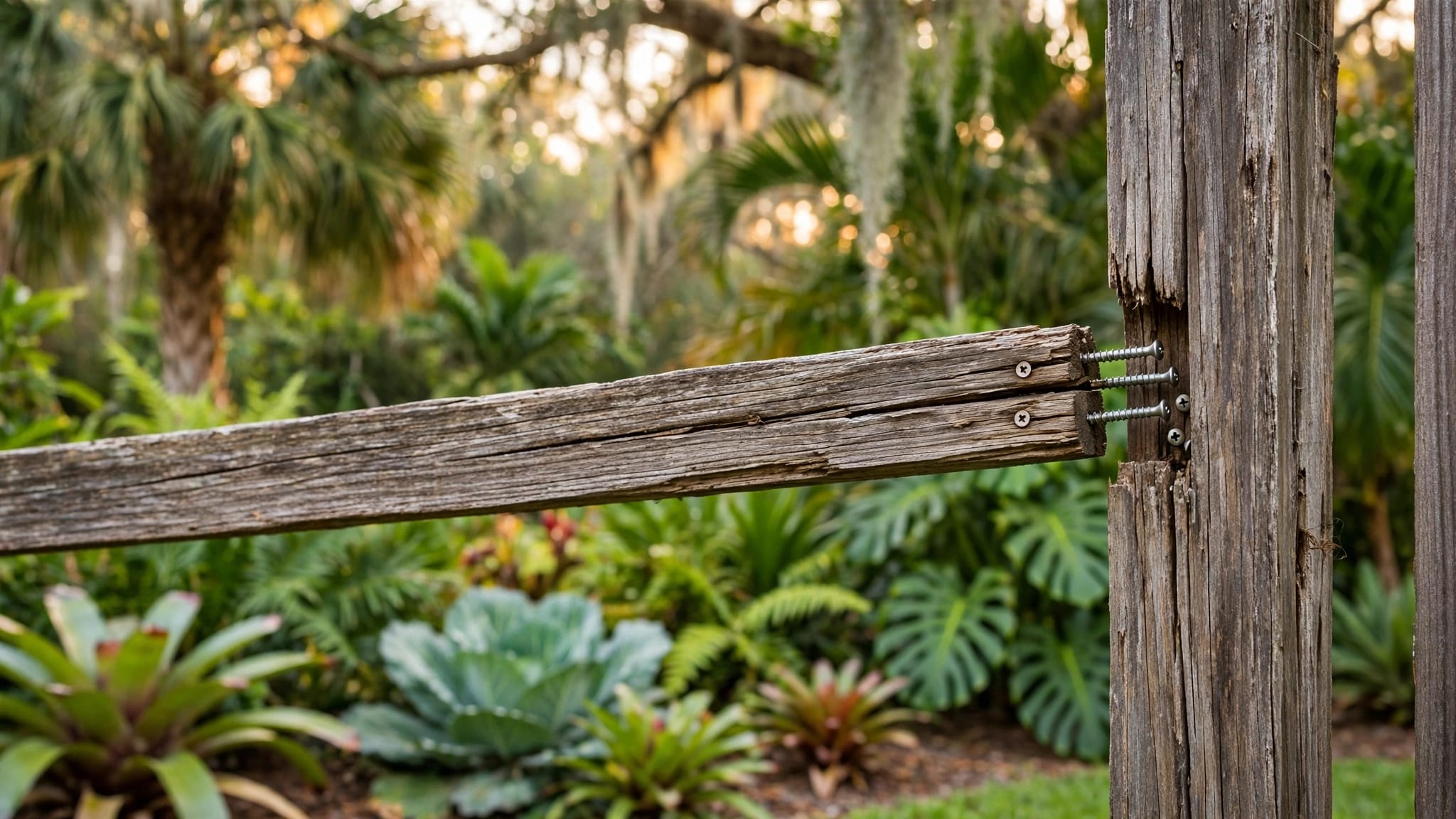
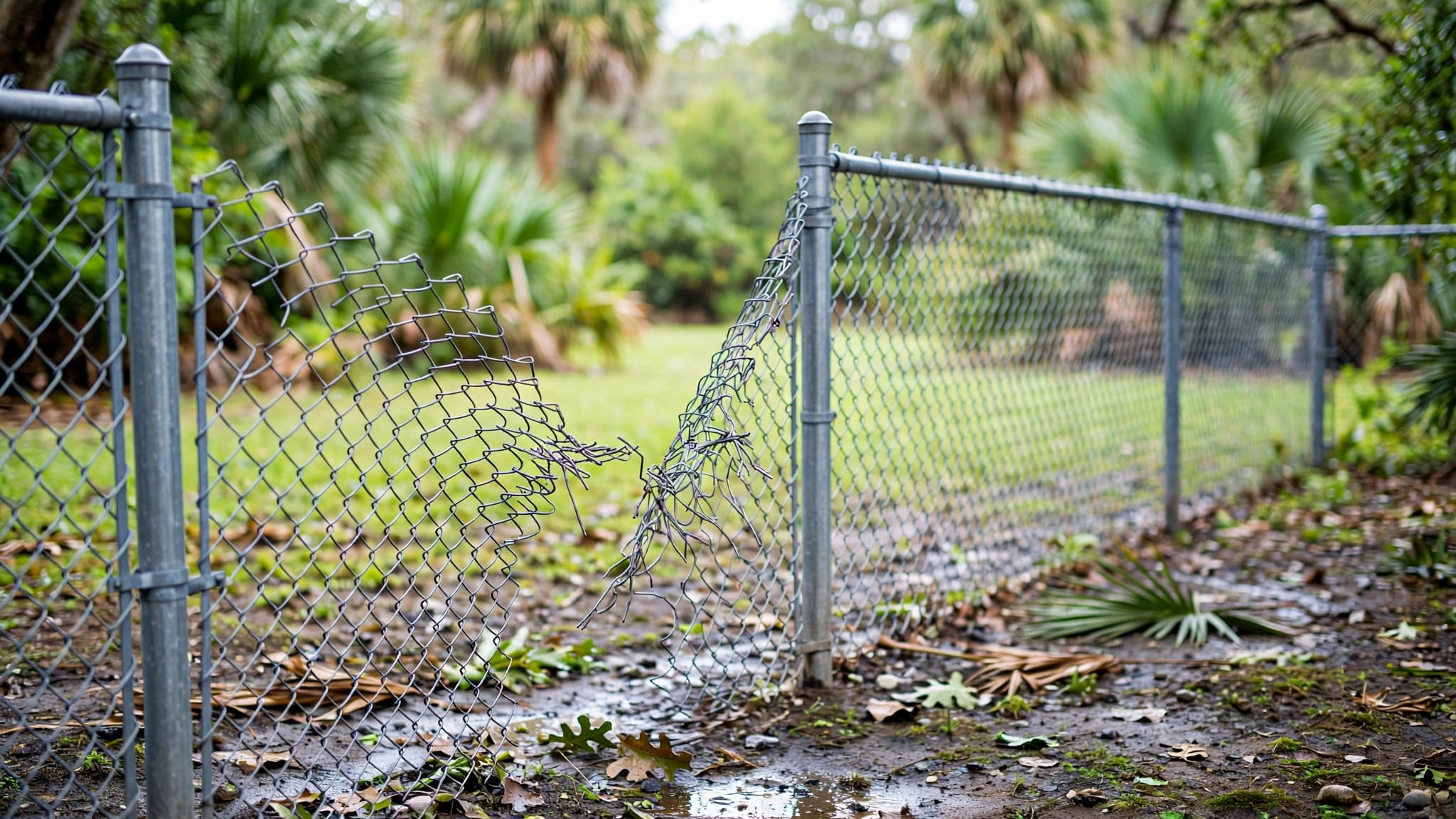
Those dimensions help limit pass-through risks. Still, fence panels need a close inspection for damaged mesh, loose pickets, protruding fasteners, rough cut ends, and gaps created by erosion after rain.
A fence can contain children, but it never replaces active adult supervision. Clear visibility and regular supervision must work alongside the barrier.
A nearby pool triggers separate Florida requirements
A playground enclosure beside a residential swimming pool isn't automatically the protective barrier required for that pool. Florida Statutes Section 515.29 requires a pool barrier at least 4 feet high on the outside. It must resist climbing and prevent a young child from crawling under or squeezing through openings. Drowning prevention may require evaluating the playground enclosure and pool barrier together.
Pool gates must open outward, away from the pool. They also need self-closing and self-latching hardware, with the release placed on the pool side and out of a young child's reach. Verify the current statute and local enforcement requirements before relying on these details.
A pond, lake, or canal doesn't automatically fall under residential pool-barrier law. However, it still calls for careful hazard planning during playground fence installation. Local contractors can coordinate site measurements and permit questions. Confirm current requirements with the local building department, property manager, school district, childcare licensing authority, HOA, or facility owner before construction.
Choose Fence Materials That Fit Florida Conditions
Material choice affects visibility, maintenance, heat and UV exposure, storm performance, impact resistance, and budget. Florida's outdoor spaces face year-round heat, rain, wind, and coastal salt exposure. During playground fence installation, ask local contractors to explain coatings, anchoring, corrosion exposure, and storm-repair needs for the site’s durable materials.
Chain link offers visibility and value
Vinyl-coated chain link is a practical choice for many schools, parks, daycare centers, and community facilities. Its open mesh supports clear supervision, while the coating helps limit routine corrosion. A commercial playground may also need heavier-gauge mesh, reinforced posts, and more frequent inspections.
A black vinyl fence often blends into a landscaped setting better than galvanized chain link. It can feel less intrusive while preserving supervision through the play area. Inspect it for UV fading, impact damage, and storm debris.
For projects that need reliable containment at a manageable price, chain link fences for yards and playgrounds are worth considering. During playground fence installation, specify mesh openings and edges free of easy footholds, sharp wire ends, or loose bottom sections.
Aluminum and vinyl meet different needs
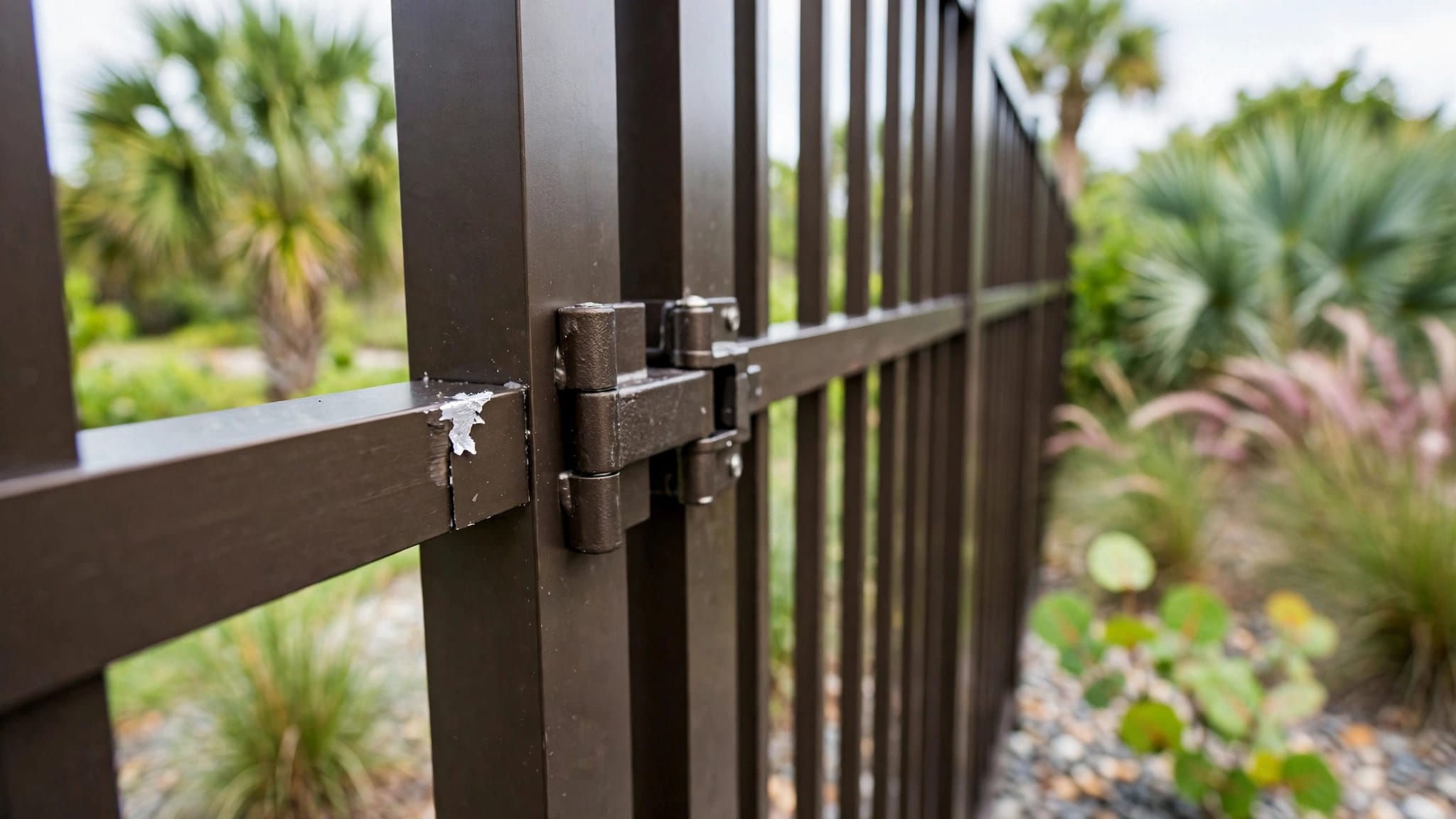
An aluminum fence works well where sightlines, appearance, and corrosion resistance matter. Open pickets help supervisors see into and out of the play area, but spacing and rails must not create squeeze-through gaps or climbing opportunities. During playground fence installation, inspect fasteners and post anchoring where wind or impact exposure is high.
A PVC fence is smooth, low-maintenance, and useful for separating a play zone from a service area or busy residential street. For privacy, use selected solid sections in a PVC fence, since full panels can limit outside supervision. Inspect each PVC fence for heat-warped, UV-damaged, or cracked panels, especially after severe weather.
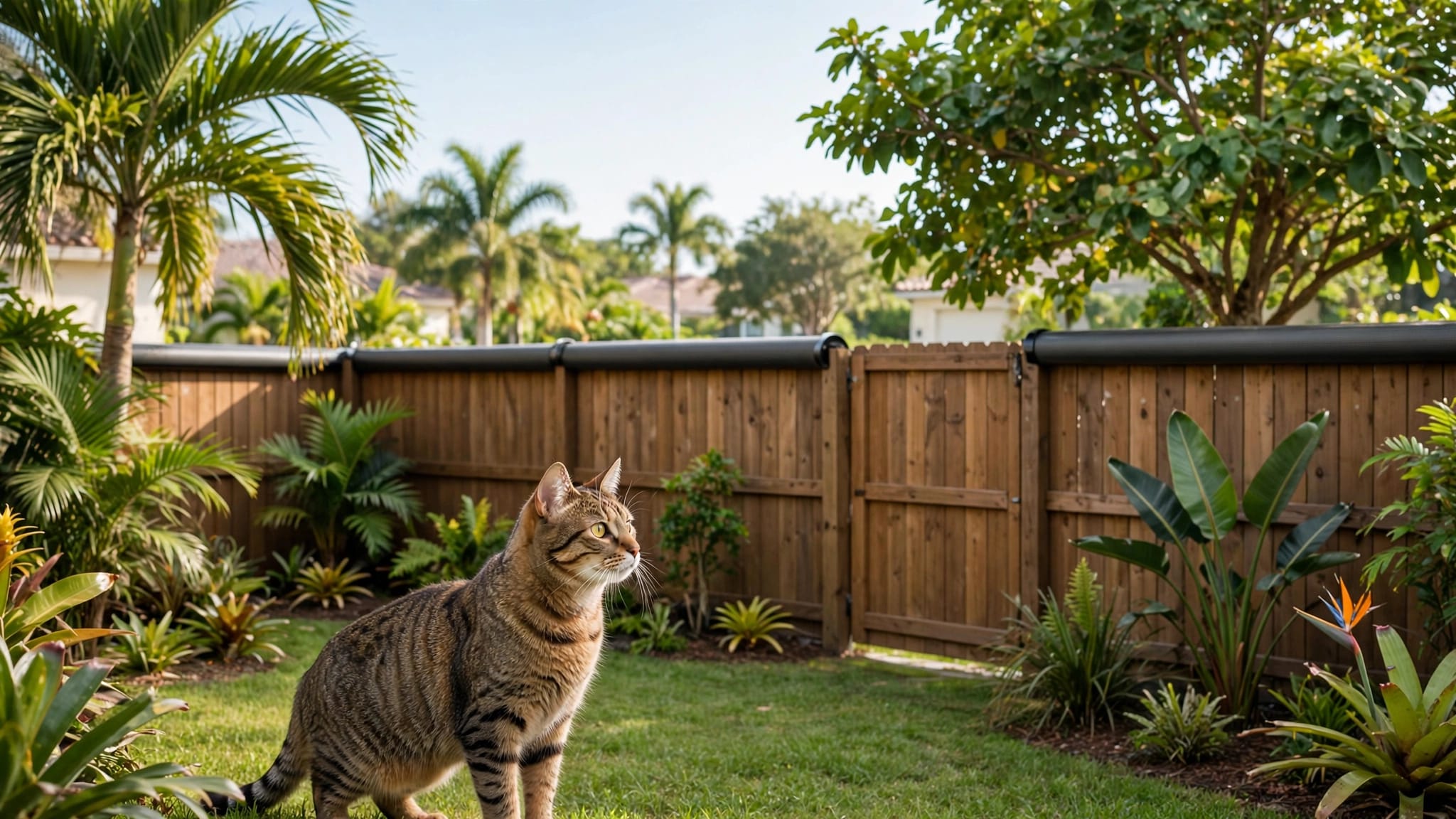
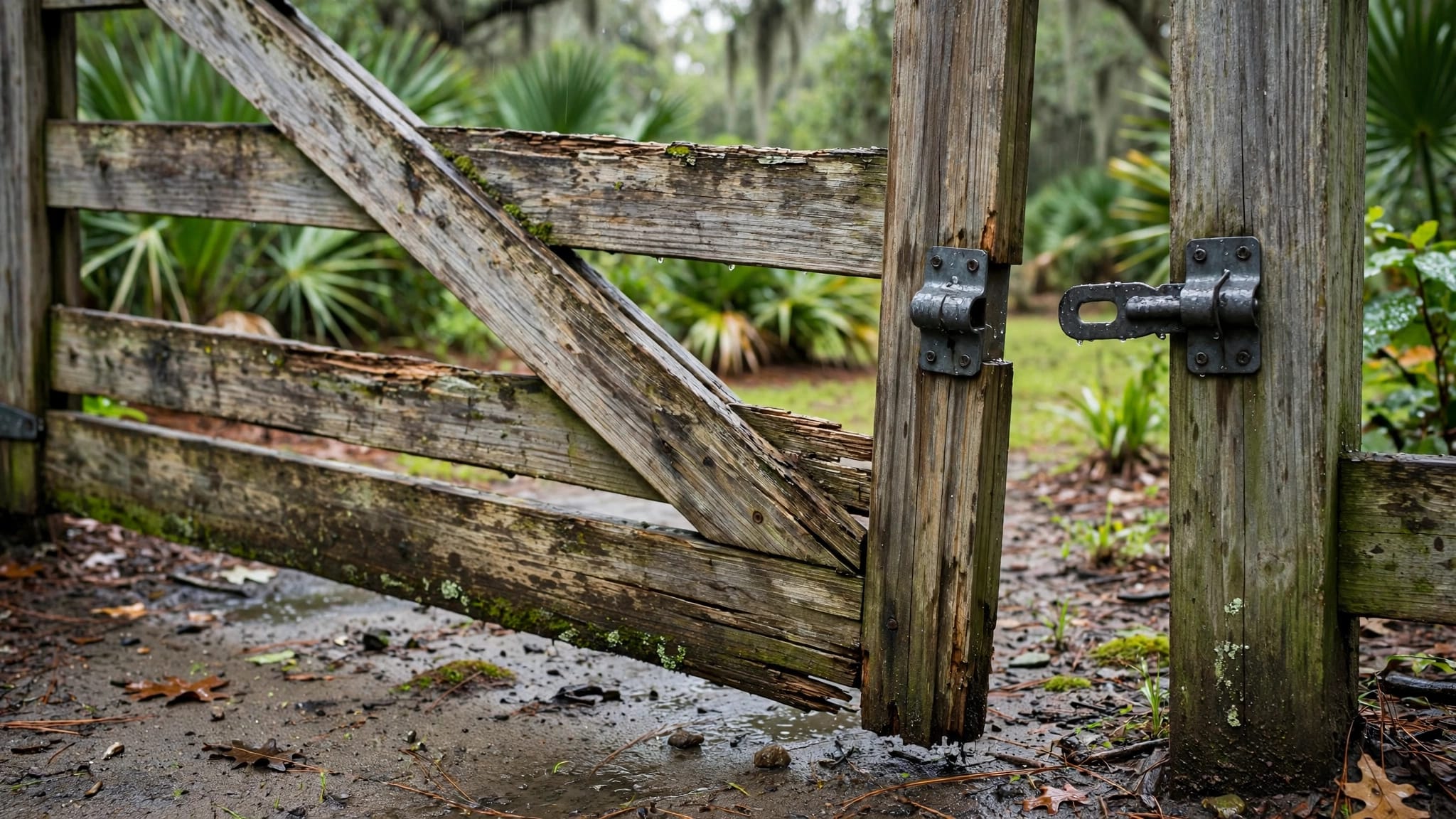
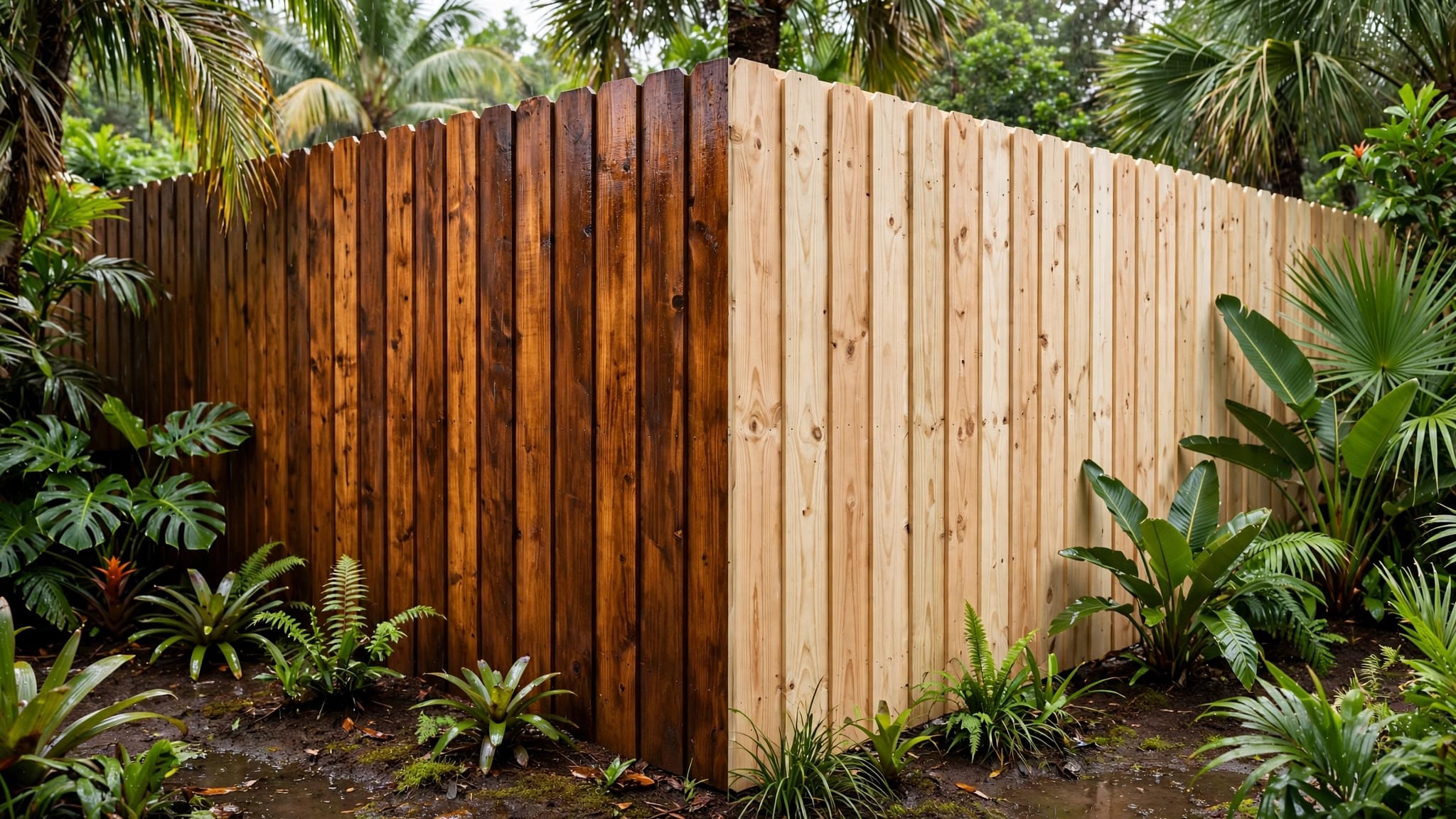
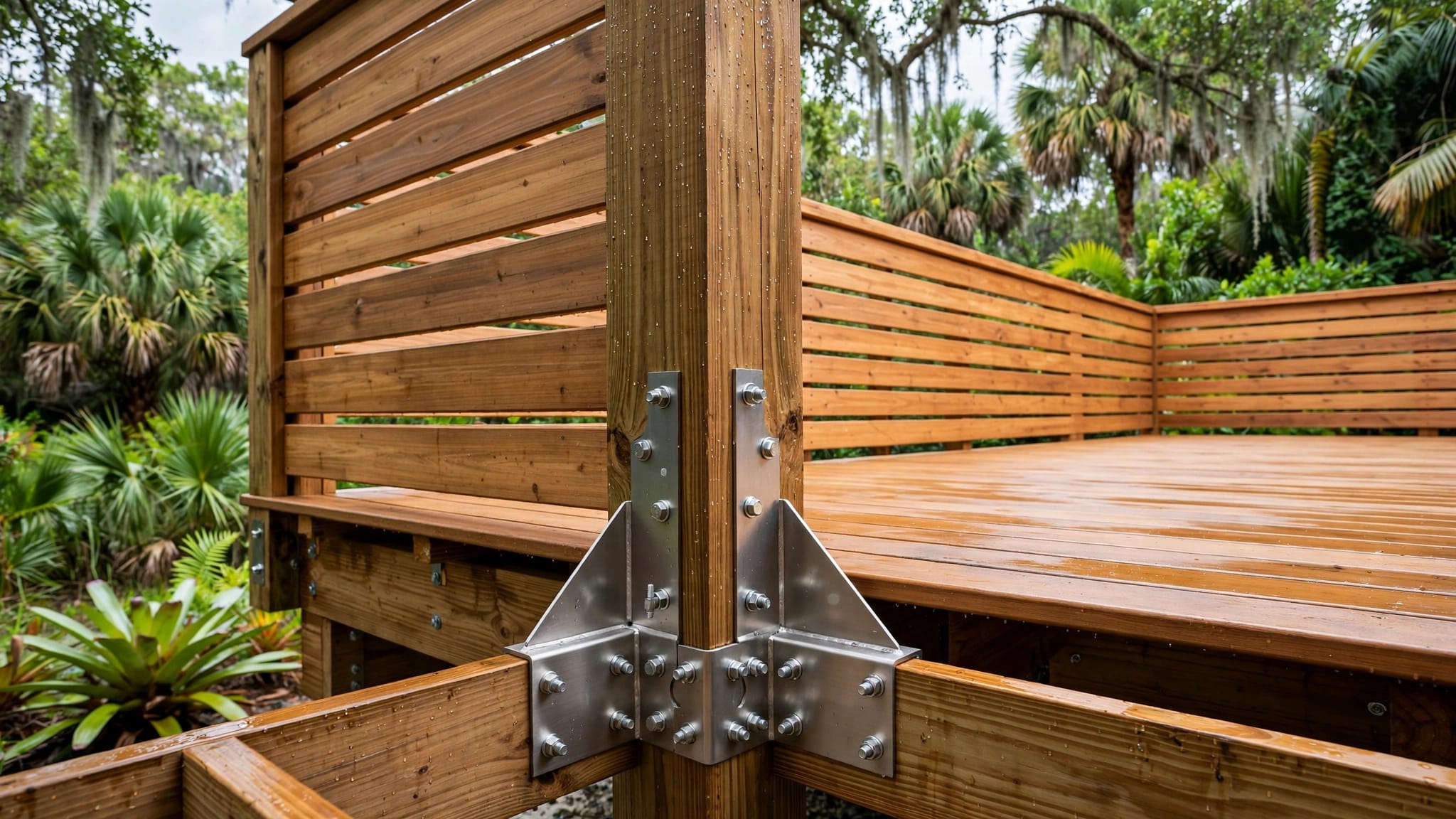
A wood fence may suit a residential playground or backyard play set. School, park, and daycare sites often need lower-maintenance options. Florida moisture and insects require frequent inspections for rot, splinters, loose boards, and protruding nails.
Build Gates That Prevent Unauthorized Access
The gate is usually the weakest part of a playground enclosure, even with careful playground fence installation. It gets opened, slammed, propped, and tested every day. A well-built fence cannot compensate for a gate that doesn't latch.
Install self-closing, self-latching gates
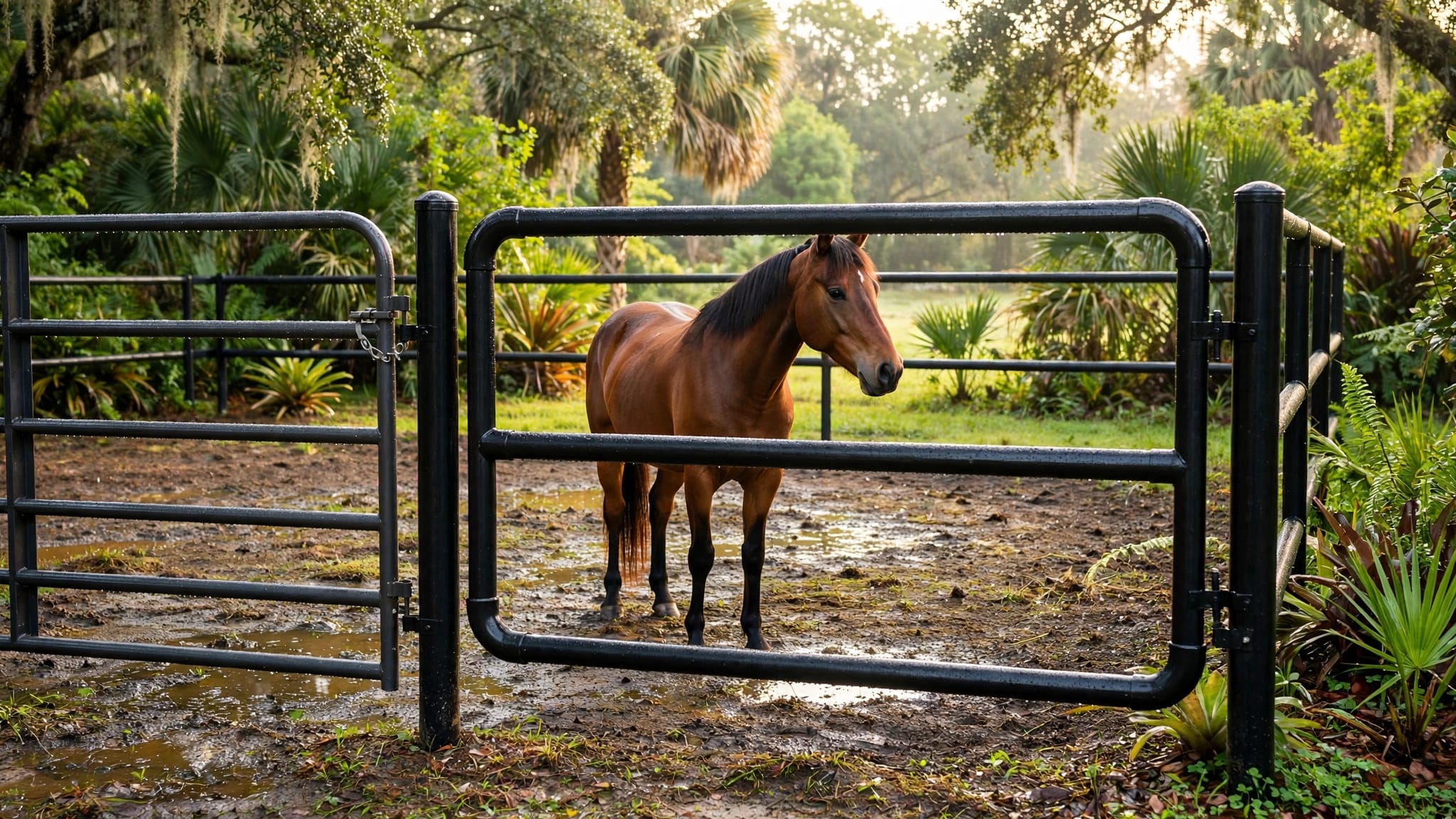
Use self-closing hinges and a positive latch during playground fence installation for gates children shouldn't operate alone. This is especially important beside pools, ponds, roads, or parking areas.
Place the latch at a release height young children cannot easily reach. Avoid hardware that creates finger pinch points near the hinge, latch, or closing edge. Gate gaps should be small enough to prevent a child's head, hand, or foot from becoming trapped.
For pool barriers, Florida rules set added requirements for gate direction, self-closing action, and latching. Requirements for non-pool playground gates can vary by county, municipality, school, childcare facility, HOA, or property type. Follow applicable local rules and the facility's operating plan.
During a playground safety inspection, check opening force, self-closing action, latch engagement, pinch points, bottom gaps, and accessible passage. Test every gate after installation and after any adjustment.
Keep emergency access practical
Schools and larger facilities may need a separate service or emergency gate. That gate should remain secured during normal use, while staff know who has access and how to open it through the approved procedure.
During playground fence installation, coordinate the service gate with the site's emergency and accessibility plans. An accessible route cannot end at a difficult latch, a narrow gate, or a threshold that blocks wheelchairs and mobility devices.
After installation, local contractors can adjust hinges, latches, thresholds, and gate clearances. Owners should confirm accessibility details with the project designer or applicable authority before local contractors make approved adjustments. Requirements can depend on the site, so don't assume one width or hardware rule applies everywhere.
Don't prop a gate open during arrivals or pickups. Adult supervision at a staffed entry point is safer than an unattended opening. An open gate can lead directly to a road or water hazard and put children safety at risk.
Preserve Sightlines Without Creating Climbing Risks
Adults should be able to scan the playground quickly because visibility supports adult supervision, but never replaces it. It helps staff spot a child near a gate, a damaged panel, or an unsafe interaction before an emergency develops.
Fence design can support supervision, but landscaping and furniture can defeat it.
Design the perimeter for easy supervision
Open aluminum or vinyl-coated chain link provides the clearest views. A solid privacy panel facing a street may limit supervision, so consider open fencing on sides monitored by staff, parents, or classroom windows. Even open fencing needs non-climbable details and regular inspections.
Trim shrubs that hide gates or corners. Keep parked vehicles, sheds, recycling bins, and stacked supplies out of the fence's sightline. A blind corner beside a gate is an invitation for children to test boundaries unseen.
Lighting also matters for outdoor spaces used in early mornings or after school. It should illuminate gates and paths without shining harshly into nearby homes.
Ask local contractors or a site professional to review blind corners, gate visibility, and nearby structures in relation to the enclosure. During playground fence installation, confirm the final placement of landscaping, furniture, lighting, and gates.
Remove footholds and snag hazards
Horizontal rails, decorative features, loose mesh, and nearby objects can turn a fence into a climbable surface. Use a layout with few handholds and footholds on the side children can access. Even open fencing needs regular inspections.
Check for exposed bolts, sharp caps, broken ties, and damaged post tops. These defects can snag clothing or cause cuts. After tropical storms or severe thunderstorms, inspect the entire perimeter before reopening. Look for leaning posts, shifted soil, fallen branches, damaged mesh, and exposed hardware, especially around gates and bottom edges.
Plan Safety Surfacing and Fence Clearances Together
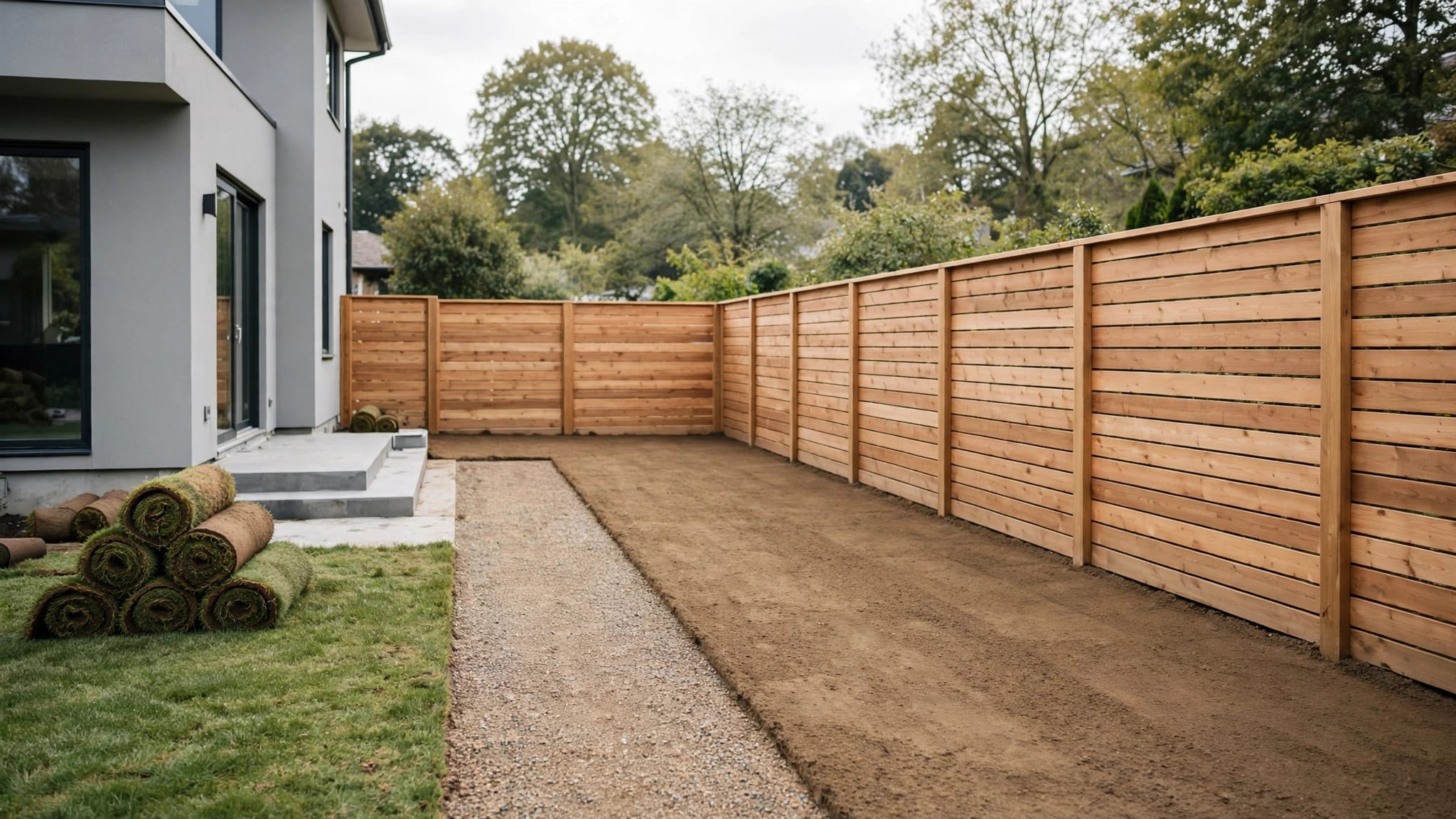
The fence line, equipment use zones, impact-attenuating surfacing, and drainage must align before playground fence installation. Don't correct these elements independently afterward. When runoff crosses the planned perimeter, coordinate local contractors, including the fence installer, surfacing provider, and drainage or grading professional.
A child who falls near the perimeter should land on suitable impact-attenuating surfacing, not concrete, compacted soil, or a tree root. This coordination supports playground safety by aligning fall protection with perimeter hazards.
The CPSC recommends protective surfacing under and around equipment. Required performance depends on fall height, the material, and the manufacturer's tested specifications. Compare CPSC guidance and manufacturer documentation with applicable local or facility criteria to confirm safety standards.
Don't rely on one universal mulch depth
There is no single loose-fill depth that works for every playground or all play areas. Engineered wood fiber, rubber mulch, poured-in-place rubber, rubber tiles, and turf systems have different performance limits.
Ask for documentation that shows the product's critical fall height and tested performance at its intended installation depth. Loose-fill materials can compress and migrate, so maintenance requirements include regular raking and replenishment. Poured-in-place rubber and rubber tiles still need inspection for damage, separation, heat effects, and drainage problems.
Define the play zone's equipment use zone, and keep fence posts and panels outside it. Swing bays, slide exits, and climbers need clear space so a child doesn't fall into a post or fence panel.
Maintain drainage without opening escape gaps
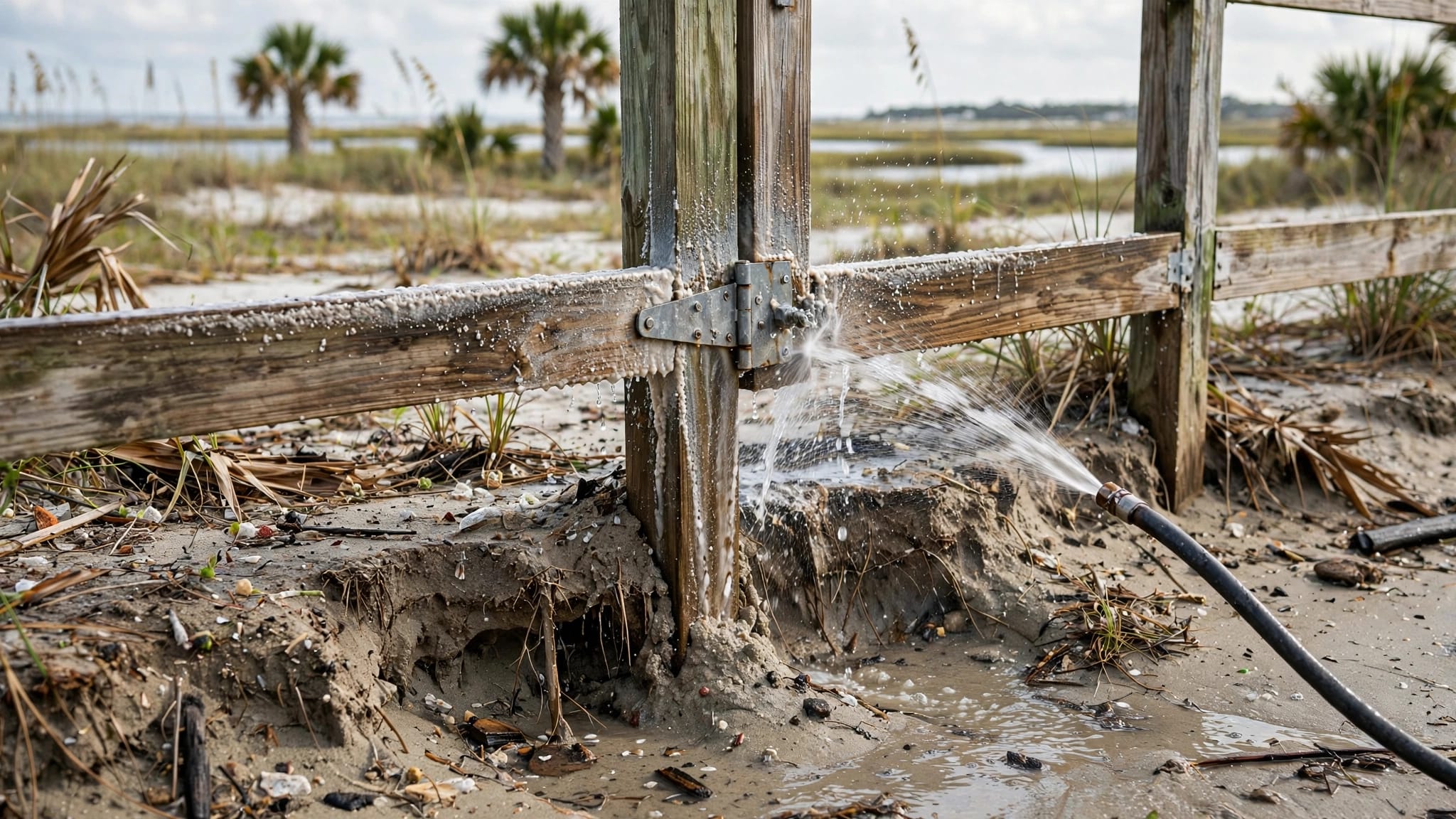
Florida downpours can wash out soil under a fence in exposed outdoor spaces. That can create an opening large enough for a child to crawl through, even if the original playground fence installation met the intended clearance.
Grade the area so water drains away from gates and posts. After heavy rain, inspect for washouts, standing water, soft footing, shifted surfacing, and new crawl-through gaps. Repair defects before reopening the area.
Budget, Permits, and Contractor Questions
The cost of playground fence installation depends on fence height, linear footage, material, gates, soil, drainage, demolition, site access, and safety hardware. County and municipal requirements, material availability, and facility use can materially change the estimate.
A small backyard enclosure costs far less than a commercial site with heavy-duty gates and engineered footings.
The following Florida installed price ranges are typical, not guaranteed. Actual pricing varies by county, municipality, and site conditions.
| Fence type | Typical installed cost per linear foot | Best fit |
|---|---|---|
| Chain link or basic safety fence | $15 to $35 | Visibility and value |
| Vinyl fencing | $25 to $55 | Privacy or smooth enclosed boundaries |
| Ornamental aluminum or steel | $30 to $70+ | Visibility, appearance, and corrosion resistance |
| Commercial-grade fencing | $25 to $90+ | Parks, schools, and larger facilities |
Gates can add roughly $150 to $600 or more each. Self-closing, self-latching, wide-access, and pool-grade gate hardware can increase that amount.
Confirm permits before materials arrive
Fence permits, setback rules, height limits, drainage easements, pool-barrier requirements, and HOA rules can change the project. A survey may also be needed to confirm property boundaries, easements, setbacks, drainage corridors, or neighboring access routes.
Permits and code requirements are separate from HOA approvals, school policies, childcare licensing rules, and owner preferences. Each may create additional reviews or restrictions.
Before playground fence installation and site preparation begin, verify current requirements with the applicable local building department.
For example, homeowners near Punta Gorda should review this Charlotte County fence permit guide before ordering materials. Confirm that the guide is current, then contact the applicable local building department with site-specific questions. Rules differ across Southwest Florida.
Ask contractors safety-focused questions
Compare local contractors who measure the site, identify grade changes, and locate gates. Ask how the proposal addresses nearby water, play equipment, sightlines, drainage, accessibility, storm anchoring, and the safety standards used for the project.
Licensed and insured installers should explain how they'll secure posts, use corrosion-resistant fasteners, finish panel edges, and prevent bottom gaps. For an irregular grade, pond, canal, or unusual access route, a custom playground fence may provide a better site fit.
Ask whether local contractors will handle permit coordination, utility-location requests, gate adjustments, and final cleanup.
Request a written scope from local contractors that lists fence height, material, post spacing, gate hardware, corrosion-resistant fasteners, storm anchoring, and removal work. Before approving playground fence installation, confirm who handles final inspection, gate testing, accessibility checks, sightline review, drainage corrections, and bottom-gap corrections.
For help comparing materials and site needs, Southwest Florida fence installers can connect you with local contractors and a project-specific estimate.
Frequently Asked Questions
How high should a Florida playground fence be?
The CPSC recommends a playground fence at least 4 feet above grade , measured on the side away from the play area. Local codes, facility policies, childcare licensing rules, or property type may require additional or different provisions.
Does a playground fence meet Florida pool-barrier requirements?
Not automatically. A residential swimming pool requires a separate barrier that meets Florida Statutes Section 515.29, including requirements for height, openings, climbing resistance, self-closing gates, and self-latching hardware.
Which fence material works best for a Florida playground?
Vinyl-coated chain link and open aluminum provide visibility that supports adult supervision, while PVC offers a smooth, low-maintenance boundary. Consider UV exposure, heavy rain, wind, coastal salt, impact risks, maintenance, and the site's required level of containment before choosing a material.
How often should a playground fence be inspected?
Inspect the fence and gates regularly, especially after tropical storms, severe thunderstorms, heavy rain, or landscaping changes. Check for damaged mesh, loose pickets, sharp edges, leaning posts, bottom gaps, washouts, latch problems, and objects that could create climbing footholds.
Can a playground fence replace adult supervision?
No. A fence supports playground safety by controlling access and reducing routes toward hazards, but active adult supervision remains essential.
A Safer Playground Starts at the Perimeter
A well-planned fence supports playground safety by matching hazards around the site. Clear views, secure gates, non-climbable details, durable materials, and proper equipment clearance protect children inside, while adult supervision remains essential.
Treat Florida playground fencing as part of a broader plan for pools, ponds, canals, roads, parking areas, and other outdoor spaces. The safest barrier location may not follow property boundaries, so map hazards first, coordinate accessible gates and surfacing, and verify current permits and local rules with local contractors.
Careful playground fence installation turns that plan into a functioning enclosure for play areas. Install the selected barrier, then inspect it after storms and throughout the year.