Florida Fence Rules for Duplexes and Multi-Family Homes
A fence around a duplex or apartment property can affect privacy, tenant safety, pool access, parking visibility, and neighbor relations. However, Florida fence rules are not one statewide set of measurements that works for every property.
State law matters most for pool barriers, while city and county codes control many permit, height, and placement decisions. Before ordering materials or setting posts, confirm the requirements that apply to the property's address and ownership structure.
Florida Fence Rules: State Requirements vs. Local Codes
Florida has statewide laws that affect certain fence situations, yet most ordinary residential fence standards come from local government. A duplex owner in Cape Coral may face different height or front-yard limits than an owner in unincorporated Lee County or Collier County.
Private documents can add another layer. Association rules, recorded easements, condominium declarations, deeds, and leases may control what local permitting does not.
State law focuses heavily on pool barriers
Florida Statute 515.29 sets residential swimming pool barrier standards. A compliant pool barrier must generally stand at least 4 feet high on the outside and prevent a young child from crawling under, squeezing through, or climbing over it.
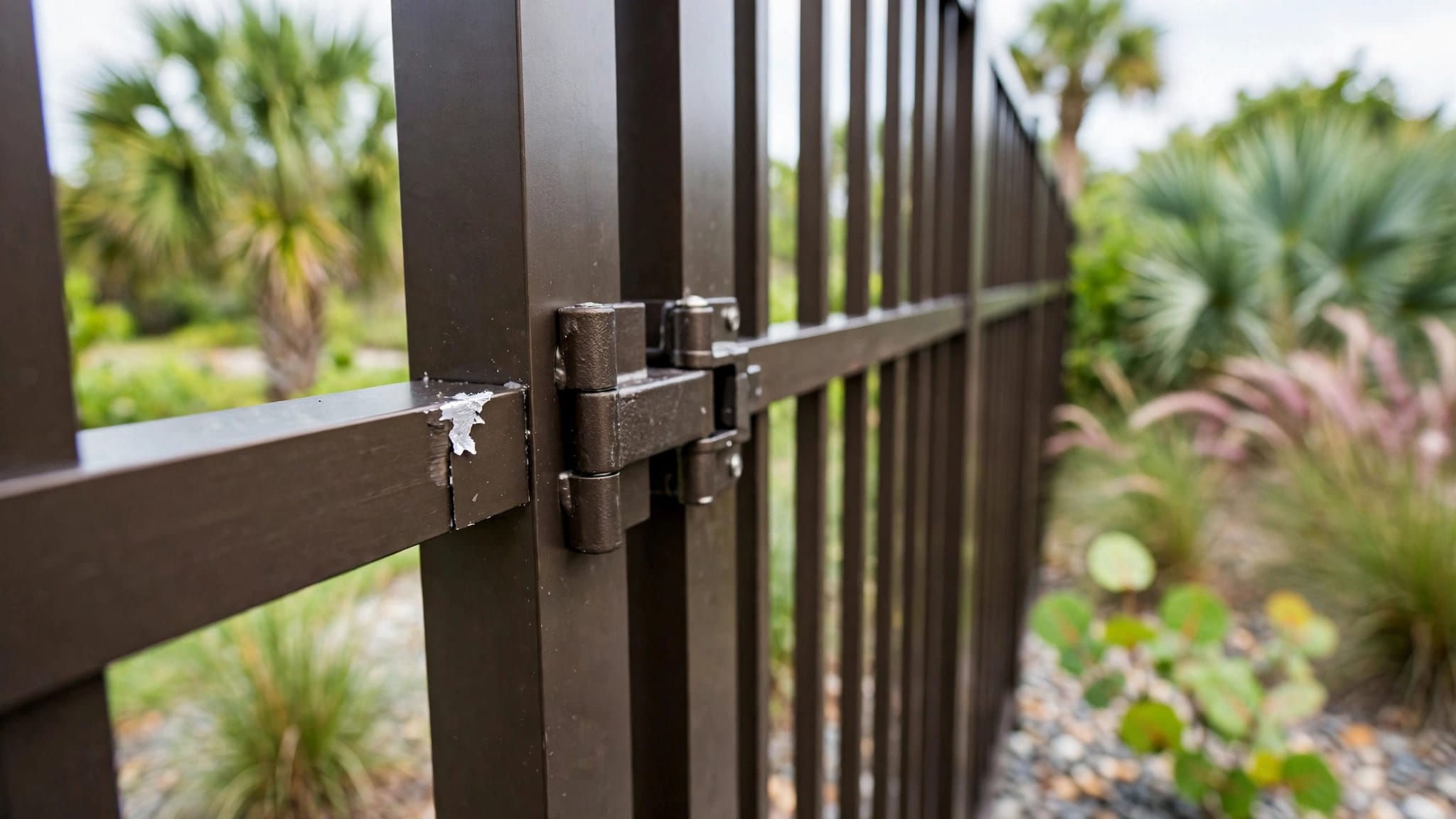
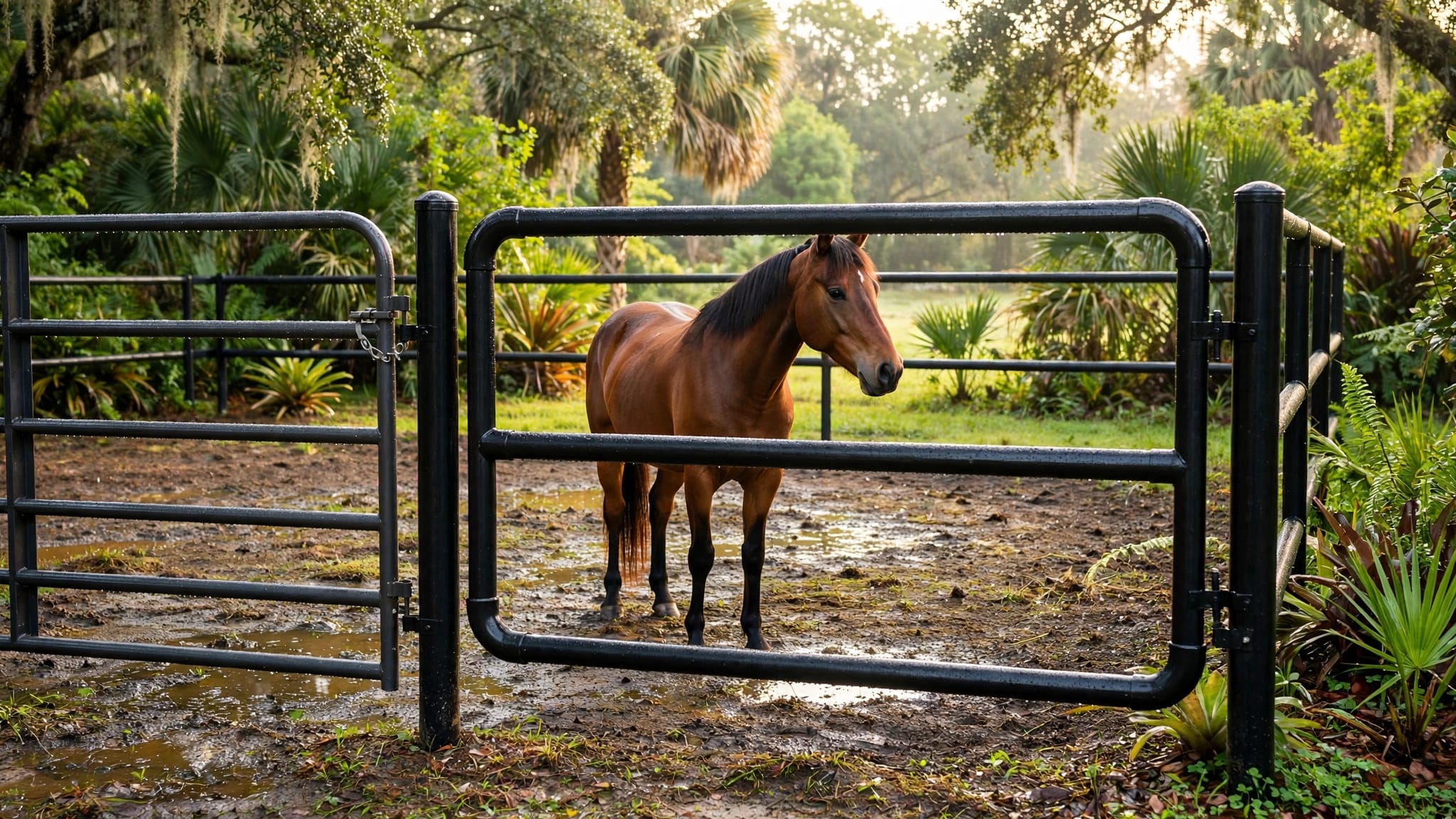
Pool gates must open outward, away from the pool. They also need to be self-closing and self-latching, with the release mechanism located on the pool side and out of reach of a young child.
A yard fence can function as the pool barrier if it fully meets those requirements and surrounds the pool perimeter. If a wall of the dwelling forms part of the barrier, it cannot have a door or window opening directly to the pool area.
Ordinary boundary fences are usually a local matter
Florida does not have a broad residential law requiring adjoining property owners to split the cost of a shared boundary fence. For most duplex and multi-family properties, fence ownership and maintenance depend on the surveyed property line, deed restrictions, local rules, and any written agreement.
Chapter 588 of the Florida Statutes concerns agricultural fencing and enclosed land. It is not the usual rulebook for a residential duplex lot or apartment community.
A fence that looks like a shared boundary fence may sit entirely on one parcel. The survey, not the appearance of the fence, answers that question.
Identify Who Has Authority to Approve the Fence
A duplex may be one building on one lot, two separately owned units, or part of a larger planned community. Multi-family properties can have even more complicated ownership arrangements. That structure affects who may approve work and who carries the responsibility for maintenance.
Start with the parcel record and governing documents before treating a side yard as a private space.
Duplex ownership can change the decision process
When one owner holds the entire duplex parcel, that owner usually has authority to seek permits and hire a contractor. Still, existing leases may limit when access is allowed or require notice before work begins near a tenant's patio, pets, or parking area.
A duplex with separately owned units may have a shared wall agreement, recorded maintenance terms, or an association that controls exterior changes. One owner should not place a fence across a common area or boundary line based on an informal conversation alone.
For condominium properties, the exterior land may be a common element. The condominium association may need to approve a fence even if a unit owner has exclusive use of a patio or yard.
Tenants should obtain written permission
A tenant should not install, remove, or alter fencing without written authorization from the owner or property manager. That includes temporary pet fencing, privacy screens attached to an existing fence, and changes around a leased pool area.
Landlords and managers should also review lease language before beginning a project. A fence installation can affect gates, access paths, parking spaces, trash collection, landscaping duties, and pet policies.
When residents request a fence, document the approved layout, materials, gate access, and responsibility for any damage. Clear terms can prevent a simple backyard request from becoming a dispute after move-out.
Local Permit Rules for Multi-Family Fence Projects
Most fence questions become local permitting and zoning questions. The city or county with jurisdiction over the address sets its own application process, placement rules, and inspection requirements.
Check whether the property is inside a municipality or in an unincorporated county area. A mailing address alone does not always identify the correct permitting office.
Cape Coral, Lee County, and Collier County examples
Cape Coral's residential regulations state that, for single-family homes and duplexes, no part of a fence may sit in front of the forward-most part of the primary structure. Residential fences are generally limited to 6 feet, although an 8-foot fence may be allowed where residential property abuts commercial property.
Waterfront placement creates another Cape Coral issue. In the rear 20 feet of a property that abuts a waterway, the fence must be open mesh above 3 feet. Review the current Cape Coral fence permit checklist before finalizing a waterfront or corner-lot layout.
Lee County requires a Residential Fence or Wall permit to install or replace a fence or wall in unincorporated areas. Its review can involve easements and encumbrances, so the Lee County fence permit rules are useful for properties outside city limits.
In unincorporated Collier County, fence installation, replacement, and repair generally require a building permit. Corner lots, front-yard placement, and chain link restrictions can differ by zoning district. Check current Collier County fence permit requirements before submitting plans.
Sarasota, Charlotte, and Manatee need a direct local check
Sarasota, Charlotte, and Manatee County properties may fall under county regulations or a city code. A fence in Punta Gorda, North Port, Venice, Bradenton, or Sarasota can have requirements that differ from nearby unincorporated neighborhoods.
Confirm the current standards with the relevant building, zoning, or planning office. Ask about permits, maximum height, front and side setbacks, sight triangles, gates, waterfront restrictions, and any required inspection.
Fees also vary by jurisdiction and project scope. A current guide to Southwest Florida fence permit fees can help owners plan, but the permitting office has the final current schedule.
Surveys, Easements, and Setbacks Shape the Fence Line
A fence contractor can build a straight, attractive fence in the wrong place if the layout starts with assumptions. Older fences, hedges, pavers, and utility boxes do not establish the legal property boundary.
For a multi-family property, a few inches can matter because a misplaced fence may block shared access or enter a neighboring parcel.
Use a current survey and a clear site plan
Review the survey, plat, and deed before marking the fence route. The site plan for a permit should show property lines, streets, buildings, proposed fence runs, gate locations, height, materials, and relevant utility or drainage features.
If the survey is old, hard to read, or does not show improvements, the owner may need updated boundary information. A licensed surveyor can address a boundary question that a fence installer cannot settle.
Also check for recorded access, drainage, utility, or conservation easements. A permit approval does not make it safe to block an easement or prevent future maintenance access.
Street corners and driveways require open sight lines
Local codes often limit fence height near intersections and driveways. These visibility areas are sometimes called sight triangles. A solid 6-foot privacy fence that works in a rear yard may not be allowed near a vehicle exit or corner.
Double-frontage duplex lots also need extra attention. Cape Coral applies front-yard regulations to all adjacent streets on double-frontage lots that are not corner lots.
Before digging, call 811 to request utility location markings. Underground lines, irrigation pipes, drainage structures, and cable routes can affect post placement even when the fence lies fully inside the property line.
Pool Fences Need More Than a Privacy Design
A pool fence is a safety system first. For duplexes with a private pool or apartment communities with a shared pool, barrier details deserve close review before materials are selected.
The most attractive fence style cannot make up for a gate that fails to close or a gap that allows a child into the pool area.
Build the barrier around the pool perimeter
Florida's pool barrier rule requires the barrier to surround the pool perimeter. A perimeter yard fence may qualify only when it creates a compliant enclosure around the pool itself.
Aluminum fencing often suits a pool barrier because it keeps sight lines open for supervision. Vinyl or wood privacy fencing may work in the right layout, yet gate hardware, spacing, climbability, and clearance all need to meet the applicable standards.
Above-ground pools require attention too. The pool structure can serve as the barrier in some cases, but ladders and steps must be secured, locked, removed, or separately enclosed.
Shared pools need controlled resident access
For apartment and condominium pools, gate locations should work for residents while limiting unauthorized entry. Property managers should account for emergency access, maintenance routes, pool furniture delivery, and accessible paths.
Do not assume an existing pool fence remains compliant after a renovation. Replacing a gate, adding landscaping, changing the latch, or attaching decorative panels can affect barrier performance.
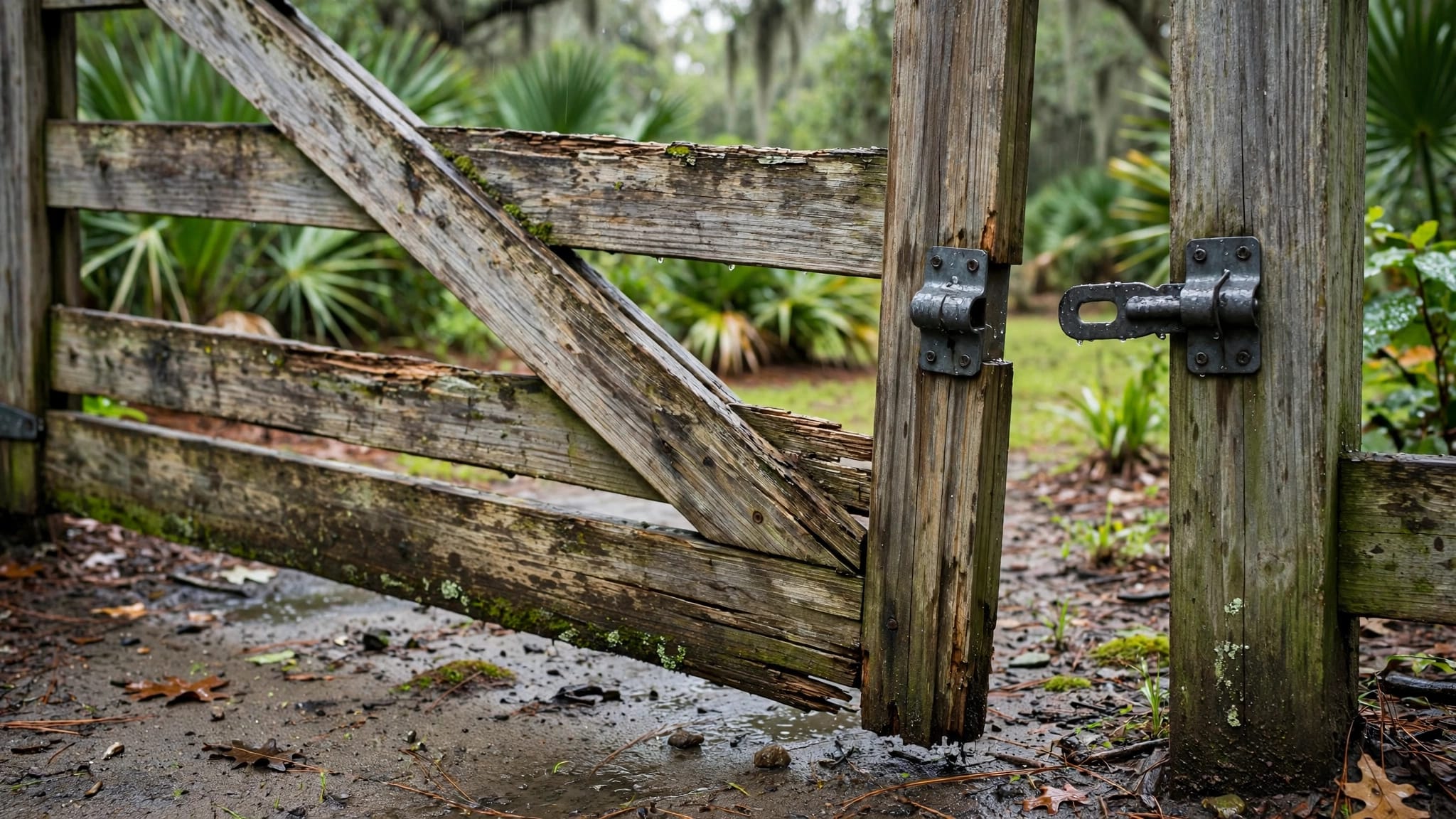
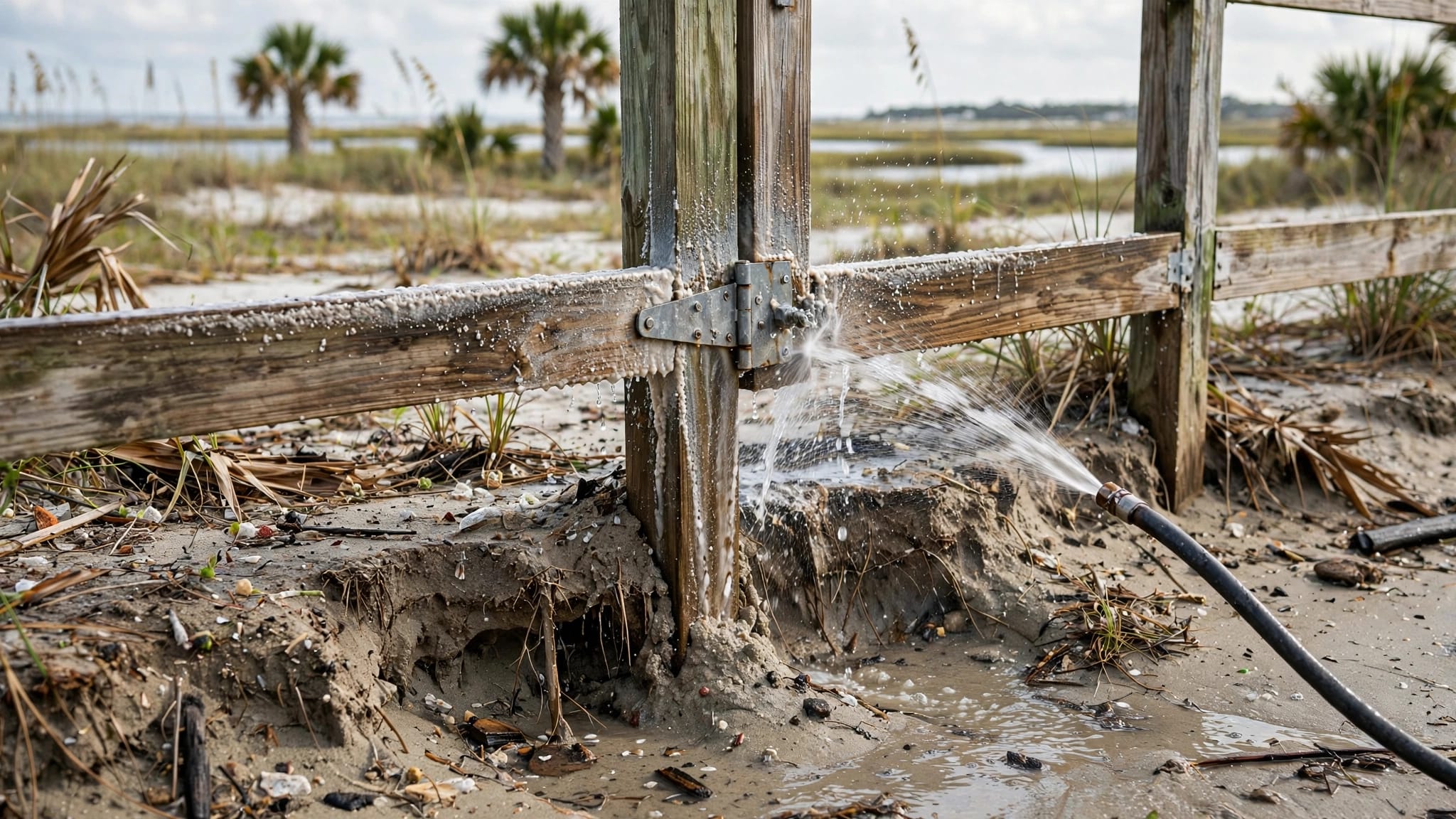
Keep maintenance records for self-closing hinges, latches, and repairs. A gate that drifts open can defeat an otherwise compliant fence.
Choose Materials That Fit the Property and Rules
Material choice affects privacy, maintenance, visibility, and permit drawings. However, it does not override local placement or pool-barrier requirements.
A durable design starts with an approved location, then matches material to the property's practical needs.
Match the fence style to its job
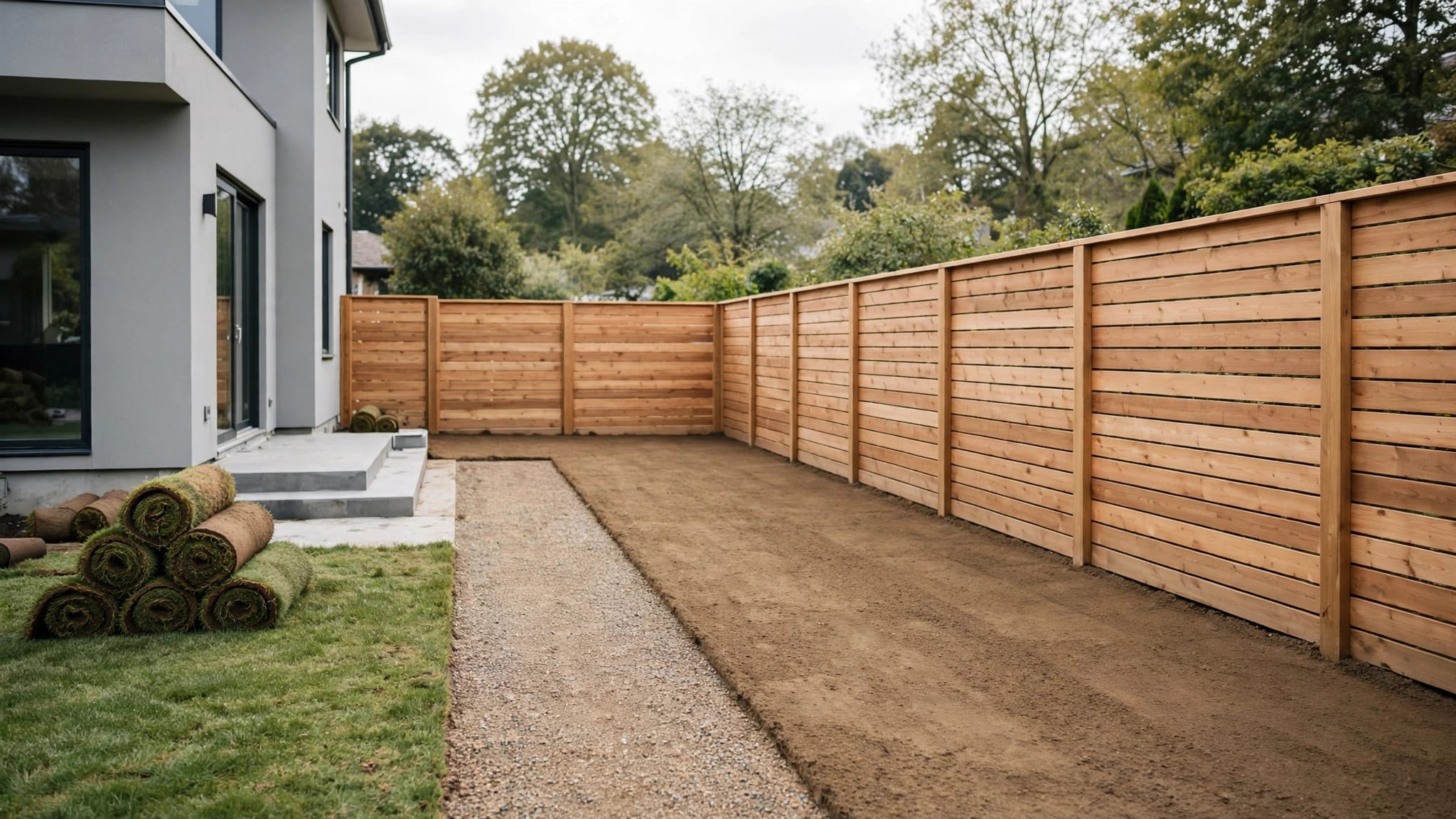
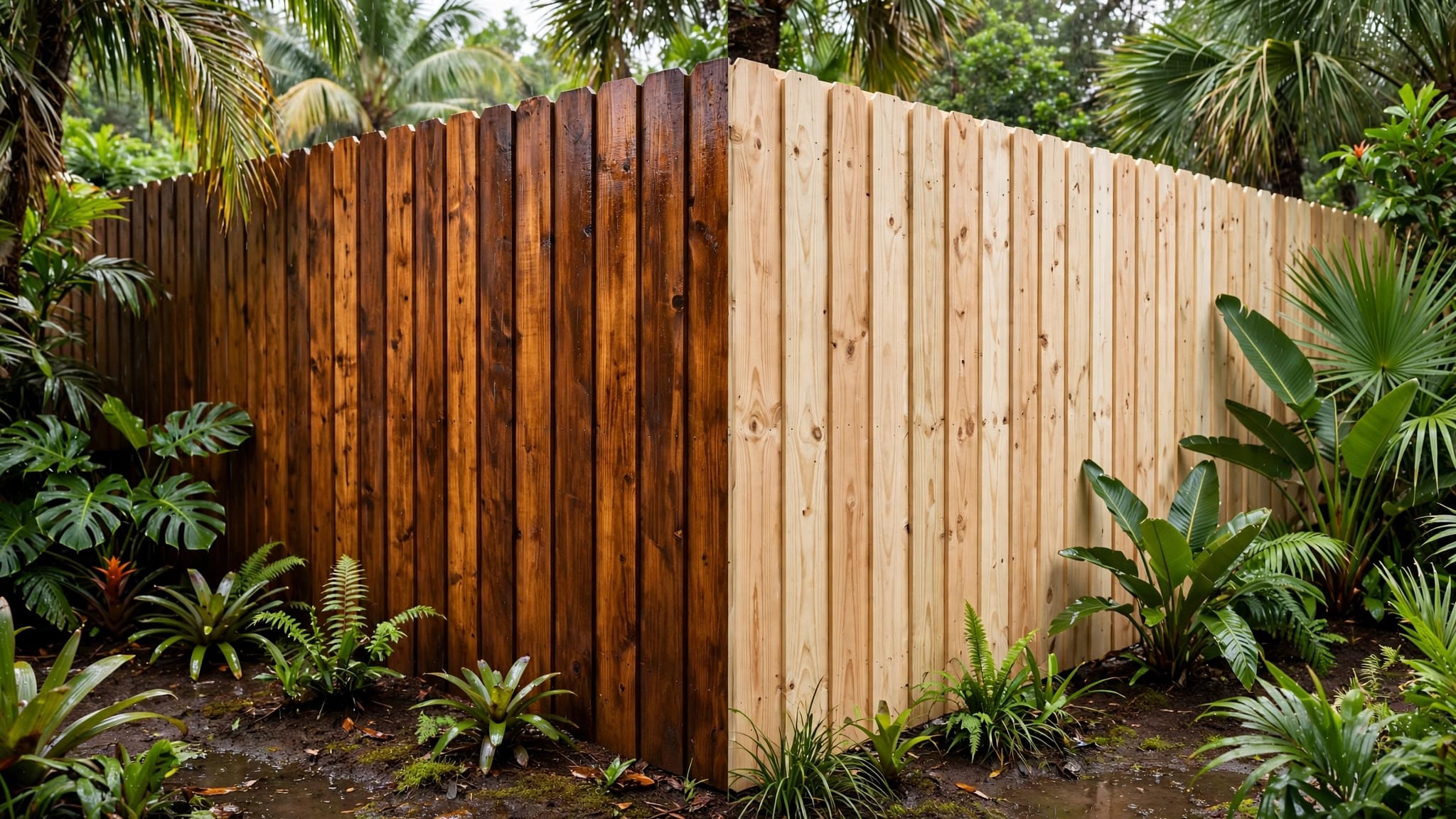
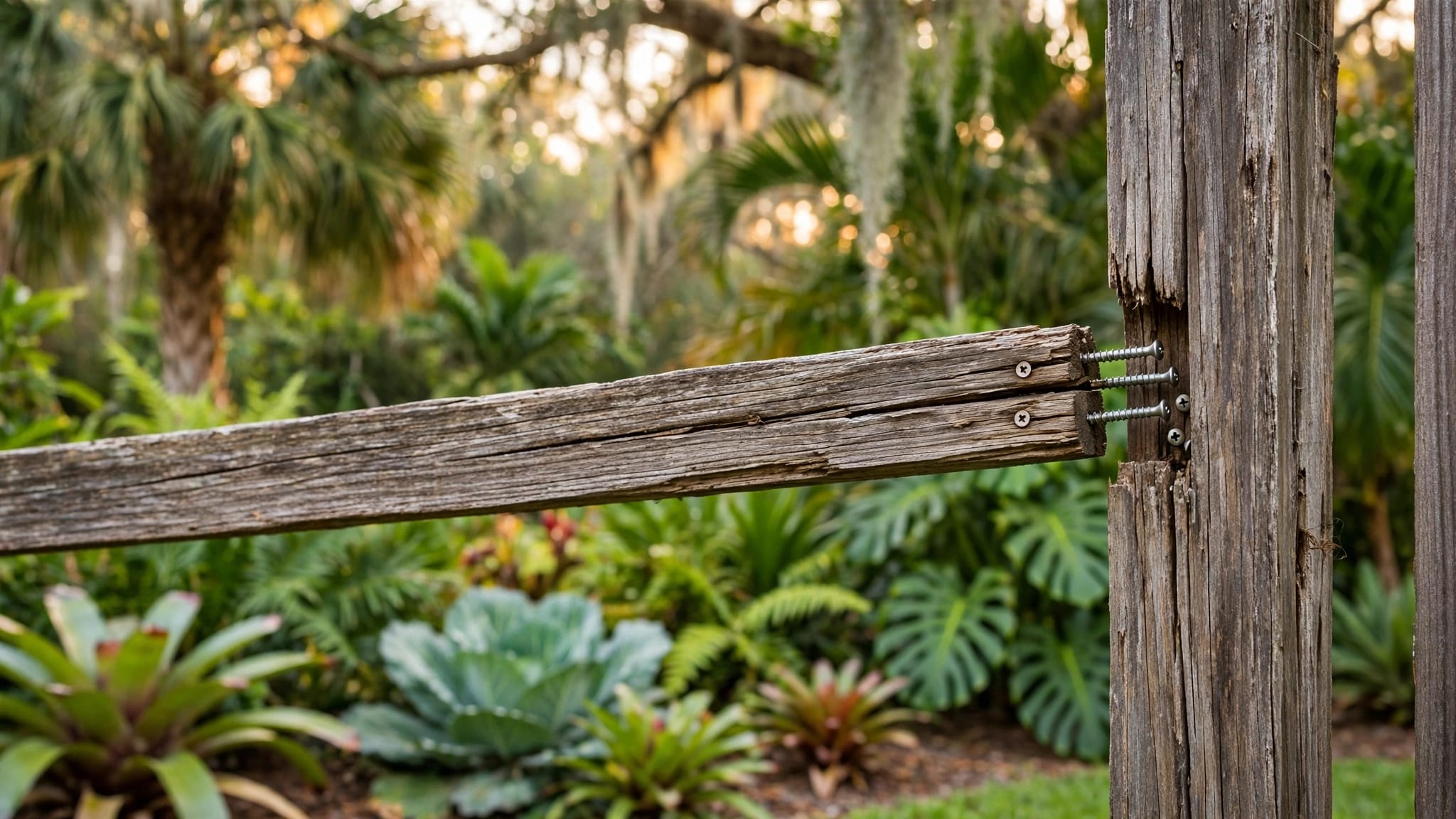
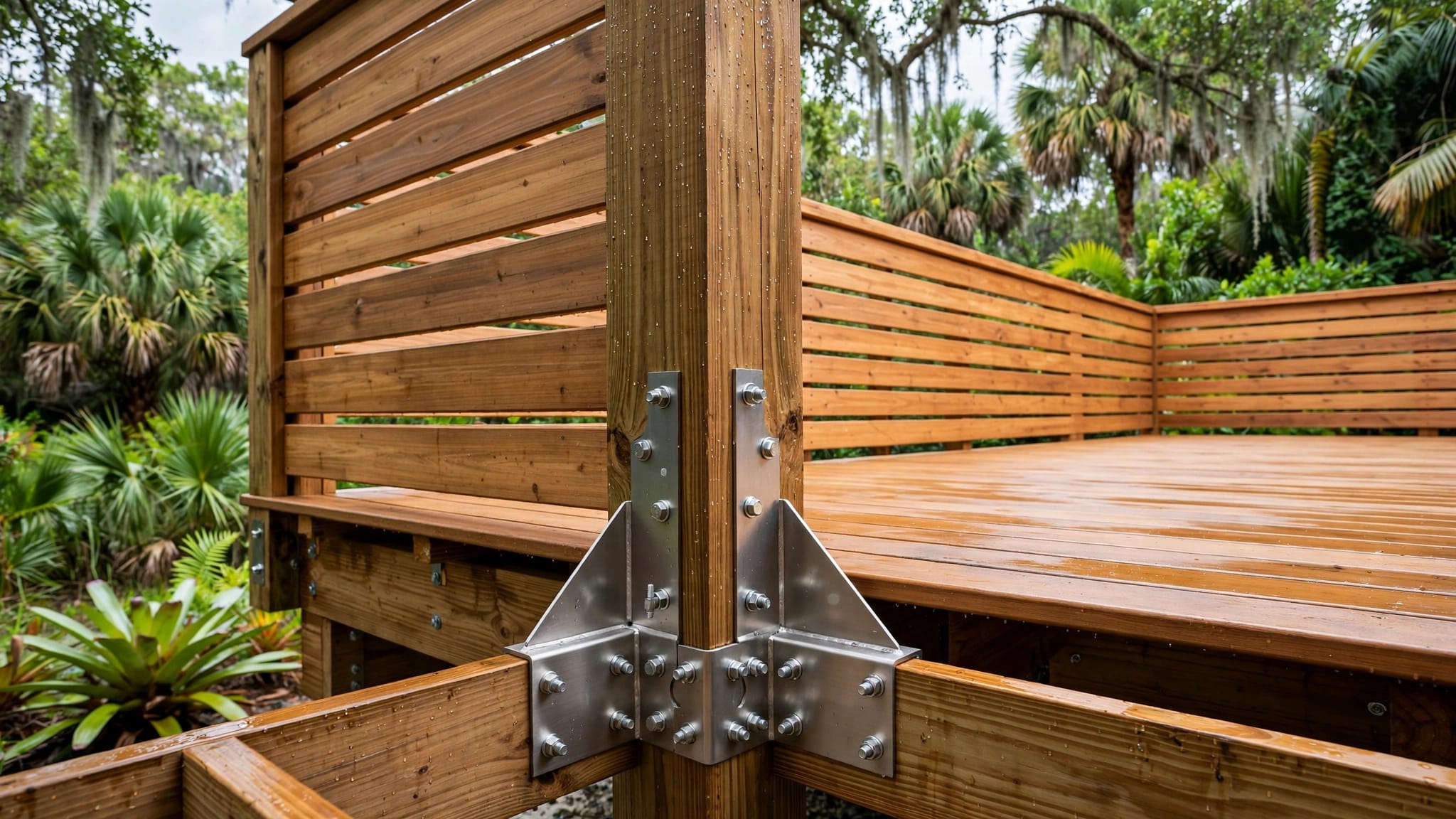
Vinyl privacy fencing can separate adjacent patios and reduce views between duplex units. Wood creates a traditional appearance, although Florida heat, rain, and insects call for suitable materials and regular upkeep.
Aluminum fencing works well around pools, ponds, and common areas where visibility matters. Chain link can suit pet runs or utility areas, but some communities and local districts restrict its appearance in front yards.
For larger properties, consider gate width early. Maintenance equipment, trash service, emergency access, and landscaping crews may need wider openings than a typical pedestrian gate.
Plan repairs and replacements as new reviews
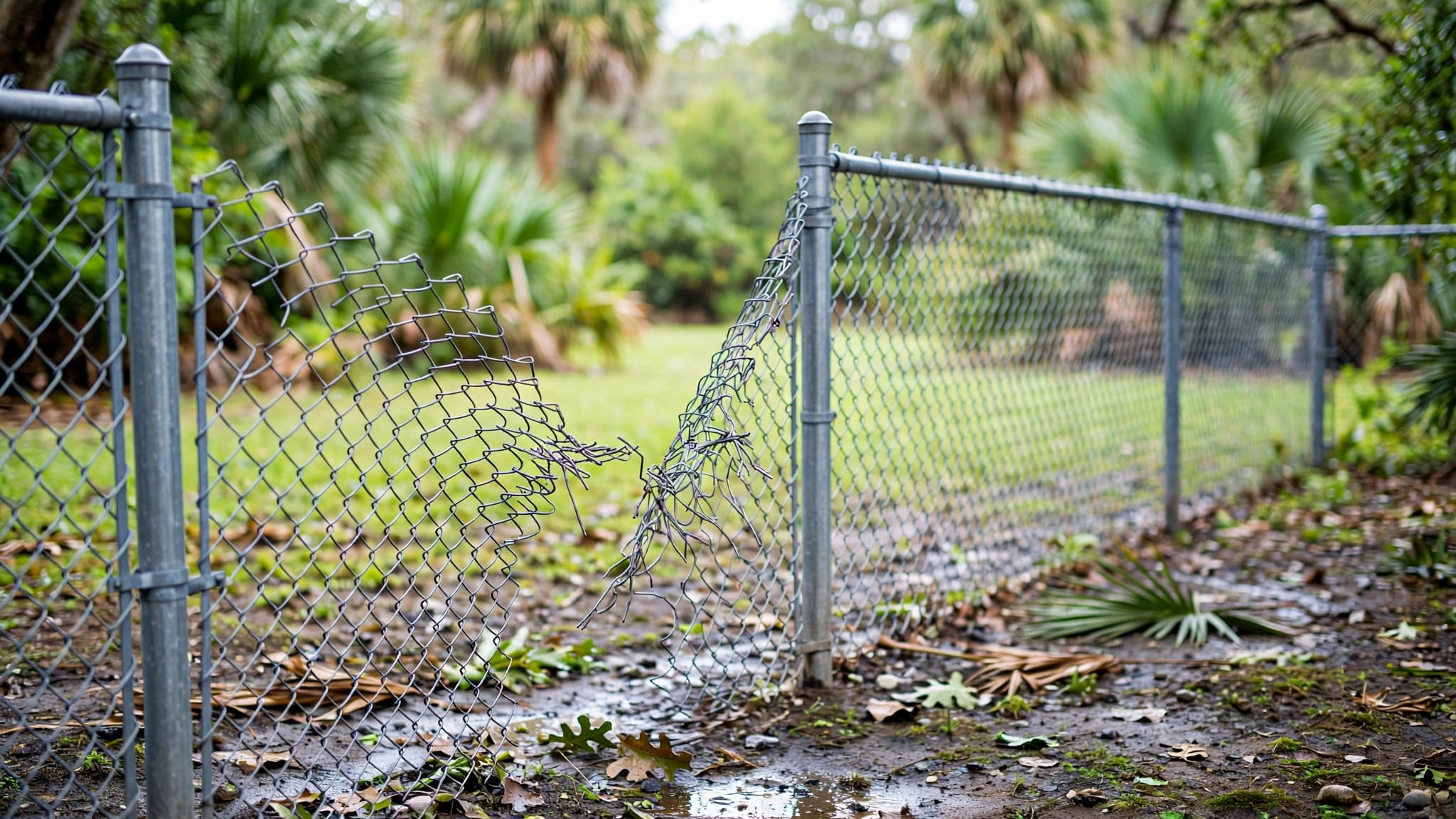
A replacement fence may still need a permit. Local officials can review the current height, material, gate direction, and placement even when an older fence occupied the same area for years.
Problems often arise when a new privacy fence is taller than the old chain link fence or shifts slightly toward an easement. Review common fence permit rejection issues before removing an existing fence.
Get the scope in writing with the contractor. It should identify the material, height, color, post placement, gate hardware, permit responsibility, and any work excluded from the proposal.
A Careful Start Prevents Expensive Fence Changes
For duplexes and multi-family homes, Florida fence rules begin with the property address but do not end there. Local codes, permits, title documents, association approvals, leases, surveys, and pool safety standards can all affect the final layout.
Confirm the governing requirements before construction, especially near streets, waterways, shared yards, and pools. A fence built on the right line with the right approvals protects privacy without creating a costly removal or access problem.