How Fence Post Spacing Handles Southwest Florida Wind
A fence can look sturdy in calm weather and still fail when a tropical storm sends strong gusts across an open yard. The right fence post spacing helps distribute wind pressure, protect panels, and keep gates aligned.
There isn't one spacing measurement that works for every property in Cape Coral, Fort Myers, Naples, or Sarasota. Height, material, fence design, soil, flood zone, and coastal exposure all affect the layout. Before construction, match the design to your site and verify current requirements with the local building department.
Why Fence Post Spacing Matters in Southwest Florida
Fence posts carry the force created when wind strikes the panels, rails, and hardware. If posts sit too far apart, each post and section must handle more pressure. That can lead to leaning posts, loose rails, cracked panels, or gate problems.
However, closer posts alone don't solve every wind issue. The footing, post size, fasteners, rails, and panel design must work together. A strong post placed in weak soil may still shift during a storm.
Solid panels catch more wind
A solid privacy fence blocks airflow and receives greater pressure than an open picket or chain-link fence. A six-foot vinyl privacy panel has much more surface area for wind to push against than a short aluminum fence with open spaces.
For that reason, privacy fencing often needs stronger posts, deeper embedment, more substantial footings, or a tighter layout. Corners and end posts deserve special attention because wind pressure can pull against changes in direction.
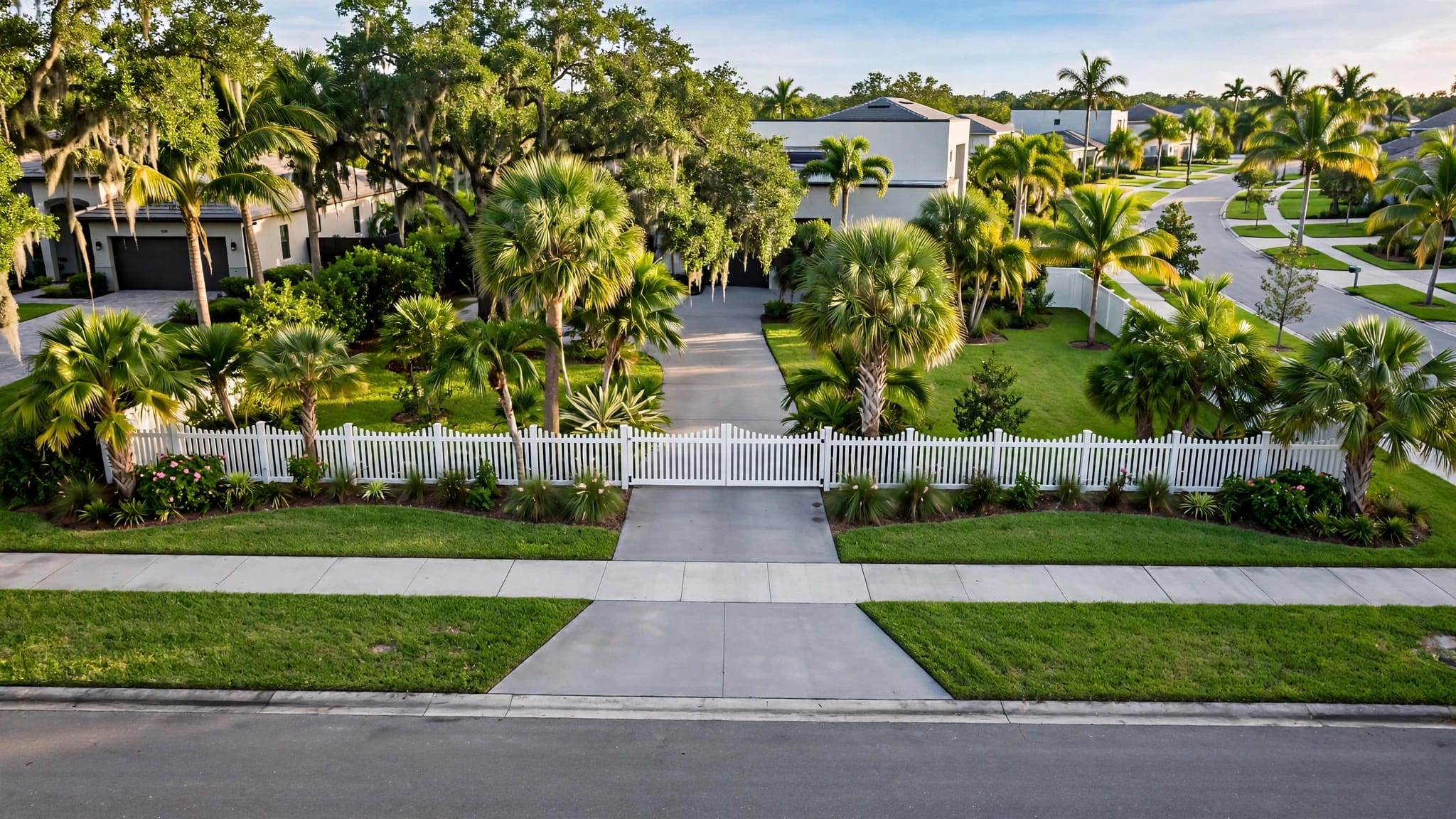
A ventilated design can reduce the solid surface area. Homeowners comparing options can review these ventilated privacy fences for Florida yards before choosing a fully enclosed layout.
Exposure changes the wind load
A home protected by neighboring buildings may experience different wind pressure than a home beside open water, a broad field, or a canal. Coastal and near-coastal lots can face stronger, less obstructed gusts.
Exposure also varies within the same county. A sheltered suburban lot in Lee County may have different conditions than an open property near the Gulf in Collier County. Height above grade, nearby structures, and the direction of open space can all affect the design.
What Florida Code Says About Fence Post Spacing
The 2023 Florida Building Code, 8th Edition, uses a wind-load approach rather than one universal post-spacing chart for Southwest Florida fences. The code considers factors such as wind speed, exposure, height, geometry, and surface characteristics.
The six-foot fence wind reference
Florida code materials include a provision for fences no higher than six feet. That provision allows a design wind speed of 75 mph fastest-mile wind speed or 115 mph 3-second gust wind speed .
This number describes a wind-design basis. It doesn't tell an installer to place every post at a fixed distance. A fence still needs a layout that matches its material, construction, site exposure, and connection details.
The code also references ASCE 7-22 for general wind-load calculations. If a project falls outside a simple prescriptive approach, the building department or an engineer may require more detailed calculations.
A code wind speed establishes design demand. It does not create one statewide post-spacing measurement for every fence.
Why there is no single spacing rule
A short aluminum picket fence and a tall vinyl privacy fence don't behave the same way in wind. Their surface area, weight, connections, and resistance to airflow are different.
The same fence can also need different treatment at a gate, corner, or exposed end. Soil conditions may require deeper or larger footings even when the line-post layout stays consistent.
This is why a contractor shouldn't quote one spacing number without reviewing the fence style and property. When a project has unusual height, open exposure, solid panels, or difficult soil, wind-load fence design in Florida may require drawings or additional review.
Factors That Determine the Right Post Layout
Fence post spacing is one part of a larger structural decision. A reliable installation starts with the full fence system, not the posts alone.
Height, material, and fence construction
Tall fences create more leverage against the footing. A taller panel also exposes more area to wind. As height increases, the installer may need stronger posts, larger footings, closer spacing, or a design that allows more airflow.
Material changes the equation as well:
- Vinyl privacy fencing has broad panels that can receive heavy wind pressure. Reinforced rails and properly supported posts matter.
- Wood fencing can be built in many styles, but moisture, termites, rot, and loose fasteners can weaken the system over time.
- Aluminum picket fencing is usually more open, which allows wind to pass through. Its posts and gate frames still need proper support.
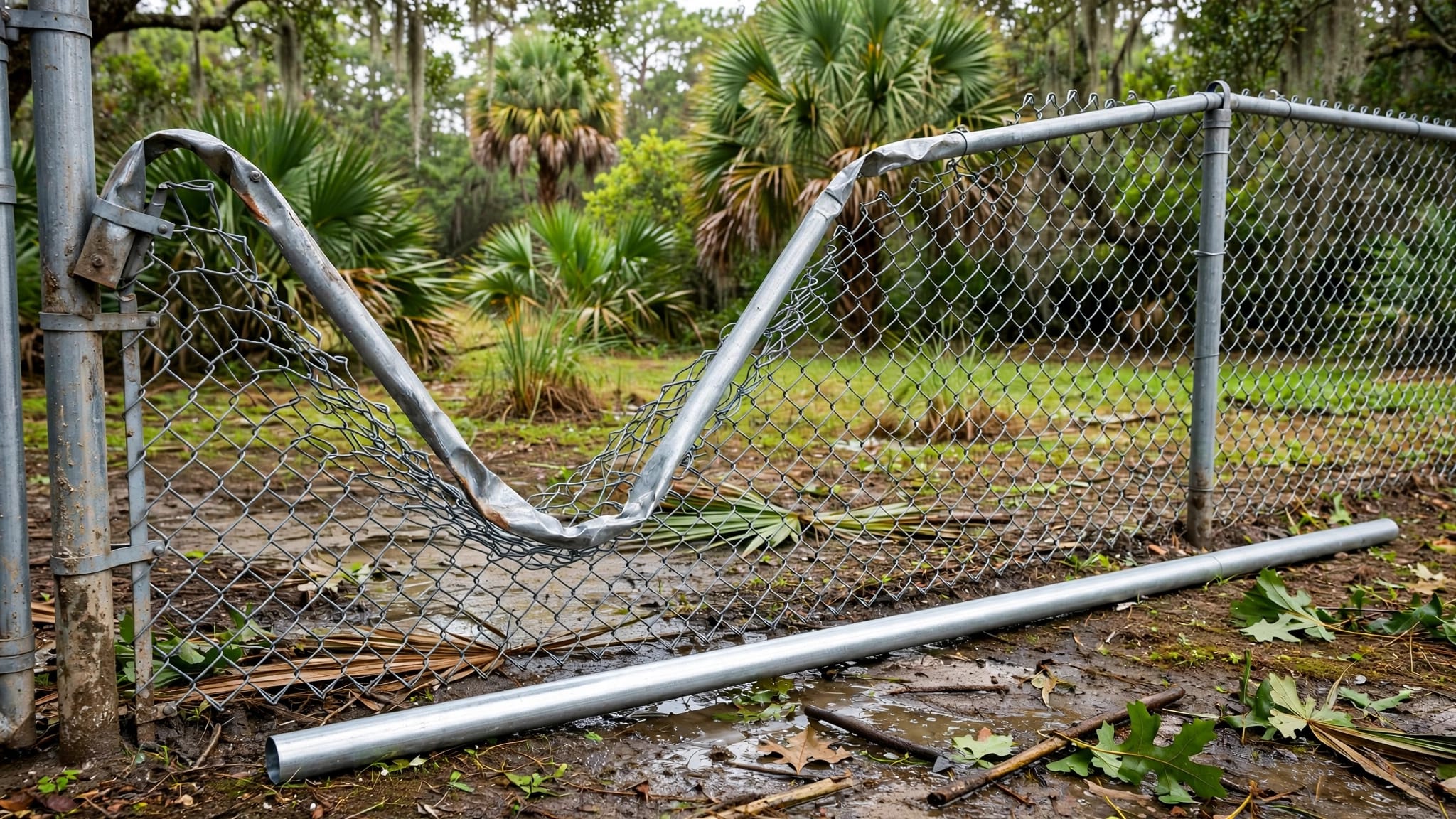
- Chain-link fencing has low wind resistance when left open. Privacy slats, windscreens, and fabric add surface area and change its storm performance.
- Composite fencing may have heavier panels and manufacturer-specific post requirements.
Material and layout choices should match the property. These wind-resistant fence materials for new homes offer useful options for homeowners comparing privacy and open designs.
Soil, footings, gates, and corners
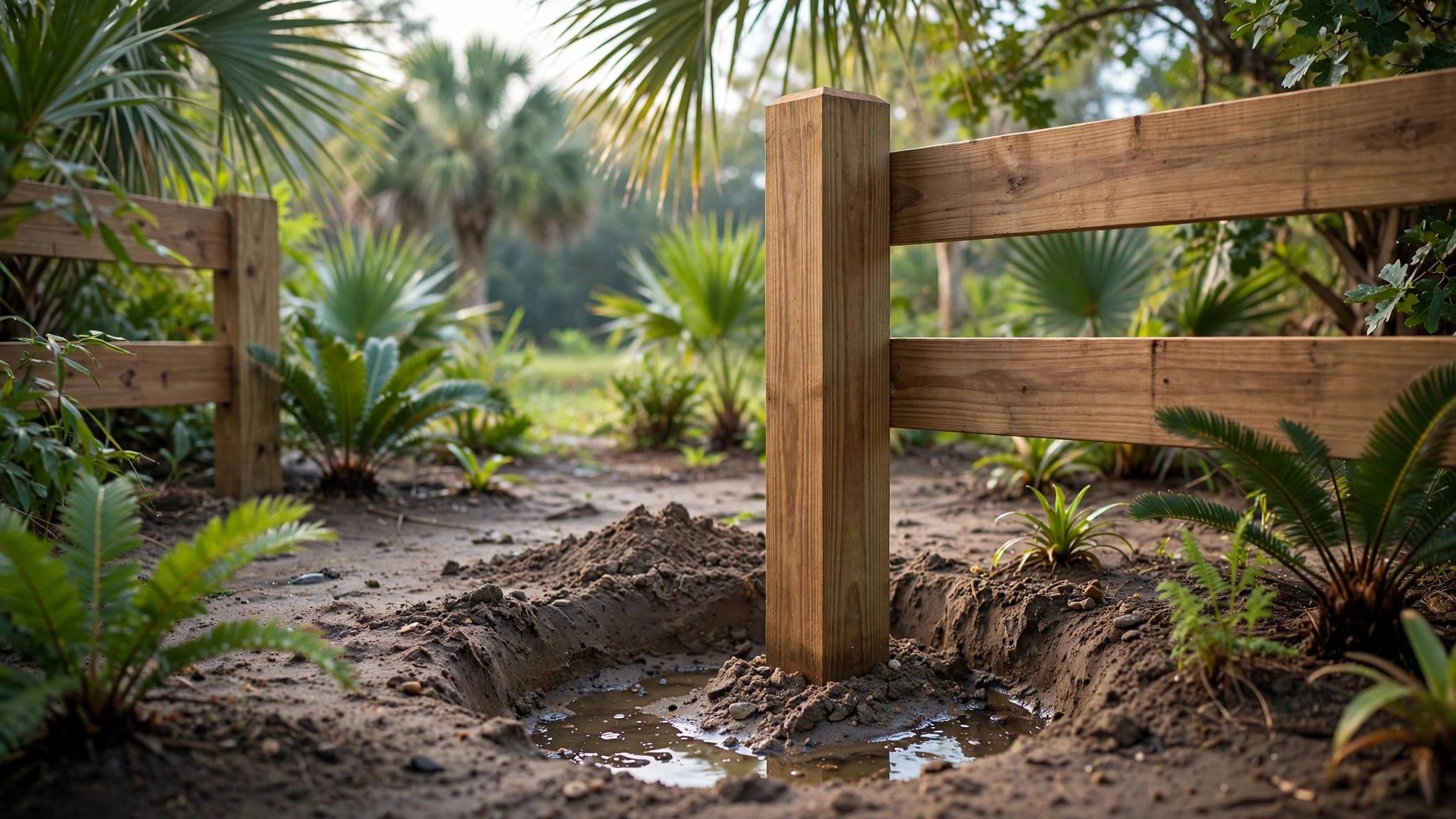
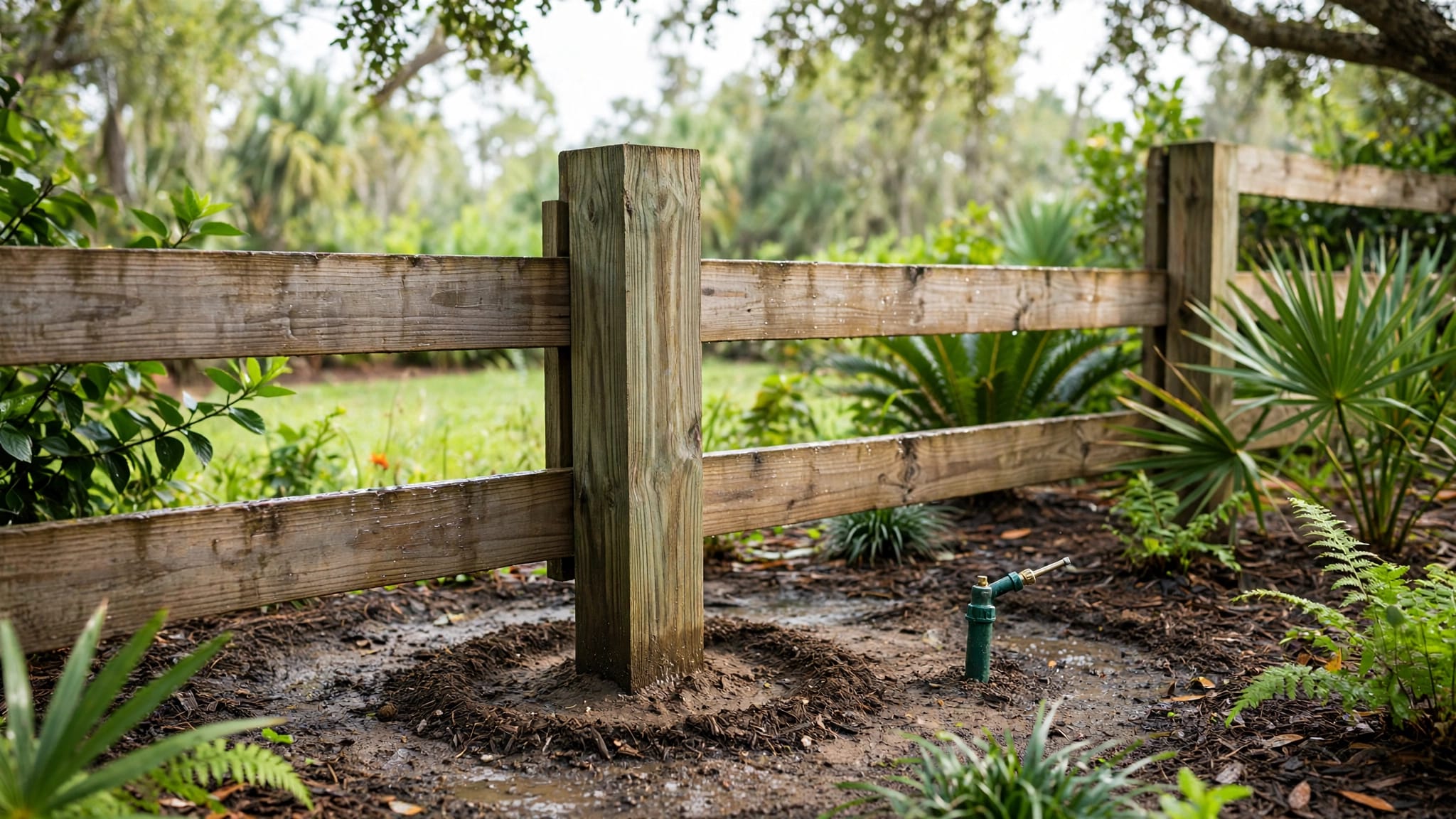
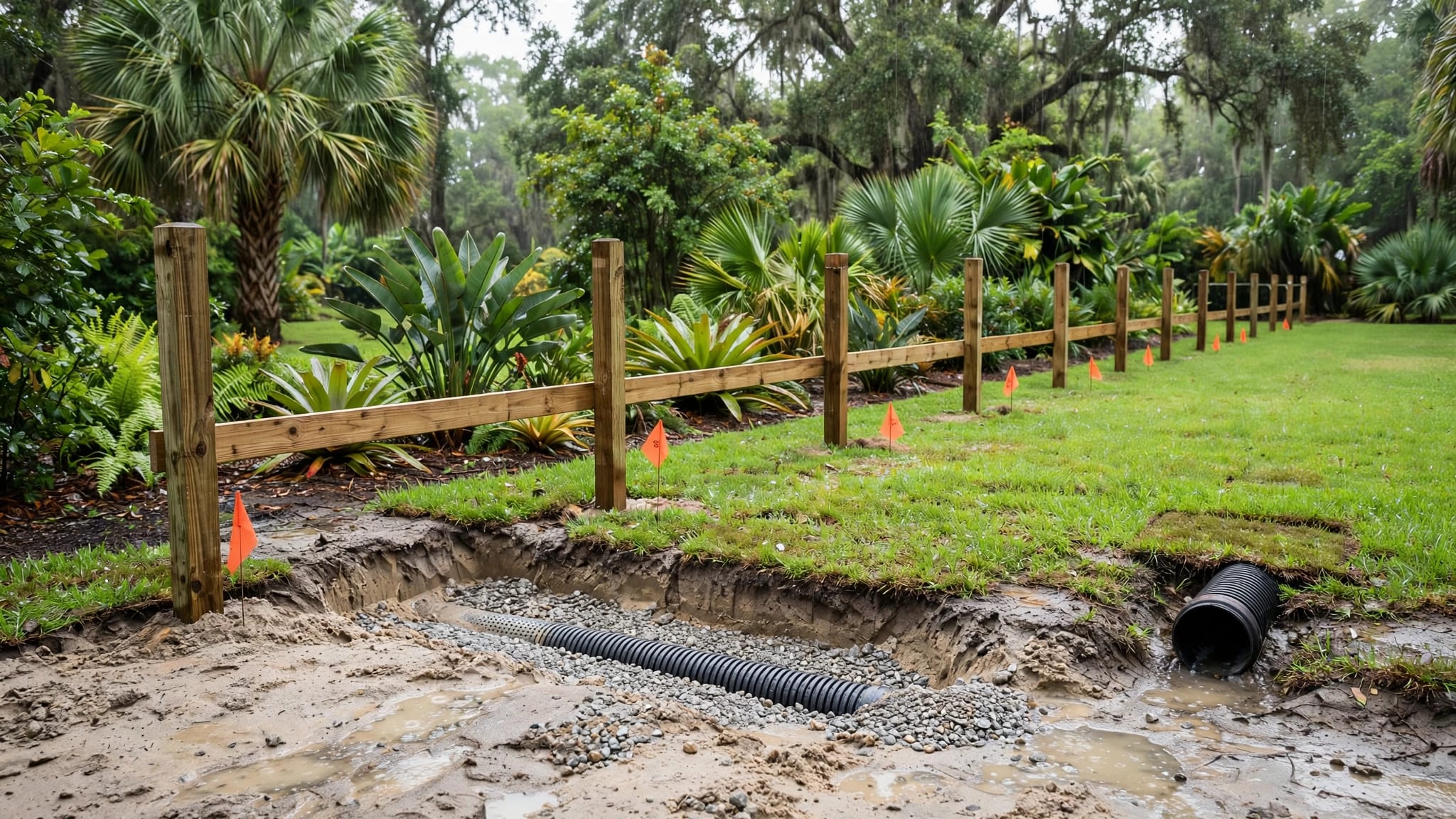
Southwest Florida properties may contain loose sand, compacted fill, wet soil, or drainage conditions that affect post stability. Flood-prone areas can create additional concerns around water movement and soil erosion.
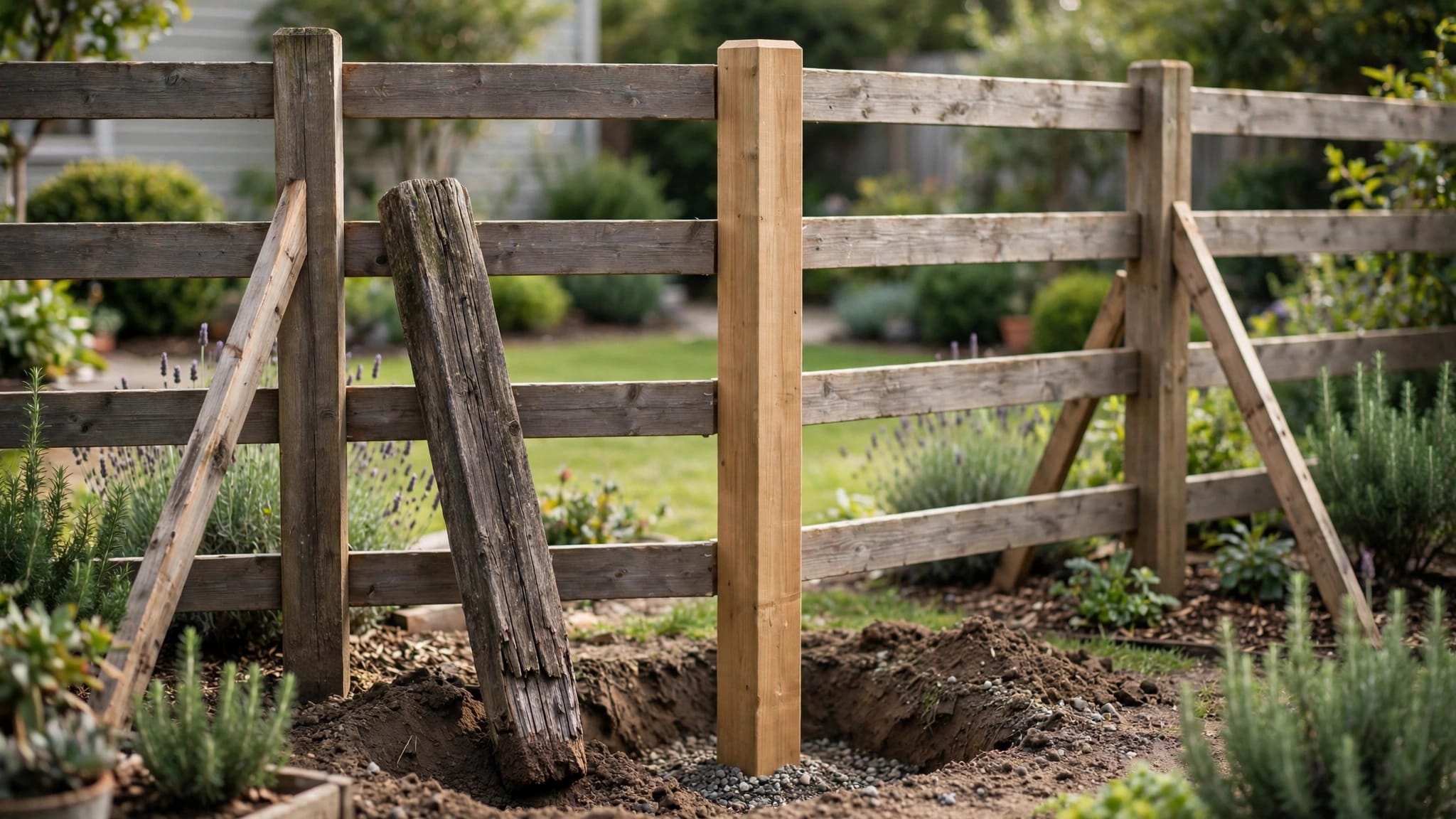
Concrete footings can provide added stiffness, especially for solid privacy fences, gates, corners, and long straight runs. However, footing size and depth should fit the fence design and site rather than follow a guess.
Gates often need larger or stronger posts because their weight and movement place extra stress on the surrounding structure. End and corner posts also carry forces that line posts don't experience.
Homeowners can compare concrete fence post installation with other footing approaches before approving a layout.
Choosing Spacing for Common Fence Styles
A contractor should base the final layout on the product specifications, site conditions, and local review requirements. Still, the fence style gives you a useful starting point for the conversation.
Privacy fences need a more careful layout
Solid vinyl and wood privacy fences place greater wind demand on posts than open designs. On an exposed lot, the installer may reduce the distance between posts, increase footing support, or use reinforced rails and stronger hardware.
The panel length can also affect the layout. Posts need to support the rails and keep panel connections secure. A design with wind gaps or semi-private sections may lower pressure compared with a fully solid wall.
Don't compare a privacy fence estimate only by price per foot. Ask whether the quote includes the recommended post size, footing method, corner reinforcement, gate support, and hardware for the chosen panels.
Open fences still need proper support
Aluminum picket, chain-link, and some ornamental metal fences allow more wind to pass through. That often reduces pressure on each section, but it doesn't eliminate the need for sound installation.
Long runs can still move if posts aren't aligned and compacted correctly. Gate posts may need additional support, and chain-link systems depend on properly installed line posts, terminal posts, rails, ties, and tension components.
Privacy slats or windscreen fabric can change an open fence into a much less permeable surface. Tell the contractor about any planned additions before installation so the post layout accounts for the finished fence.
How to Review a Contractor's Wind-Ready Plan
A professional estimate should explain more than the material color and total length. It should show how the proposed fence fits your property.
Ask for site-specific details
Before approving the project, ask the contractor to review:
- The municipality and county jurisdiction
- Fence height and total run length
- Open, semi-private, or solid panel design
- Soil, drainage, and flood-zone conditions
- Distance from the coast, canal, bay, or open land
- Post dimensions, embedment, and footing method
- Gate width, hinge support, and latch hardware
- Fastener type, especially in salt-air locations
Ask which details come from the manufacturer's installation requirements and which reflect the contractor's field practice. A clear answer helps you separate a site-based recommendation from a standard estimate.
Confirm permits and engineering needs
Permit rules vary among Cape Coral, Fort Myers, Naples, Bonita Springs, Sarasota, and the surrounding counties. The statewide residential permit list includes an exemption for some fences no higher than seven feet, but local rules, zoning, easements, flood requirements, and project conditions can still affect approval.
A permit exemption also doesn't excuse unsafe construction or property-line mistakes. The local building department may request a site plan, fence height, setbacks, product information, or contractor documentation.
Homeowners in Manatee County can also review these Bradenton fence permit requirements. For unusual sites or taller, solid fences, ask whether engineered drawings are appropriate before work begins.
A Southwest Florida Fence Planning Checklist
Use these steps before comparing installation proposals:
- Identify the correct city or county authority for the property.
- Check whether the lot has a flood-zone, canal, coastal, drainage, or easement concern.
- Choose the finished height and decide whether the fence will be open, semi-private, or solid.
- Ask how the design changes for corners, ends, gates, and exposed sections.
- Request the proposed post size, footing method, hardware, and fence post spacing in writing.
- Confirm whether the contractor will handle permit documents or provide information for your application.
- Verify current requirements before construction, since local rules and code amendments can change.
A detailed estimate should make it easy to compare two contractors on the same design. If one quote lists only total footage and material, ask for more information before choosing.
Conclusion
The right fence post spacing depends on the complete installation, including wind exposure, fence height, panel openness, soil, footings, gates, and connections. Southwest Florida has no single spacing measurement that fits every property.
A short open fence on a sheltered lot may have different needs than a six-foot privacy fence near open water. Review the design with a qualified local contractor, confirm current municipal requirements, and choose a layout that matches the actual conditions at your home. In strong Florida wind, the details behind the fence line matter as much as the fence itself .