Outdoor Shower Fence Florida: Rules for Homeowners
An outdoor shower fence Florida homeowners can install is usually allowed, but the fence is only one part of the project. Privacy screens, gates, plumbing, drainage, lighting, and nearby pools can all affect the requirements.
A well-planned enclosure gives you privacy without creating a wind barrier or drainage problem. However, rules can vary by county, city, zoning district, flood zone, and HOA. Start by checking local requirements, then select a design that fits your yard and Florida weather.
Outdoor Shower Fence Florida Rules to Check First
Yes, you can generally install a fence or privacy screen around an outdoor shower. Many homeowners use a small enclosure with one gate, while others add a screen to an existing pool or backyard fence.
Florida's 8th Edition Building Code, published in 2023, generally lists fences no higher than 7 feet as work that doesn't require a building permit. That exemption doesn't cancel local zoning rules, easements, floodplain requirements, HOA approval, or separate permits for plumbing and electrical work.
An outdoor shower may need plumbing review even when the surrounding fence doesn't need a building permit. A roof, permanent floor, lighting, receptacles, or other attached construction can also change how the project is reviewed.
County and city rules aren't the same
Your location matters. Cape Coral and Fort Myers have municipal requirements, while an address in unincorporated Lee County follows county zoning and permitting procedures. Collier, Charlotte, Sarasota, and Manatee counties have their own rules as well.
Lee County's published fence and wall application requires a site plan showing property lines, buildings, easements, streets, bodies of water, and the proposed fence location. It also directs applicants to follow county zoning regulations for height and setbacks.
A contractor can help identify potential problems, but you should confirm the final requirements with the building or zoning department that has authority over your property.
A pool can add separate safety requirements
If the outdoor shower sits near a swimming pool, the enclosure might become part of the pool barrier. In that situation, Florida pool-barrier rules may apply separately from ordinary fence rules.
The gate, openings, height, and placement may need to meet pool safety standards. Don't assume a privacy fence is automatically an approved pool barrier. Ask the local building department before installation, especially if the shower is inside or beside the pool enclosure.
Privacy Screen and Fence Options for a Florida Shower
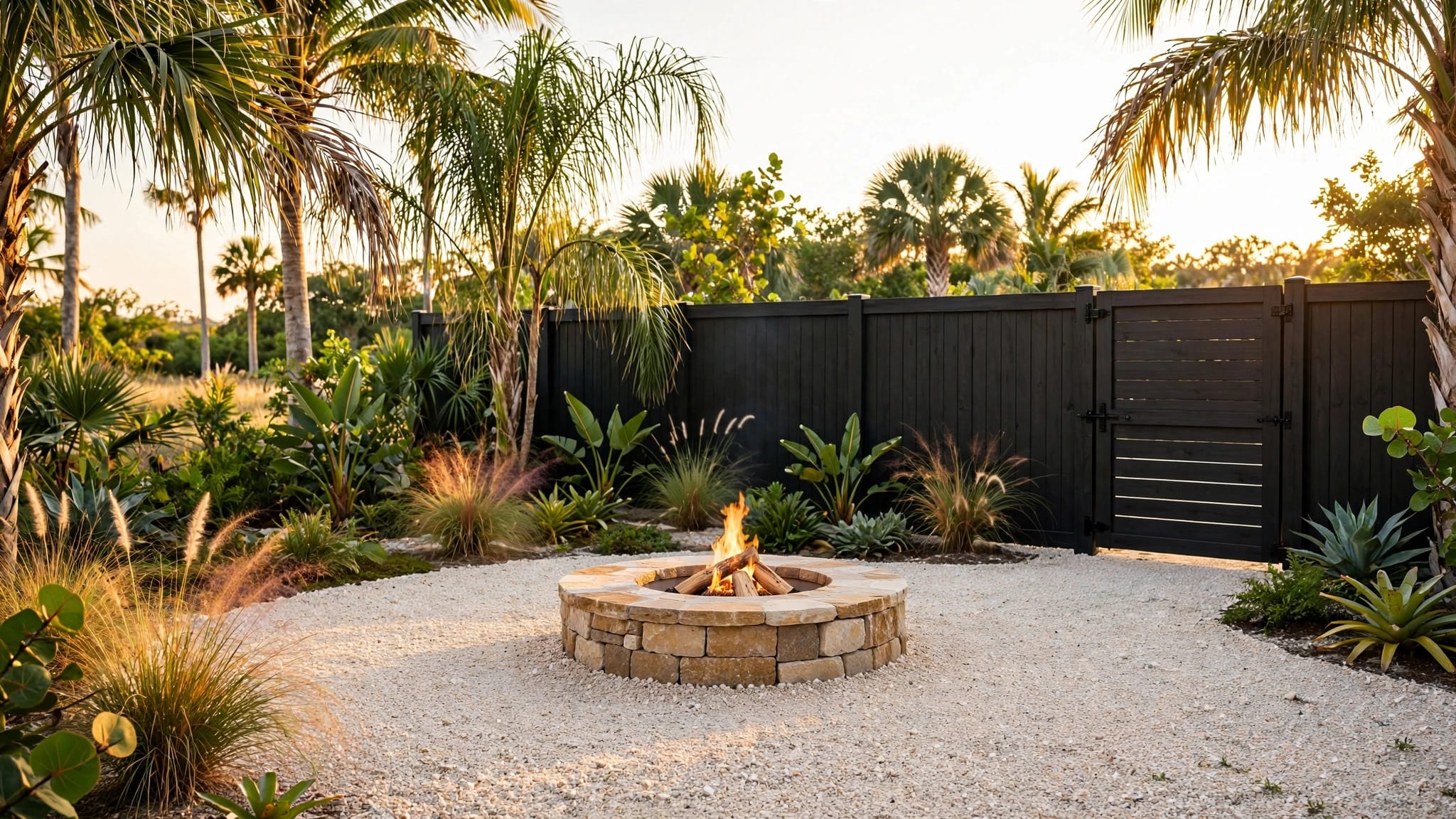
Outdoor showers need privacy, but a completely solid wall isn't always the best choice in Southwest Florida. Solid panels catch more wind, hold moisture, and can place greater stress on posts and connections.
A shorter return wall, louvered panel, spaced slats, or lattice section can block direct sightlines while allowing air to move through. You can find more ideas in these ventilated privacy fences for Florida yards.
Match the material to the location
Vinyl is popular for shower enclosures because it doesn't rust and needs little maintenance. It works well when you want a clean privacy panel, though solid vinyl can experience greater wind pressure than a spaced design.
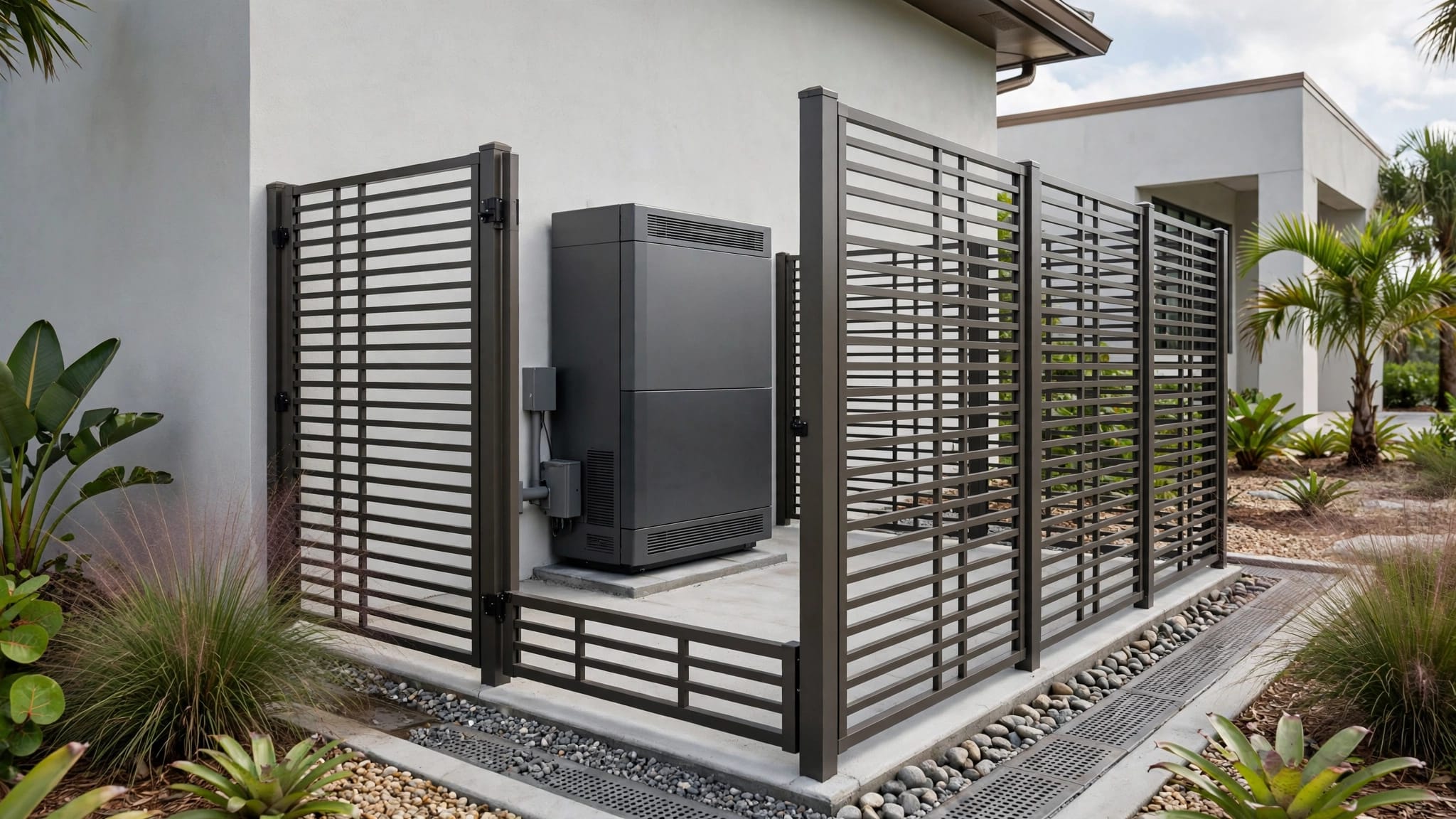
Aluminum works well near pools, canals, and salt air. Slatted aluminum can provide privacy without the weight of a masonry wall. However, added privacy panels need strong attachment points and a fence system designed to handle the extra wind load.
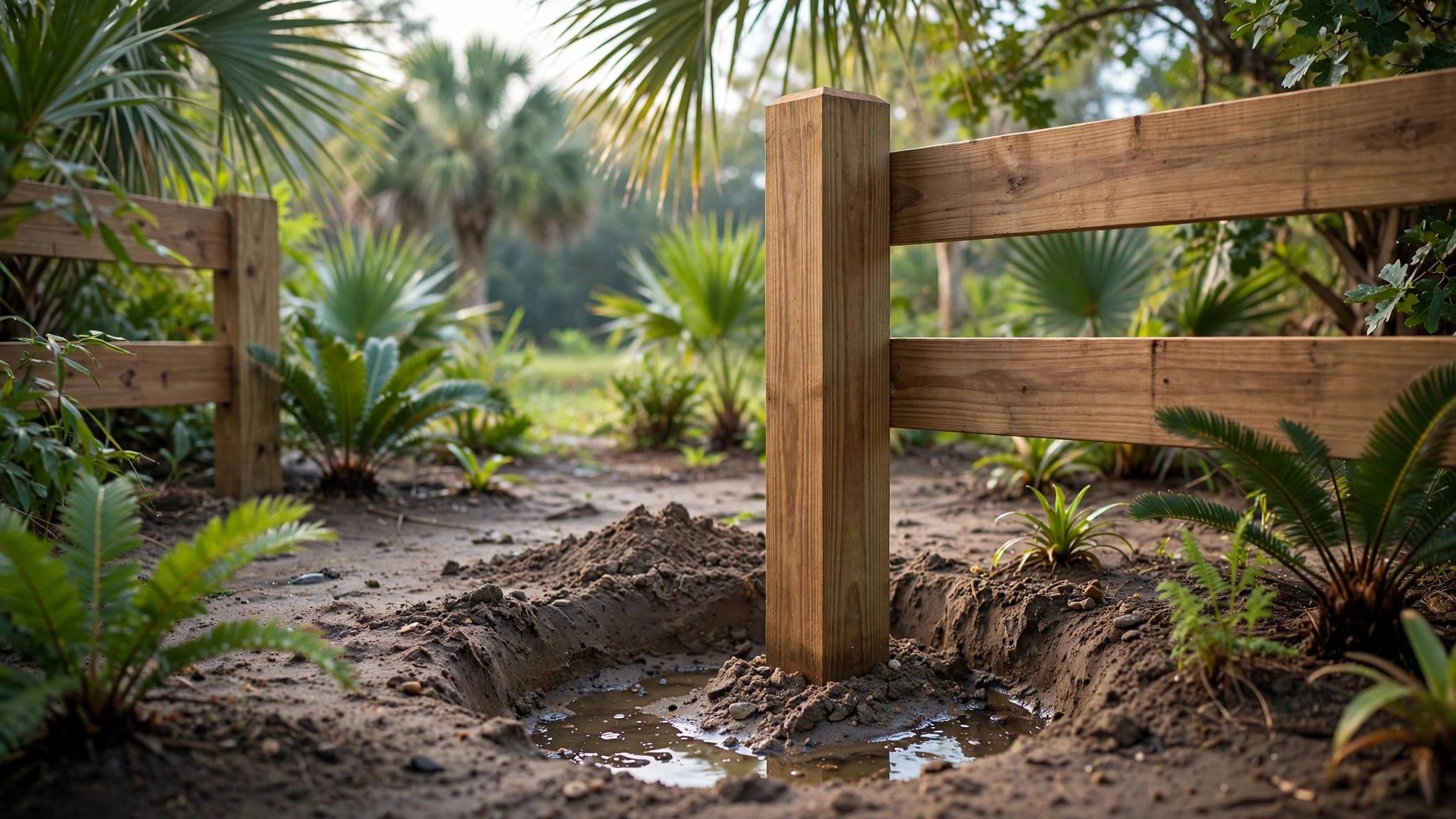
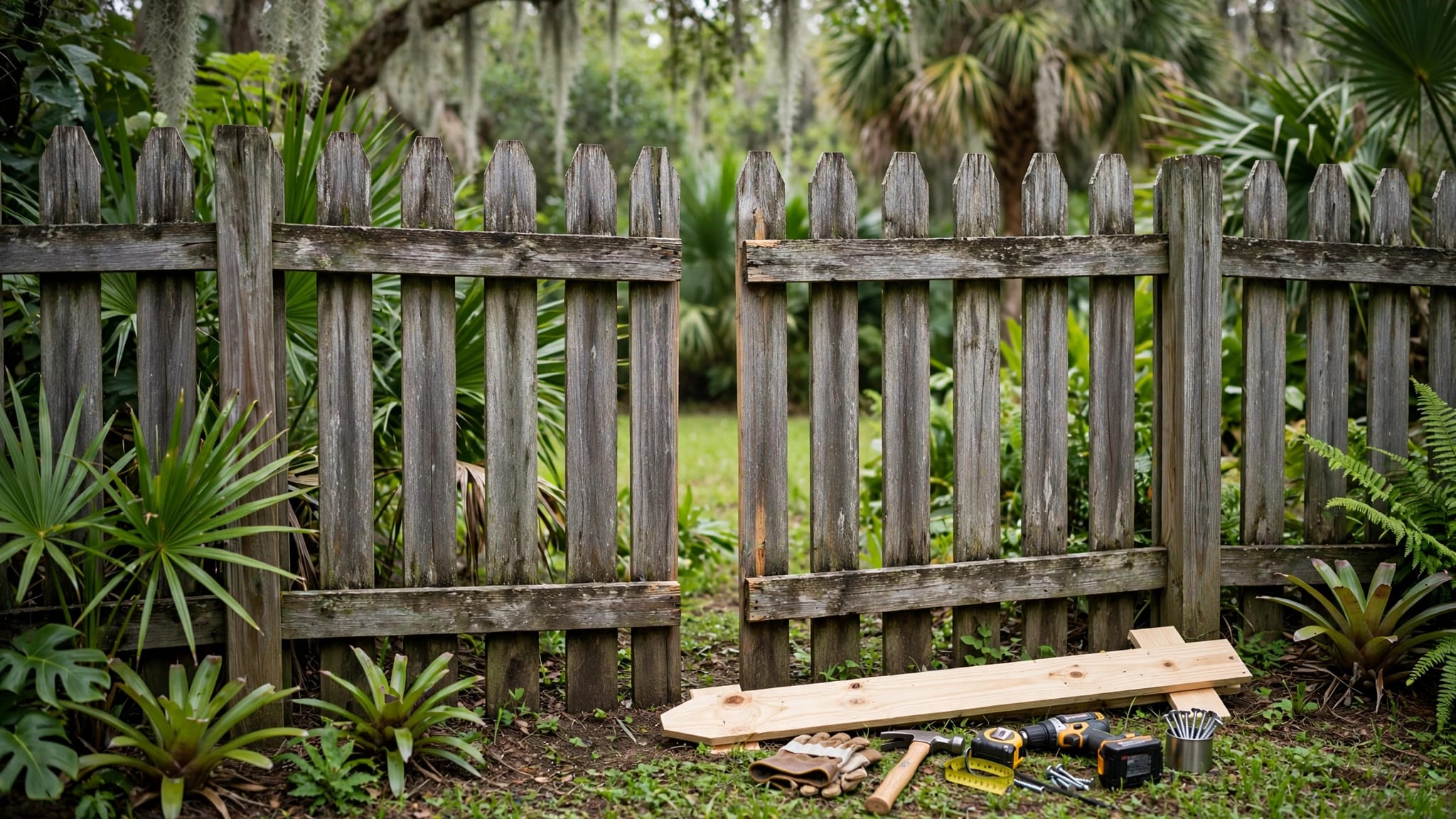
Wood offers a warm, natural appearance and makes custom screen shapes easy. In Florida's humidity, wood needs regular sealing and inspection for rot, swelling, and insect damage. Composite fencing provides a wood-style appearance with less routine maintenance, but the system still needs proper post support.
For a closer comparison, review this guide to low-maintenance fencing options in Southwest Florida.
Plan the gate and sightlines
A shower enclosure should provide enough room to enter, turn, and use the fixture without the gate hitting the shower or nearby landscaping. Outward-swinging gates may interfere with walkways, pool decks, or property lines.
The screen doesn't always need to surround every side. A privacy panel placed between the shower and the most visible neighboring window may provide better airflow and lower cost than a fully enclosed box.
Glass requires extra care. Under Florida code provisions, glazing beside a shower can be considered hazardous when its bottom exposed edge is less than 60 inches above a walking or standing surface. Ask about safety glazing before adding glass panels.
Setbacks, Wind, Drainage, and Utility Work
The fence location often creates more permitting questions than the fence material. Draw the proposed enclosure on a site plan before ordering materials.
Check setbacks and wind exposure
Local rules may control how close a fence can sit to a property line, drainage swale, canal, easement, sidewalk, or right-of-way. Corner lots can also have sight-triangle restrictions that limit fence placement near the street.
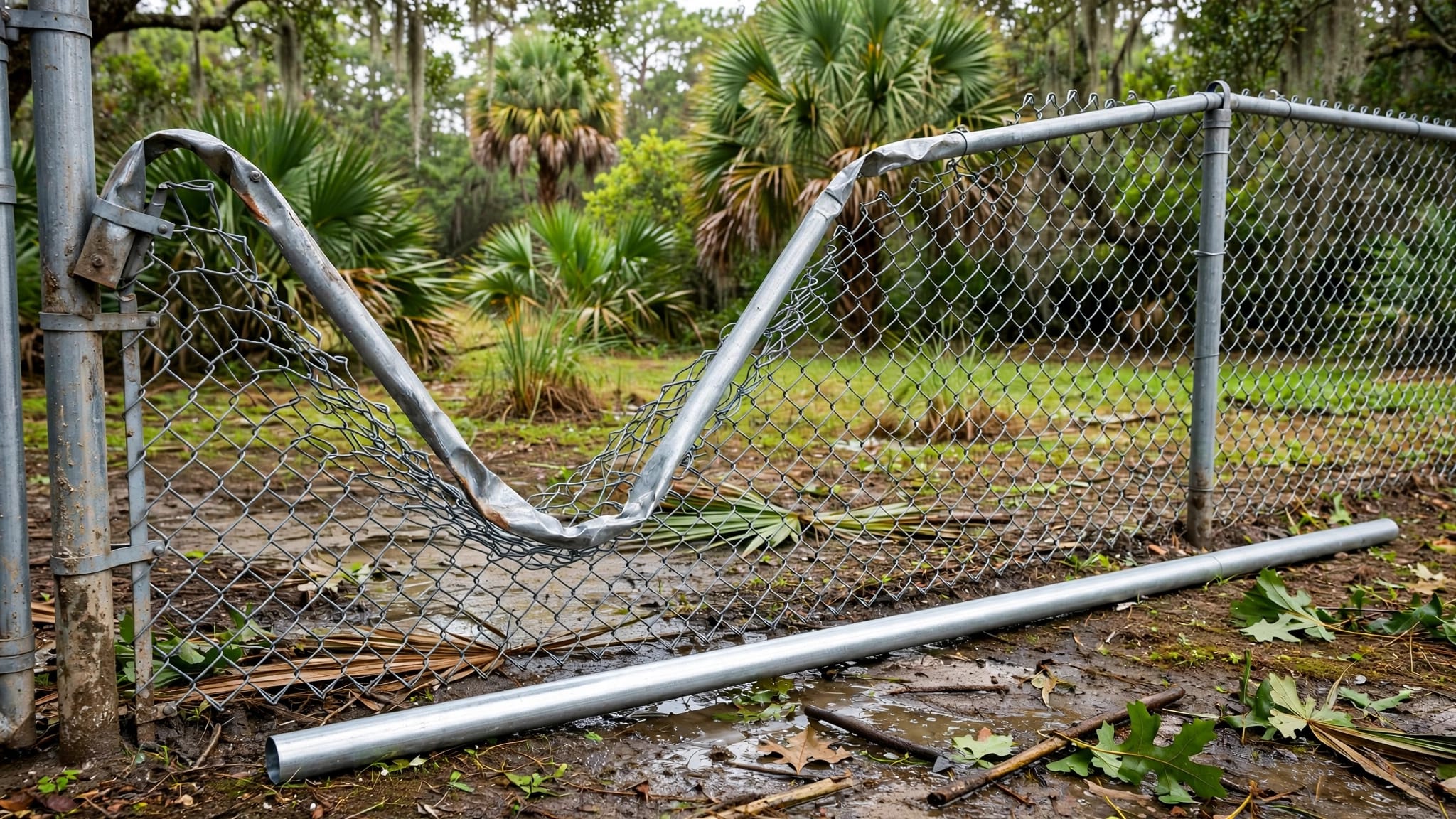
Wind deserves attention in coastal and open yards. Florida's code includes wind-load provisions for fences up to 6 feet, while taller, solid, or unusual assemblies may receive additional review. Lee County's application says walls over 6 feet require plans signed and sealed by a Florida-registered architect or engineer for required wind loads.
That doesn't mean every outdoor shower screen needs engineering. It does mean the design, post spacing, footing, hardware, and panel openings should match the exposure. Read about Florida fence engineering requirements before choosing a tall solid enclosure.
Protect drainage and flood performance
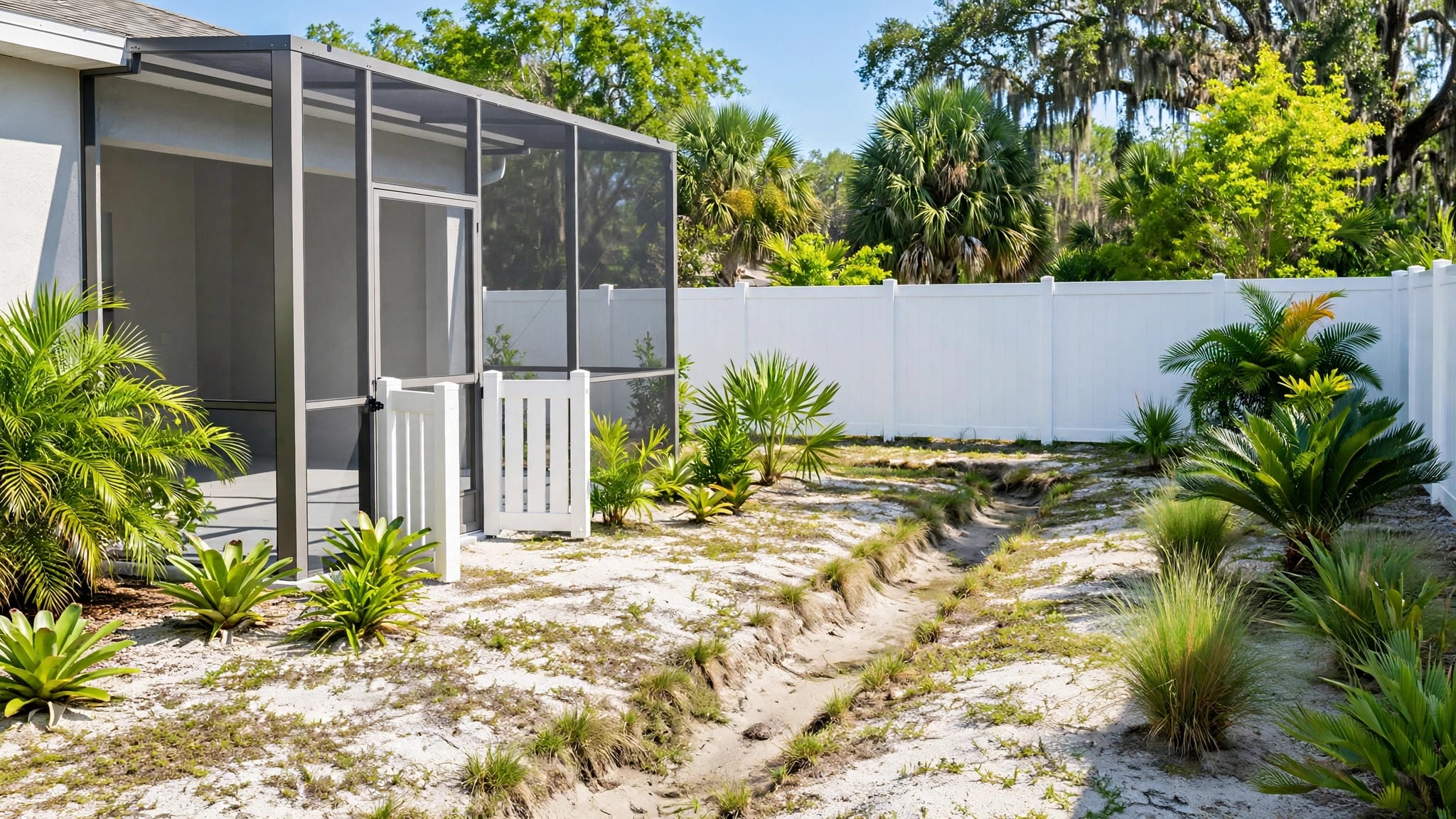
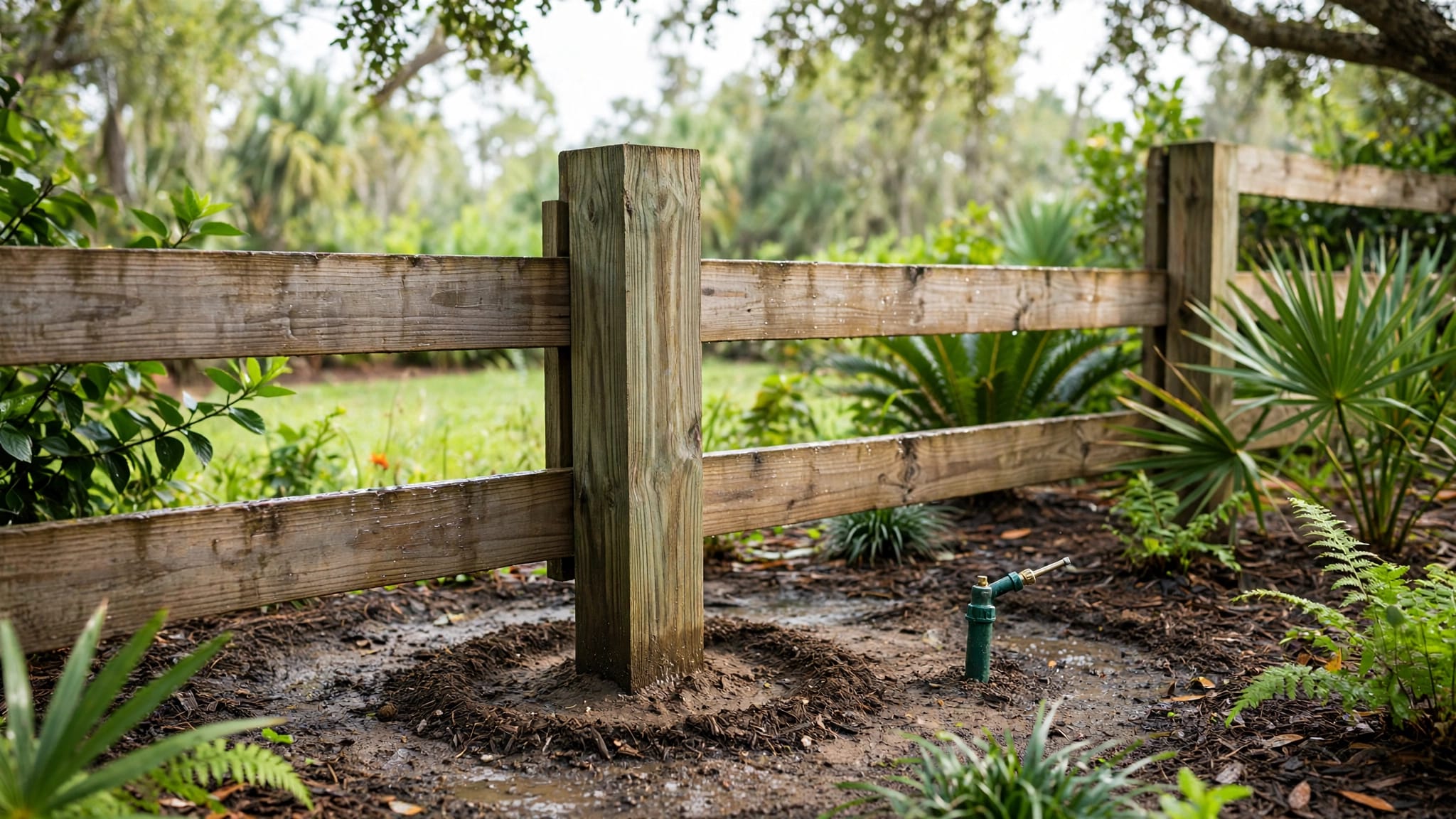
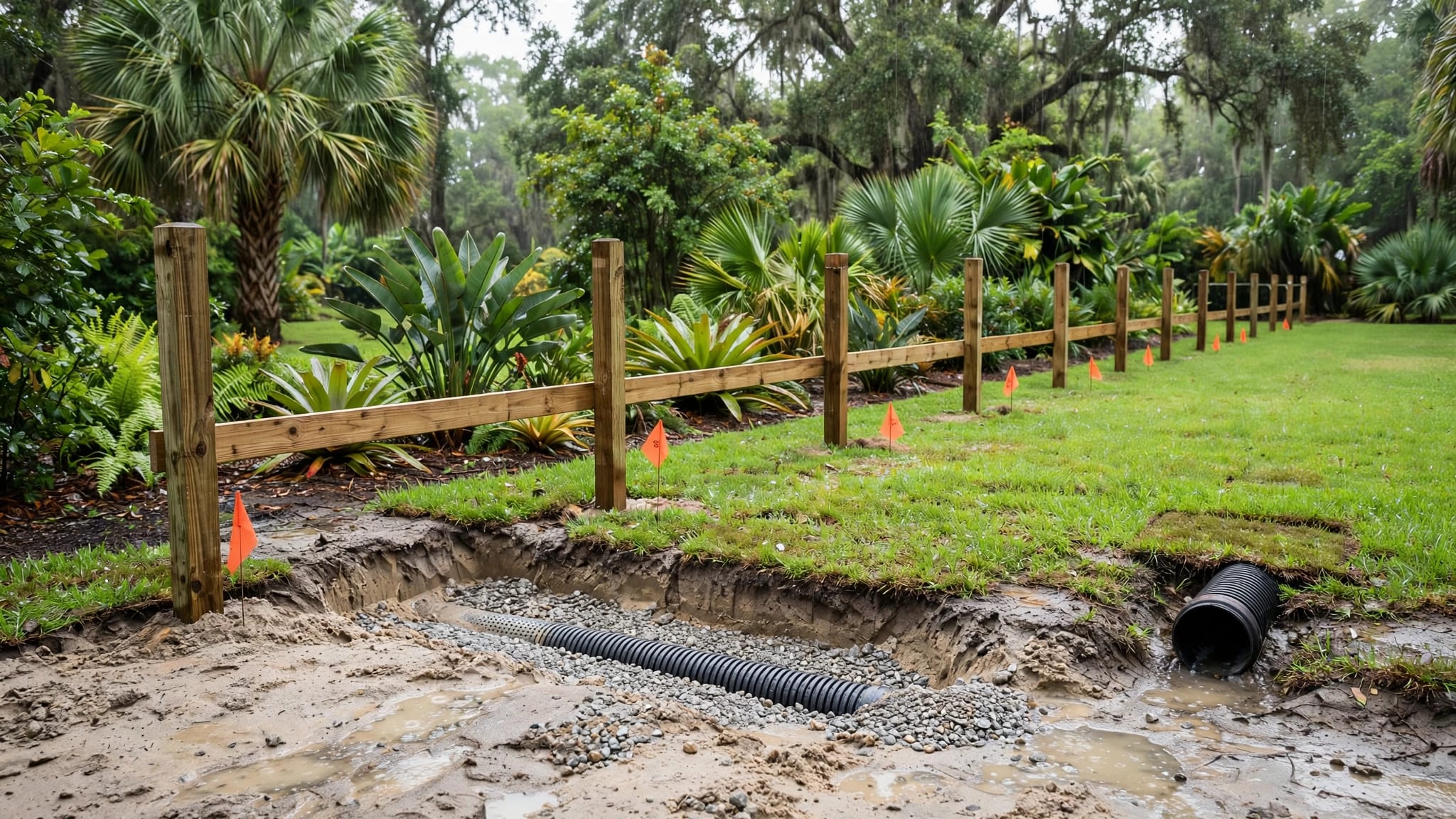
Shower water needs an approved discharge or drainage method. Directing wastewater across a neighbor's property, toward a foundation, or into an obstructed swale can create trouble.
Flood-zone properties may need additional review. A solid fence can catch leaves, branches, and floating debris during heavy rain or storm surge. Open or water-permeable designs may work better in some locations, but local floodplain officials decide what the property requires. Review Florida flood-zone fence rules before placing posts near a canal or drainage feature.
Treat plumbing and electricity as separate work
A plumber should review the water supply, shutoff, drain, and connection to the home's sewer or septic system. Local departments may require a plumbing permit even when the privacy fence qualifies for a building-permit exemption.
Electrical work deserves the same care. Lighting, switches, and receptacles near an outdoor shower must use equipment and protection approved for wet locations. A licensed electrician can determine whether GFCI protection, grounding, bonding, or a separate permit applies. Keep extension cords out of the shower area.
What to Confirm Before Installation
Before requesting an estimate, gather a survey or property sketch if you have one. Mark the home, pool, shed, septic components, easements, canals, swales, and the proposed shower enclosure.
Then confirm these points with your local department and HOA:
- The maximum fence or screen height for your zoning district.
- Required setbacks from property lines, streets, canals, and easements.
- Whether the property sits in a floodplain or drainage overlay.
- Whether the enclosure affects a pool barrier.
- Which permits apply to the fence, plumbing, electrical work, or roof.
- Whether the HOA controls material, color, gate style, or placement.
A local fence contractor can measure the site, recommend wind-friendly materials, and identify installation concerns. Still, the property owner should obtain the final approval from the correct Florida building or zoning office.
Final Thoughts
An outdoor shower fence can improve privacy and make a Florida backyard more comfortable. The safest choice usually combines a suitable material, secure posts, enough airflow, proper drainage, and a gate that fits the space.
Because requirements vary across Cape Coral, Fort Myers, Lee County, and other Southwest Florida jurisdictions, confirm the rules before construction begins. A few calls and a clear site plan can prevent a privacy project from becoming a permit, drainage, or HOA problem later.