Florida fence inspection: A practical guide for homebuyers
A fence can look solid during a sunny showing and still hide storm damage, soft posts, or a gate that won't latch. A careful Florida fence inspection helps you decide whether the fence is a useful feature or a repair bill waiting for the right buyer.
When you're buying in Southwest Florida, you also need to account for heavy rain, humidity, termites, salt air, flooding, and hurricane winds. A quick look at the panels isn't enough. You need to check the structure, hardware, safety, property boundaries, permits, and likely repair costs before making an offer.
What a Florida fence inspection should cover first
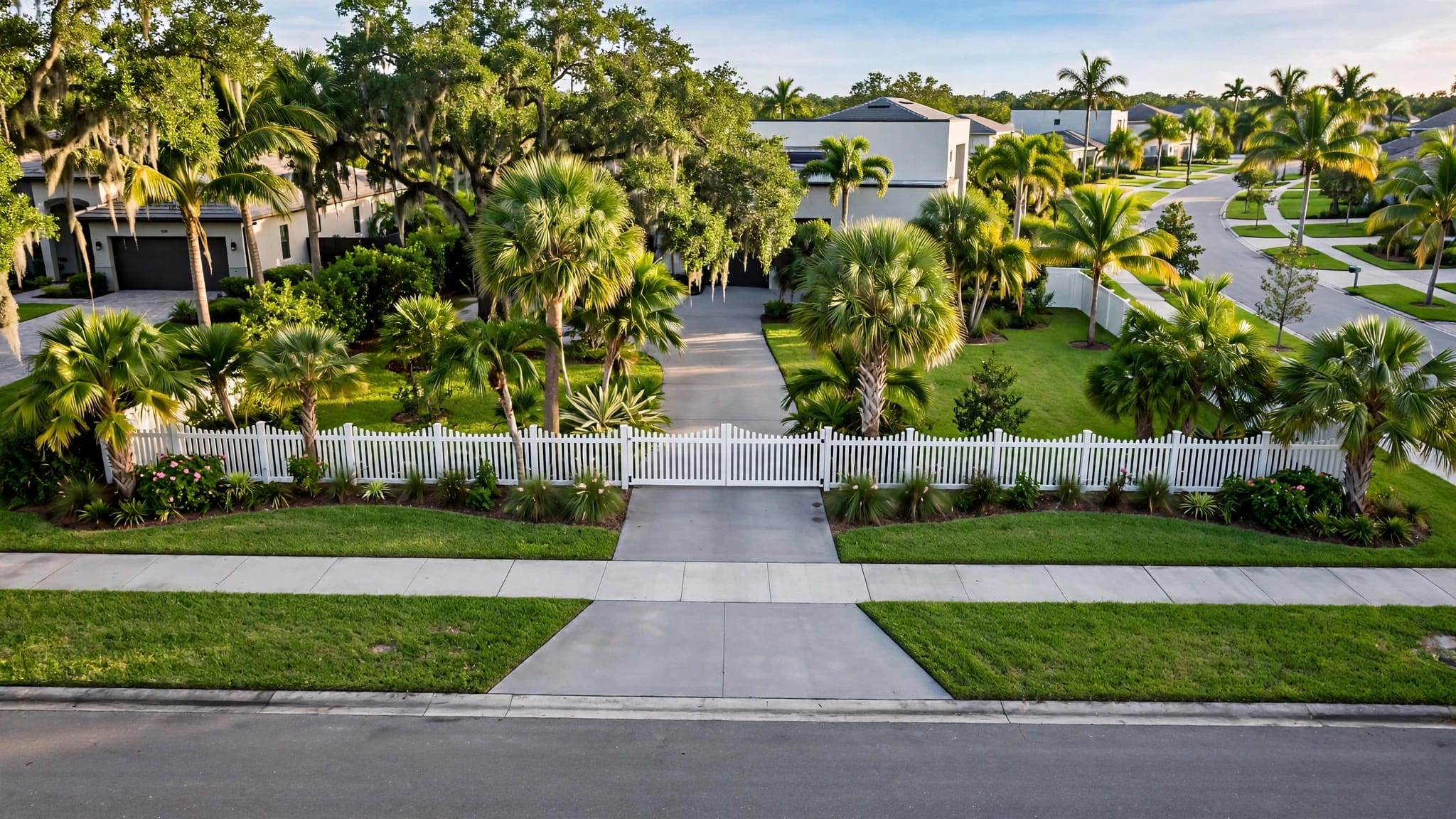
Start at the street and walk the entire property line. Don't inspect only the section visible from the driveway or backyard. Damage often appears behind landscaping, beside air-conditioning equipment, or along a side yard that receives less attention.
Walk the complete perimeter
Look for leaning sections, missing panels, open gaps, bent rails, cracked vinyl, and broken boards. Compare the fence line with the lot layout. A section that suddenly angles inward may have shifted, or it may have been installed inside the actual property boundary.
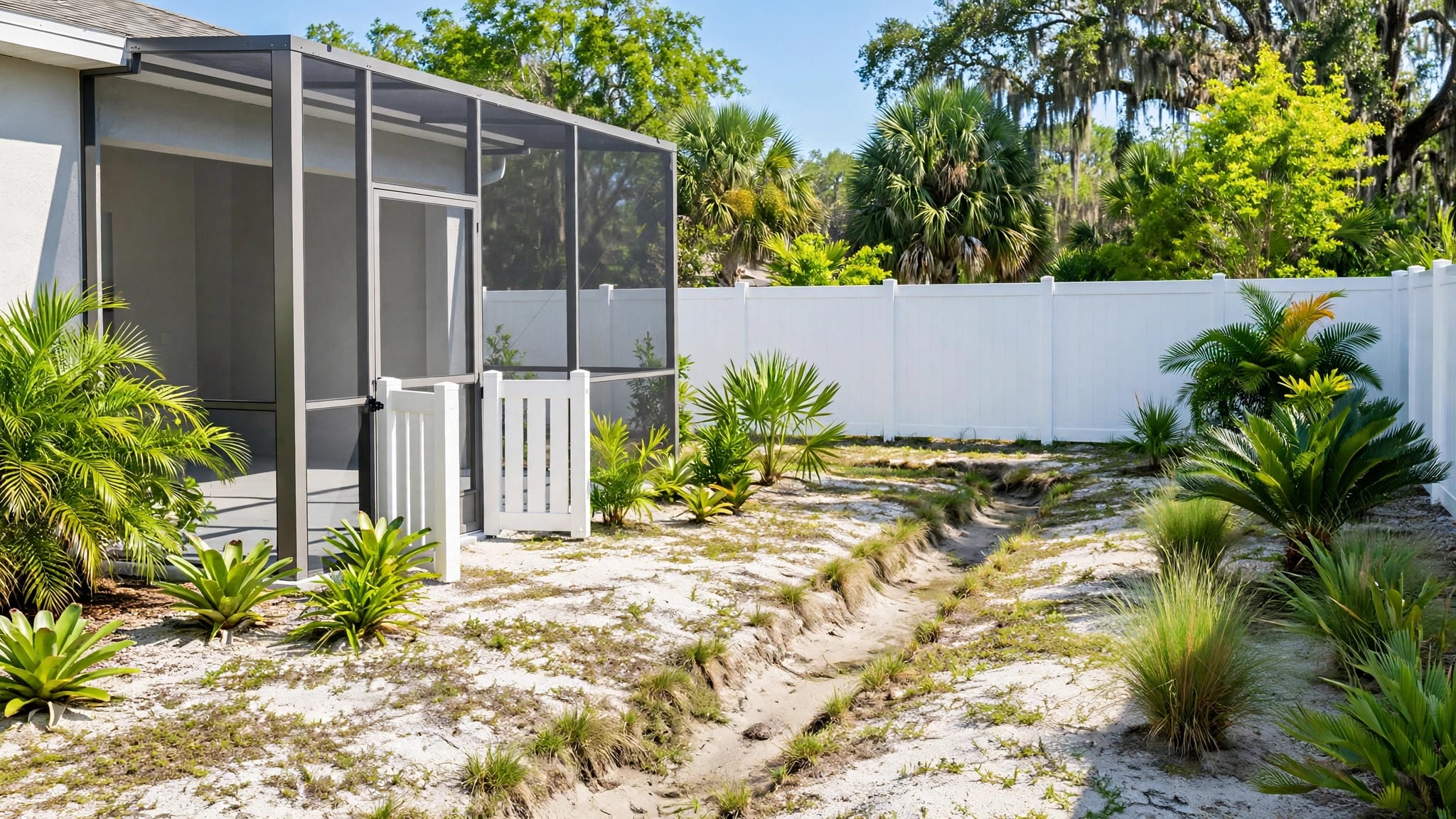
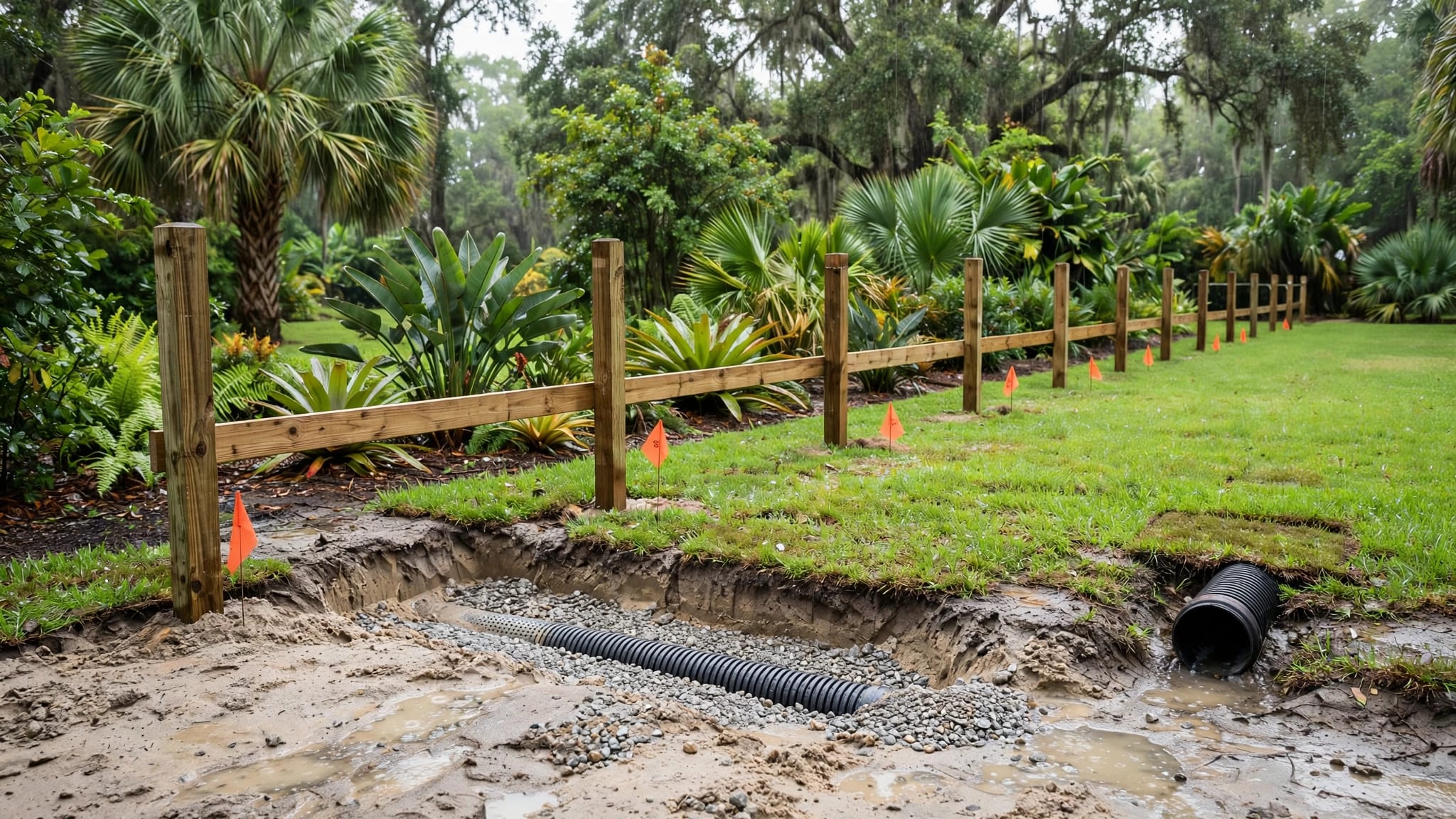
Check whether the fence blocks drainage swales, sits near a canal edge, or crosses an area where utility access may be required. Floodwater and runoff need room to move. A fence that traps water or collects debris can suffer faster damage after major storms.
Also look at the bottom edge. Soil contact can cause wood to decay, while lawn equipment can damage vinyl, aluminum, and chain link. Gaps under the fence may affect pets, privacy, security, or pool safety.
Check posts before judging the panels
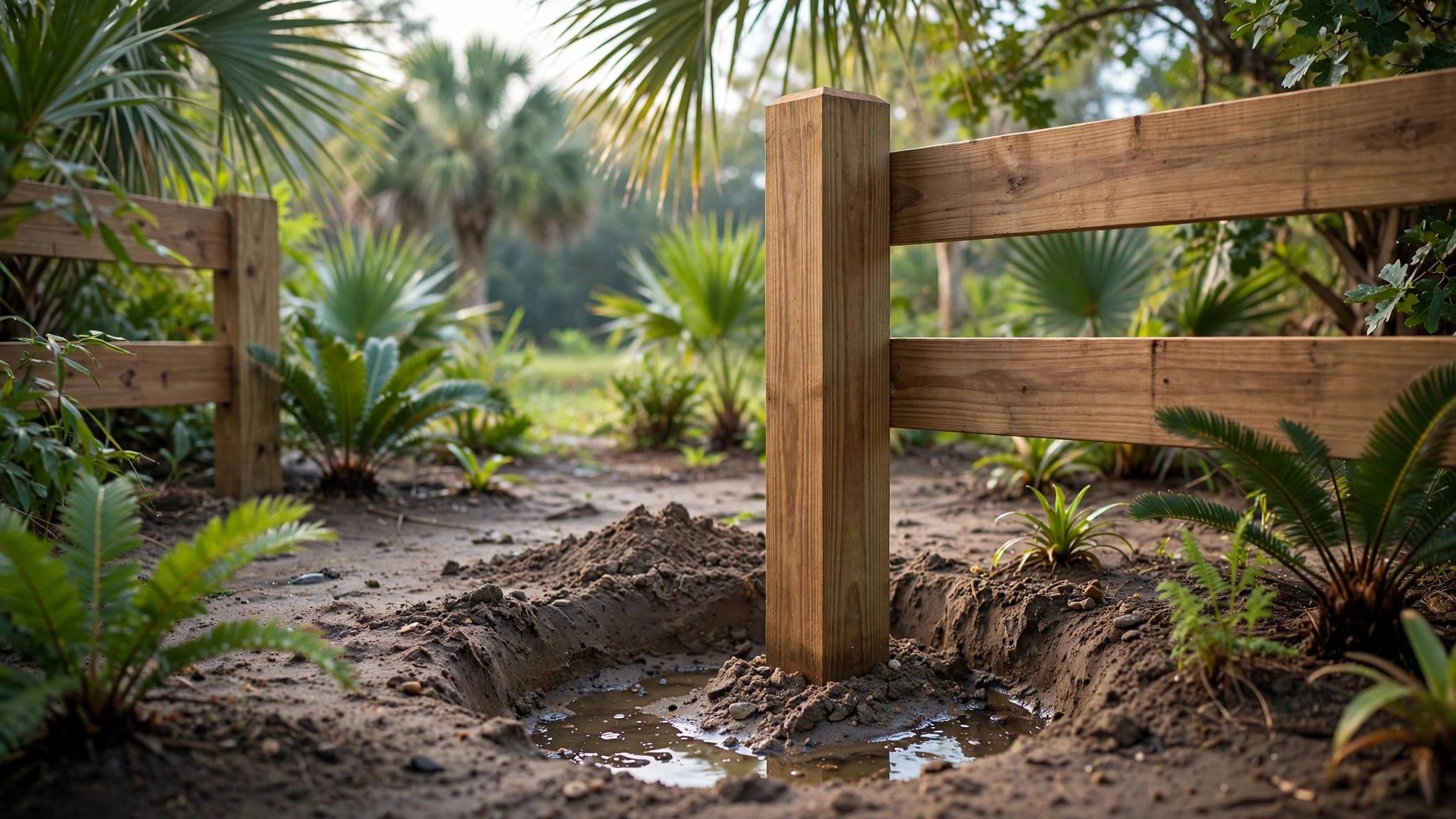
Posts carry the load, especially when hurricane winds push against a solid privacy fence. Place a hand on each accessible post and apply light pressure. Excessive movement, loose soil, cracked concrete, or a post that leans away from the line deserves further attention.
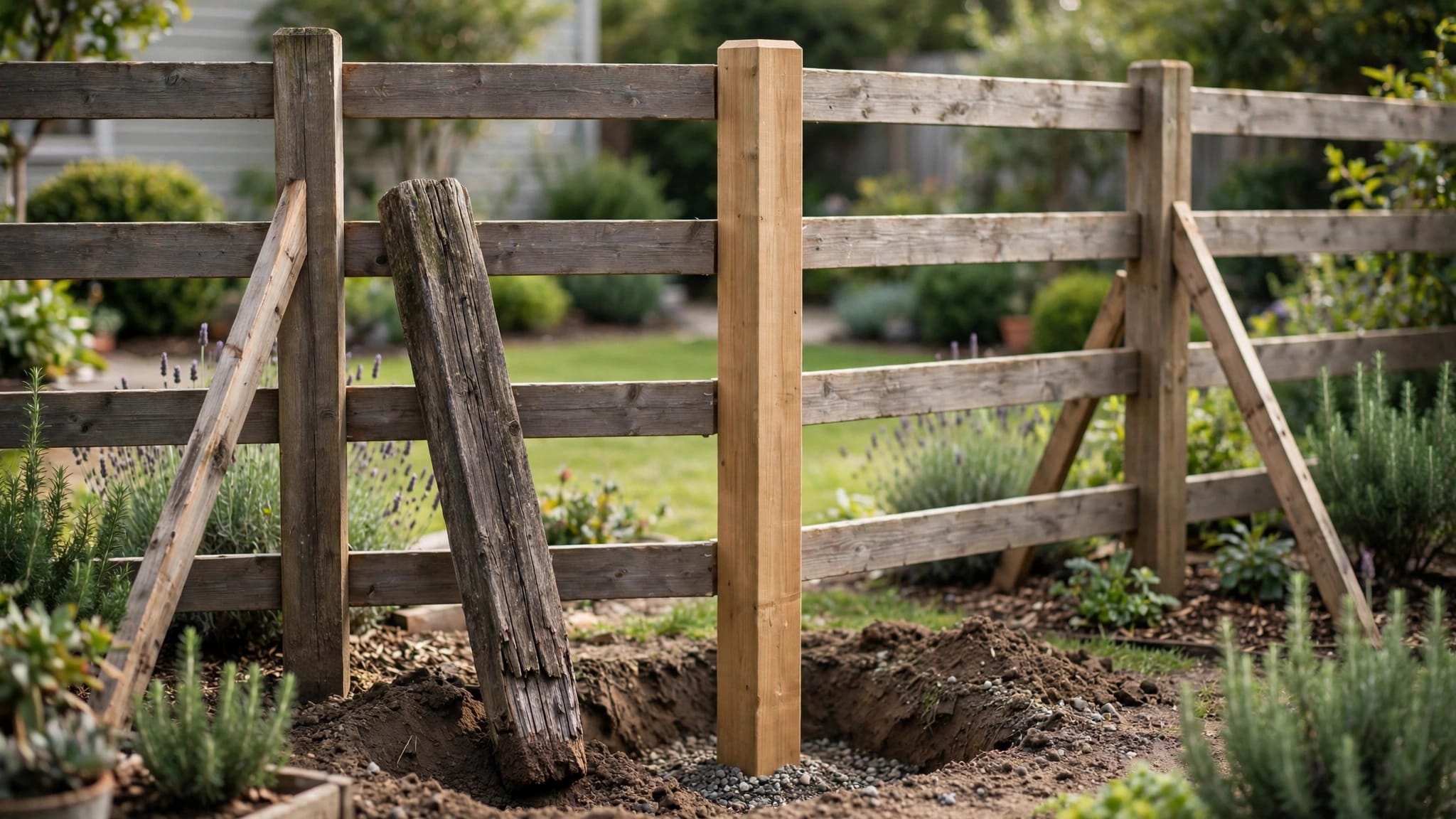
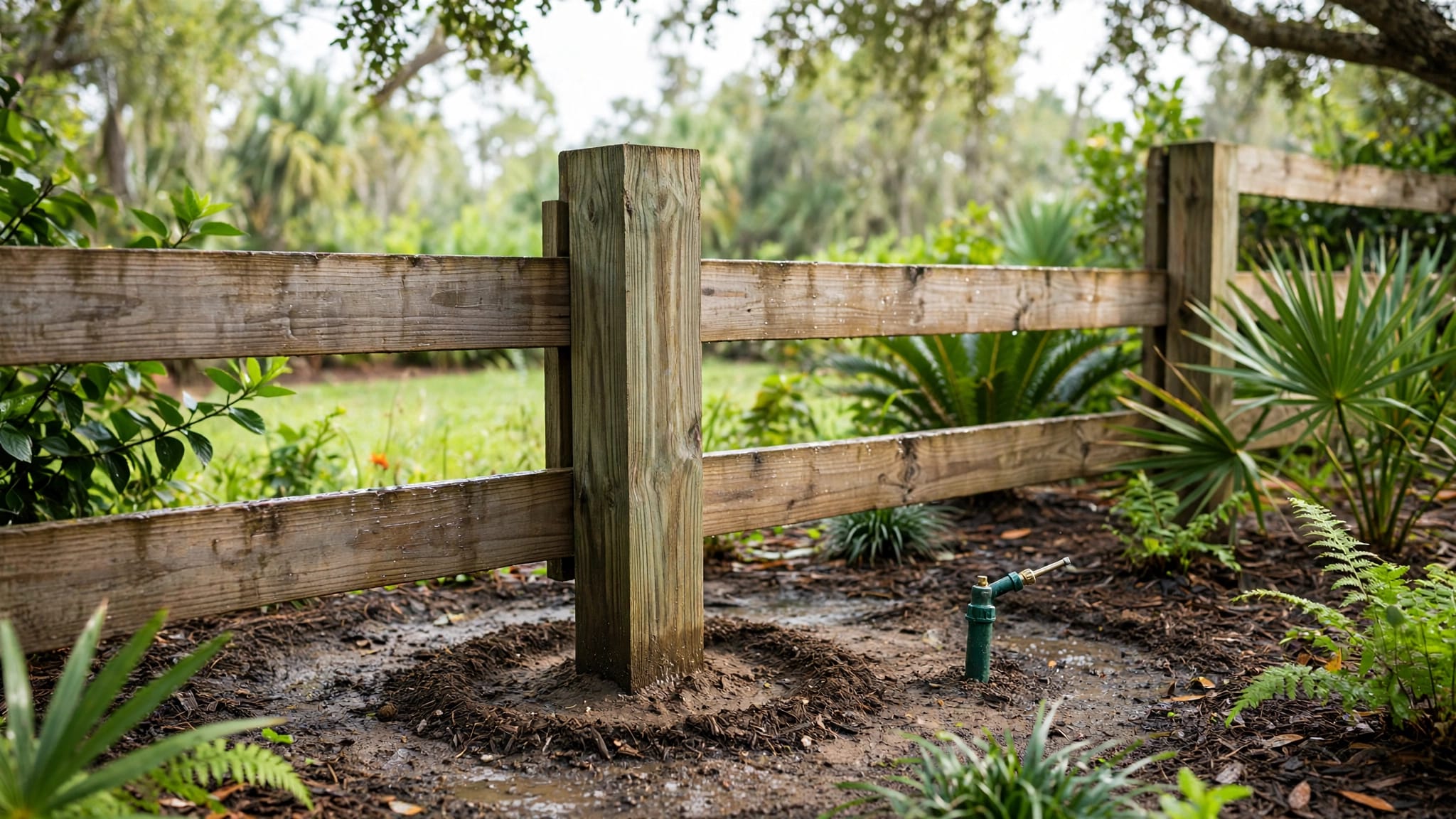
Inspect the areas where posts meet the ground. A post can look acceptable above grade while rotting below the surface. Watch for stained wood, soft spots, exposed fasteners, concrete cracking, and rust around metal brackets.
A complete Florida fence inspection should separate cosmetic problems from structural ones. Faded paint may be easy to address. A failing post, damaged footing, or loose gate support can require removal and replacement of an entire section.
Look for Florida weather, moisture, and pest damage
Florida's climate affects fences year-round. Sun, rain, heat, moisture, and wind place different demands on each material, so the inspection should look beyond appearance.
Trace water damage and flooding
Heavy rain can saturate the ground around posts and wash soil away from footings. Look for erosion, standing water, muddy areas, algae, mold, and dark staining. On properties near canals or low-lying areas, inspect whether water reaches the fence after ordinary storms.
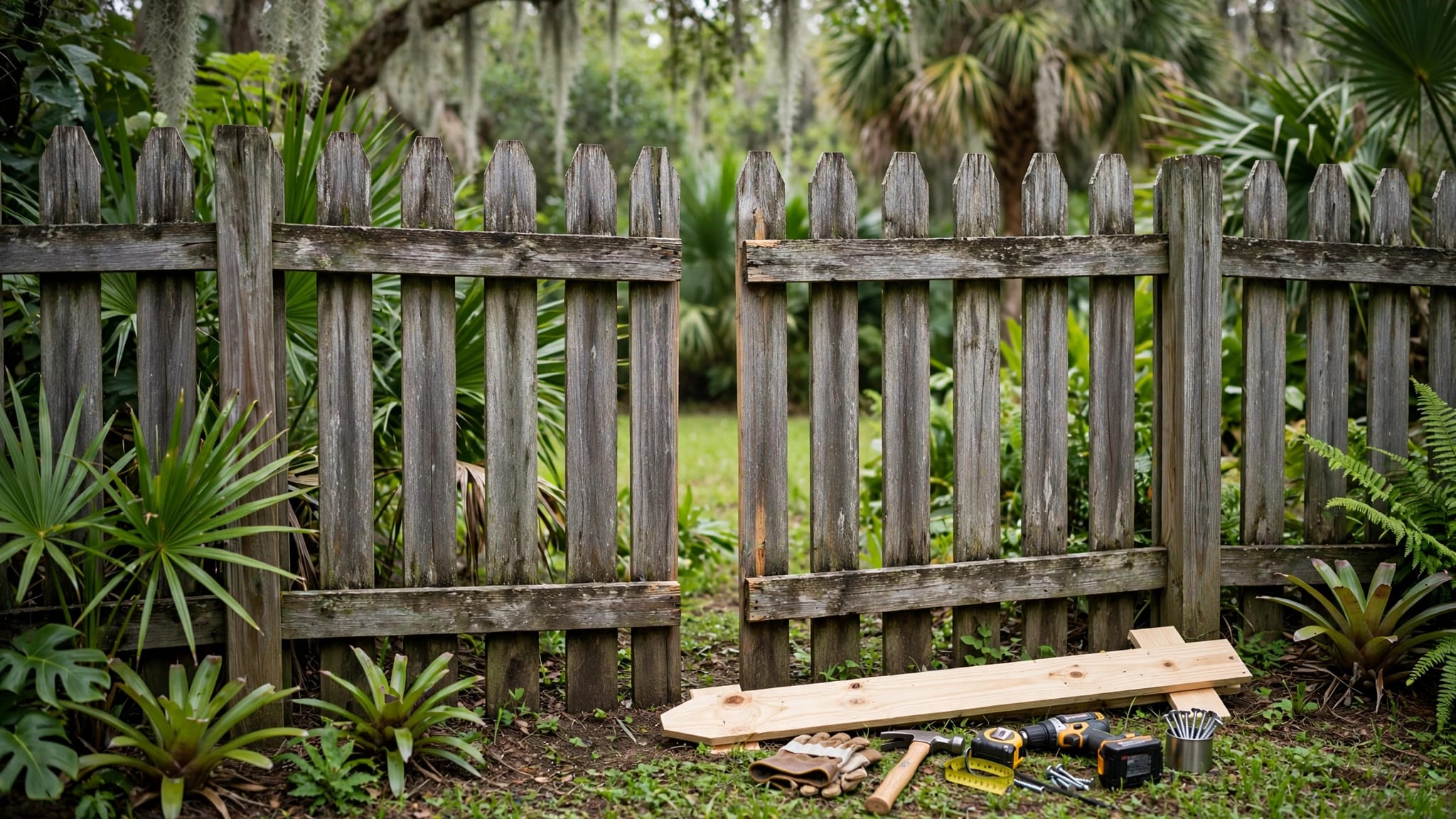
Wood fences need close attention around posts, bottom rails, and fastener points. Probe only where it is safe and appropriate, and avoid damaging sound material during a showing. Soft or crumbly wood can indicate decay that extends farther than the visible spot.
Water can also damage gates before it affects the rest of the fence. A gate that drags may have a shifted post, settled ground, swollen wood, or a sagging frame. Record the location of each problem instead of treating every issue as a simple adjustment.
Check for termites, rust, and salt-air corrosion
Termites can damage wood components that appear intact from a distance. Look for mud tubes, hollow-sounding wood, small holes, discarded wings, or areas that crumble under light contact. A pest professional should evaluate suspected infestation and determine whether damage extends beyond the fence.
Metal fencing needs a different inspection. Search for bubbling paint, orange rust, flaking coatings, corroded screws, and weakened welds. Salt air can speed corrosion near the Gulf, canals, and coastal neighborhoods, but inland fences can also rust when moisture remains on hardware.
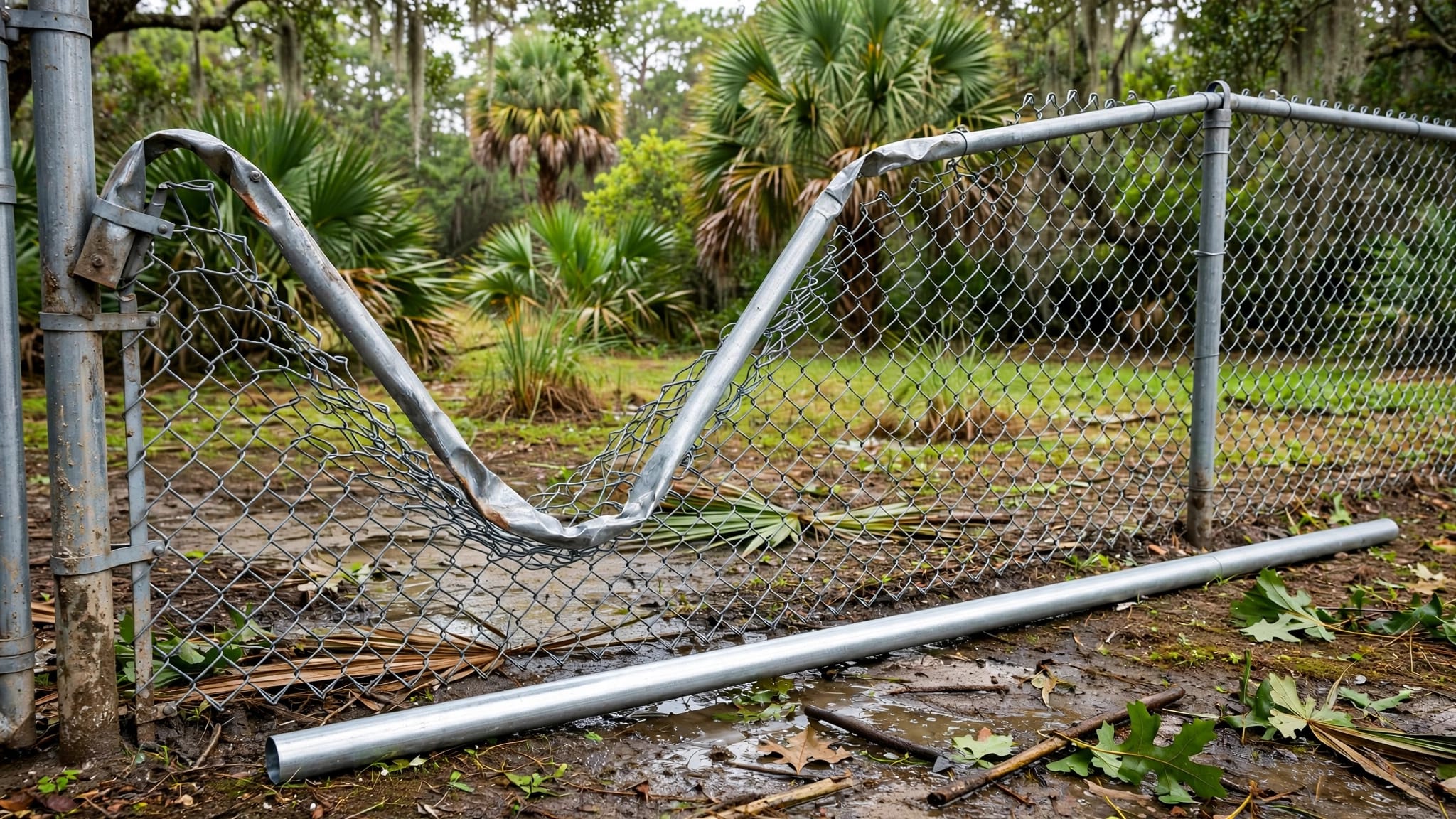
Aluminum generally resists rust better than steel, although its finish, posts, hinges, and connections still need review. Chain link may remain functional even when its coating has worn away. Check the mesh, tension wire, terminal posts, and gate frame for sharp or loose sections.
A fence's material matters less than its condition, installation, and exposure. The same fence type can perform differently on a shaded inland lot and a wet coastal property.
Test gates, latches, and pool barriers
A fence can provide privacy while failing at its most important access points. Open every gate slowly, then close it without forcing the hinges or latch. The movement should be controlled, and the gate should align with its receiving post.
Inspect gate operation and security
Check whether the gate drags on concrete, pavement, grass, or soil. Look at hinge screws, latch hardware, drop rods, wheels, rollers, and the post supporting the gate. Loose hardware may be a small repair, but a moving gate post can point to a deeper footing problem.
Consider how the gate works for daily use. Can children open it easily? Does it swing into a walkway? Does the latch remain secure during wind? A gate that will not close reliably can affect pets, backyard security, and access to equipment.
For drive gates, inspect the frame, wheels, track, stops, and operator if the property has an automatic system. Ask for any available maintenance records, remotes, and information about known failures. Don't assume an automatic gate is part of the home purchase unless the contract includes it.
Treat a pool fence as a separate safety issue
A fence near a pool or spa may need to meet requirements that don't apply to an ordinary yard fence. Barrier height, openings, gate swing, self-closing hardware, self-latching hardware, and the relationship between the house and pool area can affect compliance.
A fence that looks fine for privacy may not work as a pool barrier. Check every access point, including doors from the house, gates to side yards, removable sections, and areas where landscaping or furniture could affect the barrier.
Requirements can vary by location and project details. Buyers in Cape Coral can review the Cape Coral pool fence requirements, then confirm the current rules with the local building department or a qualified pool-safety professional.
Confirm property lines, permits, and HOA rules
A fence inspection is physical, but the paperwork matters just as much. A well-built fence in the wrong location can create a dispute, delay closing, or require expensive relocation.
Verify where the fence is allowed to sit
Don't use a neighbor's fence, sidewalk, driveway, or landscaping as proof of the boundary. Fences may sit inside a lot, cross an easement, or follow an older line that doesn't match current records.
Review the seller's survey, plat, title documents, and any recorded easements. A plat map can show the subdivision layout, but it may not confirm the exact location of improvements on the ground. When the line is unclear, a licensed surveyor can locate property corners and provide the information needed for a reliable decision.
For a closer look at pins, bearings, easements, and setbacks, use this guide to read a Florida property survey.
Check permits and association approval
Ask the seller for fence permits, final inspection records, invoices, and contractor information. Missing paperwork doesn't automatically prove the fence is defective, but it gives you a reason to ask the local building office whether the installation was approved.
Local requirements can differ between a city and unincorporated county property. Height, setbacks, corner visibility, easements, fence placement, and pool barriers may receive separate review. Your Florida fence inspection should include a call to the appropriate city or county office, not only a visual check.
If the home belongs to an HOA, request the association's current rules and written approval records. An HOA may regulate material, color, height, style, gate placement, or the distance from a street. Confirm the requirements before assuming you can replace an existing fence with the same design.
You can also review local guidance about Florida fence permit survey requirements before deciding whether a survey or site plan may be necessary.
Use fence defects during the buying decision
A damaged fence doesn't always justify walking away from a home. The right response depends on the defect, the safety risk, the repair scope, and your budget after closing.
Separate minor maintenance from major repairs
Minor issues may include loose screws, a misaligned latch, a small damaged panel, or vegetation pressing against the fence. Larger concerns include multiple leaning posts, widespread rot, storm-bent sections, corrosion at structural connections, or a pool gate that doesn't close and latch correctly.
Ask a fence contractor for a written evaluation when the repair scope isn't clear. The contractor should identify which sections can be repaired, which posts need replacement, whether materials can be matched, and whether a full replacement is more practical.
Material availability can affect the result. An older vinyl profile, discontinued color, or weathered wood style may be difficult to match. A patch that looks acceptable on paper may stand out after installation.
Build the cost into your offer
Get repair estimates before waiving inspection contingencies or accepting a seller credit. Include related costs such as permit work, survey services, debris removal, post replacement, gate hardware, and landscape changes when they apply.
Also ask whether the fence affects any immediate safety concern. A loose section beside a pool, a sharp broken wire, or a gate that opens toward a public sidewalk deserves faster attention than faded stain.
Your insurance agent can explain whether the fence condition affects underwriting questions or coverage under the policy you plan to purchase. Don't assume the seller's insurance treatment will match your future policy.
Know when to call a fence contractor
A general home inspector can identify visible damage, but the report may not include exact property-line verification, permit history, material matching, or detailed pool-barrier evaluation. A fence contractor can inspect construction details and estimate the work needed to restore the fence.
Ask for a focused inspection
Share the seller disclosure, survey, photos, and any permit records available. Ask the contractor to assess:
- Post stability and footing condition.
- Panel, rail, mesh, and fastener damage.
- Gate alignment, hinges, latches, and operators.
- Signs of rot, termites, rust, or corrosion.
- Drainage, flooding, and difficult access areas.
- Pool-barrier concerns, when a pool is present.
- Repair options compared with full replacement.
A contractor should explain what can be seen during the visit and what needs another professional. For example, a surveyor handles boundary questions, a pest professional evaluates termites, and the local authority confirms permits and code requirements.
Keep the report before closing
Save photos, measurements, estimates, and written answers in your transaction file. If the seller agrees to repair the fence, define the work clearly. Identify the affected sections, material, hardware, finish, gate function, and who will obtain any required approval.
A final walkthrough should confirm that the agreed work is complete. Check the same posts, panels, gates, and pool access points you inspected earlier. If the seller offers money instead of repairs, compare that amount with the written estimates and your available repair budget.
Conclusion
A fence can add privacy and security to a Florida home, but it can also hide costs after closing. Walk the full perimeter, test every gate, look for moisture and pest damage, and check the fence against surveys, permits, HOA rules, and pool-safety requirements.
The strongest buying decision comes from separating appearance from condition. A thorough Florida fence inspection gives you the facts to request repairs, negotiate fairly, or budget for replacement before the fence becomes your responsibility.