Can You Install a Fence Around Solar Panels in Florida?
Yes, many Florida homeowners can install a fence around solar panels , but approval of the solar system doesn't automatically approve the fence. Ground-mounted panels raise different questions than rooftop arrays, especially where height, setbacks, shading, service access, and storm exposure are involved.
For homeowners in Cape Coral and across Southwest Florida, requirements can vary by city, county, utility, HOA, deed restrictions, and installation type. Check the site before ordering materials, then plan the fence and solar equipment together.
Can You Install a Fence Around Solar Panels in Florida?
Rooftop and ground-mounted panels follow different concerns
Rooftop solar panels usually don't need a perimeter fence. The review may focus on roof access, electrical equipment, fire access, HOA approval, and whether a new fence could shade the panels.
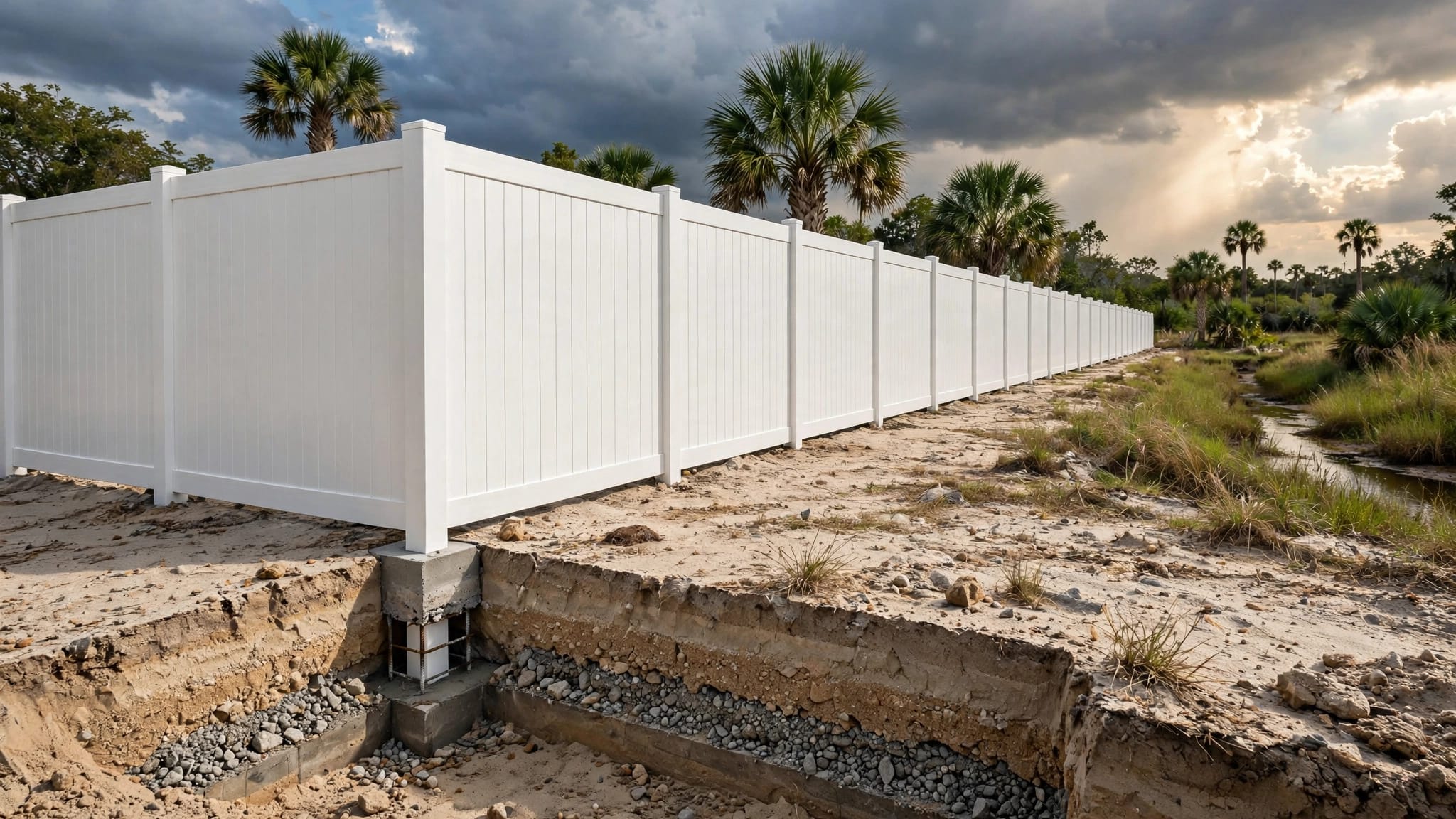
Ground-mounted systems are different. A fence may provide security or screen equipment, but posts and panels must leave room for maintenance, wiring, drainage, and emergency access. A tall fence on the sun-facing side can also cast shade and reduce production at certain times.
Solar approval doesn't automatically approve the fence
A solar permit generally covers the solar installation, not a later fence project. The fence may need its own zoning or building review, depending on its height, location, materials, and relationship to property lines.
A fence that looks acceptable from the yard can still cross an easement, block a drainage route, or sit too close to a street. Review Southwest Florida fence permit requirements before construction begins.
What local officials may review
Permits, setbacks, and site plans
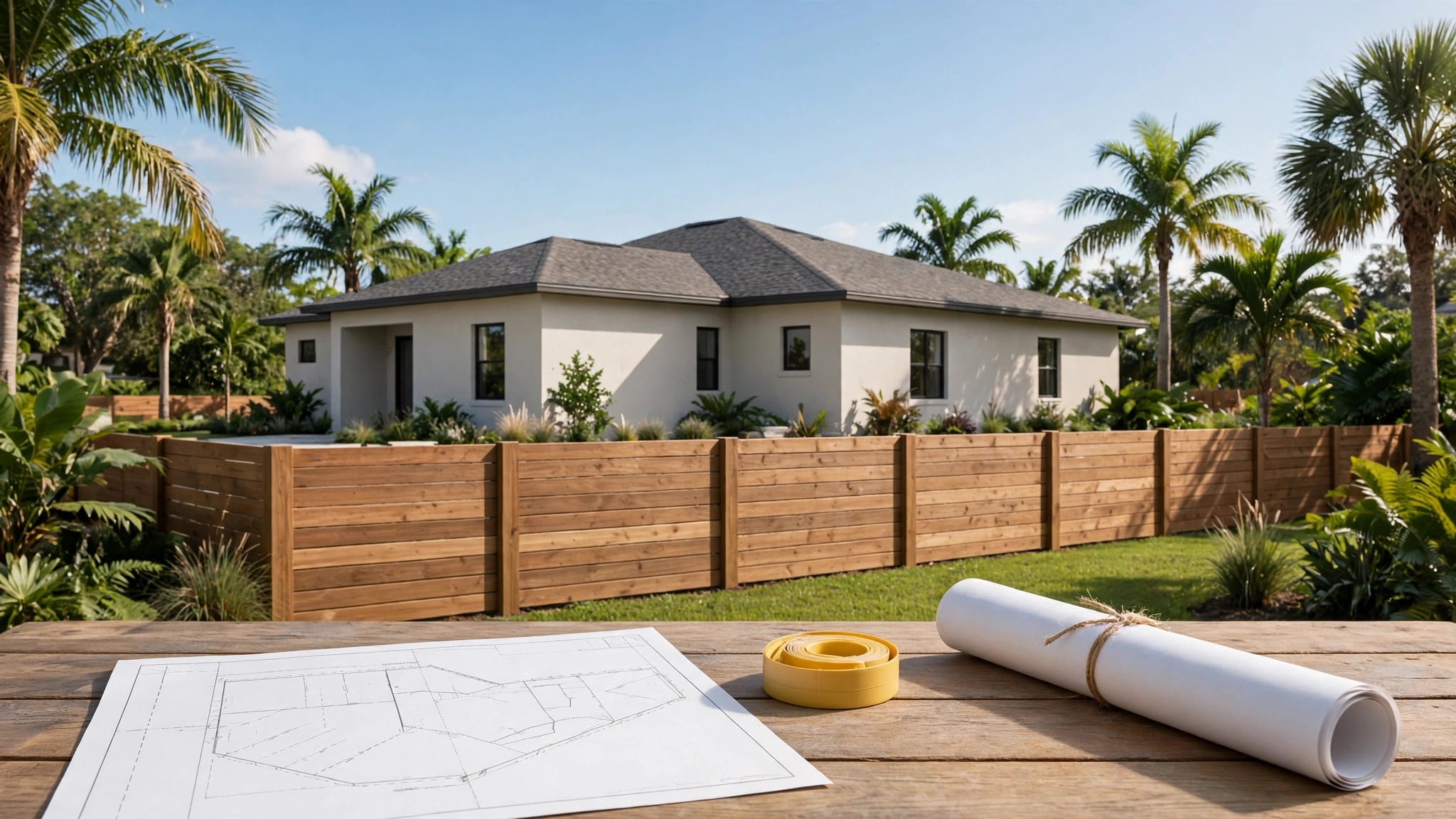
Florida doesn't have one statewide residential rule for fencing around solar equipment. Local officials may ask for a site plan showing property lines, buildings, easements, nearby roads or water, the panel location, gates, and the proposed fence height.
Lee County's application materials illustrate why a clear drawing matters. In unincorporated areas, fence rules can also differ near streets, waterways, drainage features, and rights-of-way. See the current Lee County fence permit rules for local examples.
Access, utilities, and shading
The fence must not block an inverter, disconnect, meter, battery, or other equipment that technicians need to reach. Your solar installer or utility may also have access requirements that don't appear in ordinary fence guidelines.
Before digging, call Sunshine 811 so underground utility lines can be located. Confirm that gates open freely and that service crews can reach the panels without removing a fence section. Also check whether the fence will shade the array during important production hours.
Southwest Florida examples show why location matters
Rules change across Florida, even when two properties have similar solar systems. These examples are not statewide requirements:
| Location | Example of a local requirement |
|---|---|
| Lee County | Certain fences near streets or easements may be limited to 3 feet, or 4 feet with open mesh. Side and rear fencing may be limited to 6 feet. |
| Collier County | Ground-mounted solar applications may require property lines, setbacks, easements, water bodies, and existing or proposed structures on the site plan. |
| Hillsborough County | Ground-mounted solar panels are limited to 14 feet, with side and rear setback rules that can include a 15-foot minimum. |
| Lake Wales | Solar generation facilities may require a 50-foot property-line setback and 6- to 8-foot security fencing or walls. |
These figures apply to specific jurisdictions and project types. They shouldn't be used as a shortcut for a Cape Coral, Fort Myers, Sarasota, Charlotte County, or Collier County property. Confirm the address and zoning district before finalizing the design.
Choose a fence that fits the array and Florida weather
Open designs can improve airflow
A solid privacy fence can catch more wind than an open picket or aluminum design. It can also create more shade when installed close to ground-mounted panels.
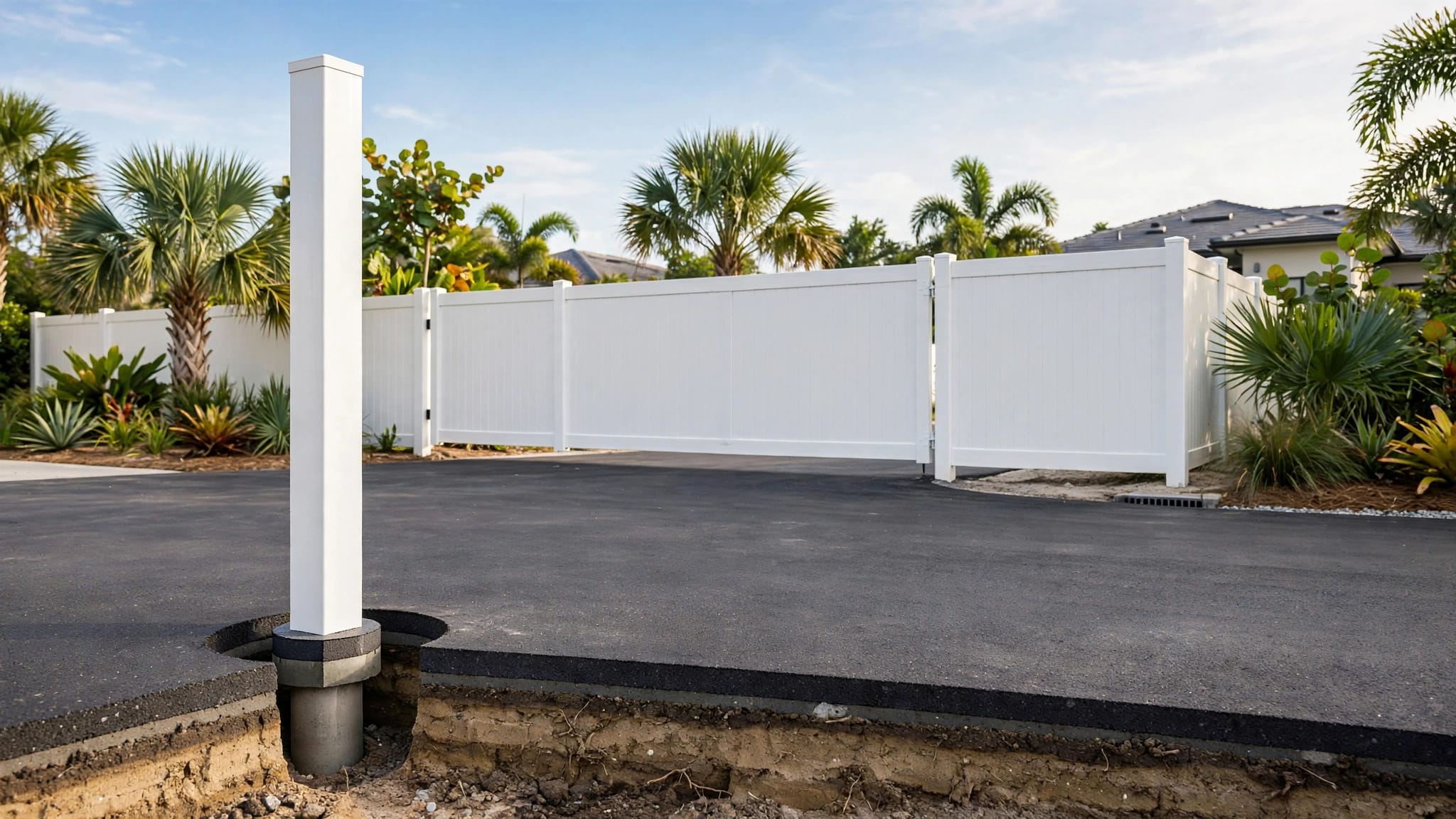
For many Southwest Florida properties, aluminum, open mesh, or a semi-private design offers a better balance between screening and airflow. Review these Florida privacy fence designs when comparing privacy, ventilation, and storm exposure.
Gates need to support maintenance access
A gate should provide practical access to the panels, inverter, battery, and wiring. It also needs enough clearance to swing without hitting equipment, landscaping, a wall, or uneven ground.
If the fence will also surround a swimming pool, the pool portion must meet separate barrier and gate requirements. A standard equipment enclosure doesn't automatically qualify as a pool barrier.
A practical pre-installation checklist
Before installing a fence around solar panels:
- Identify the governing city or county and ask whether the fence needs a permit or site-plan review.
- Ask the solar installer and utility about equipment clearances, access, disconnects, and possible shading.
- Check the survey for property lines, easements, drainage areas, canals, swales, and street visibility zones.
- Obtain written HOA or deed-restriction approval for the height, color, material, and gate design.
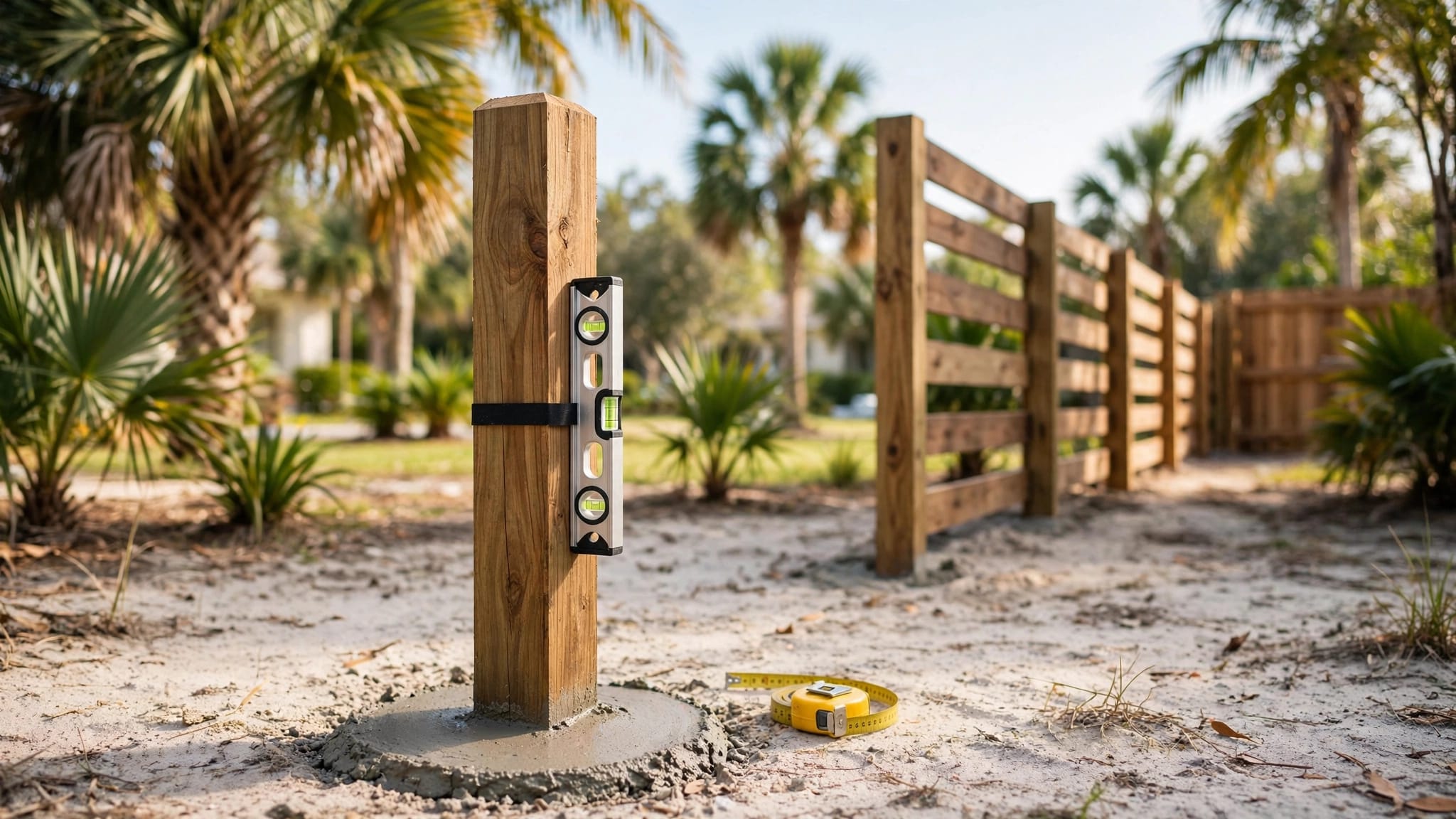
- Mark underground utilities through Sunshine 811 before post holes are dug.
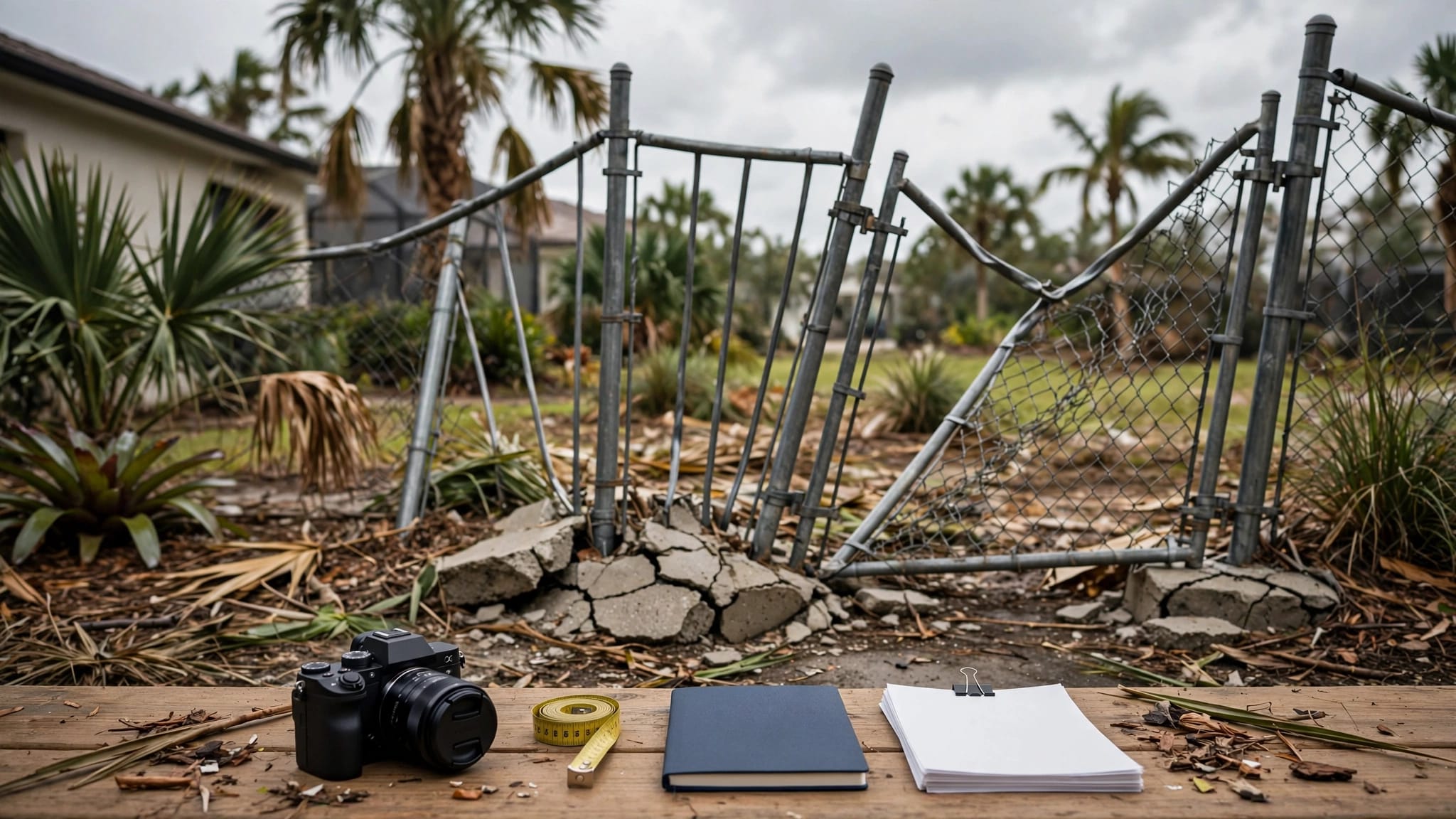
- Keep the approved plans, survey, permit, inspection record, product details, and contractor agreement after completion.
This sequence can prevent a fence from interfering with the solar system or creating a permit problem later.
Key Takeaways
- Florida has no single residential rule for a fence around solar panels.
- Ground-mounted arrays usually require more planning than rooftop panels.
- Local setbacks, fence heights, easements, utilities, shading, and access all matter.
- Lee County, Collier County, Hillsborough County, and Lake Wales use different requirements.
- HOA approval may be required even when a local permit isn't.
- Confirm the layout with the building department and solar installer before buying materials.
FAQ
Is a fence required around ground-mounted solar panels?
Not for every residential system. Some local rules require security fencing around larger solar facilities, while residential installations may have different standards. Ask the local zoning office whether the project type requires a barrier.
Can a fence reduce solar production?
Yes. A tall fence placed close to the panels can shade them during part of the day. Ask the solar installer to review the fence height, distance, and sun-facing side before installation.
Do rooftop solar panels need a fence?
Usually, a perimeter fence isn't needed around rooftop panels. However, a new yard fence still must avoid blocking equipment access, utility components, roof work areas, or required fire access.
What is the best fence material around solar equipment?
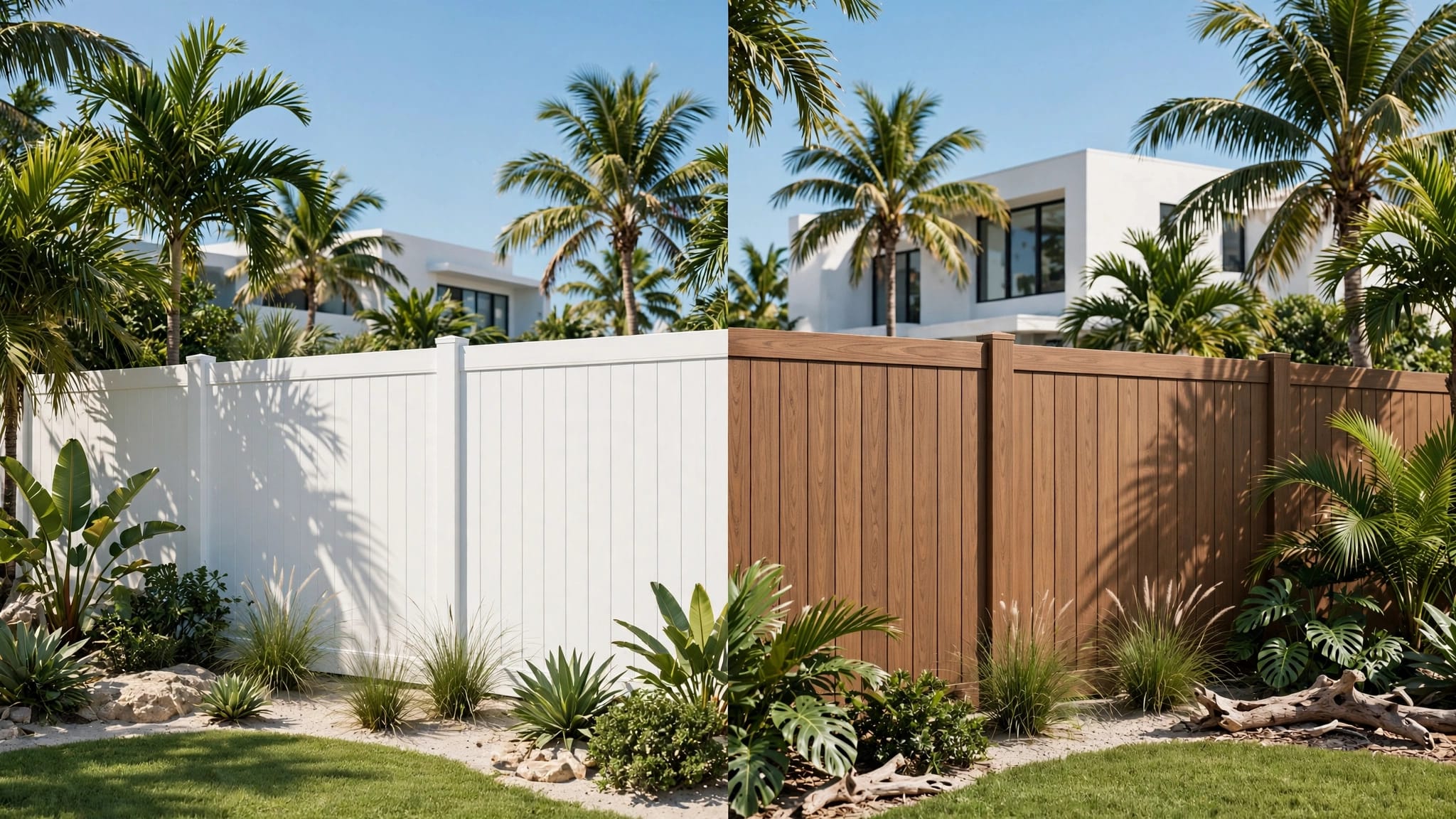
There isn't one answer for every property. Aluminum and open mesh can support airflow and visibility, while vinyl or composite may provide more screening. Wind exposure, salt air, maintenance access, HOA rules, and the solar layout should guide the choice.
Conclusion
A fence around solar panels can work in Florida when the fence and solar layout are reviewed together. The safest approach is to confirm local requirements, protect access to every component, check for shading, and obtain HOA and permit approval before construction.
For Southwest Florida homeowners, a thoughtful site plan matters as much as the fence material. Local conditions should determine the final height, placement, gate design, and anchoring.