Hendry County Fence Permit Guide For 2026 Homeowners
A fence feels like a simple upgrade until the permit question hits. Do you need approval, a site plan, an inspection, or can you just start setting posts this weekend?
For 2026, the safest assumption is this: you may need a Hendry County fence permit before you build, especially if your fence is taller, includes gates, or acts as a pool barrier. The goal of this guide is to help you avoid the most common delays: building in the wrong jurisdiction, missing a required document, or placing a fence where it can't legally go.
Rules can change, and each property is different. Always confirm current requirements with Hendry County Building Code Enforcement and Planning and Zoning before you buy materials or schedule an install.
County vs city rules in Hendry: confirm your jurisdiction first
Before you measure a single fence run, confirm who controls permitting for your address. In Hendry County, that can mean the difference between county rules (unincorporated areas) and city rules (municipal limits). A lot of "permit surprise" stories start with one mix-up: a homeowner assumes the county handles everything, but their property is inside a city boundary.
Start with these quick checks:
- Look at your property address and boundaries . If you're in a platted neighborhood near downtown areas, you might be inside city limits.
- Check your tax bill or property records . They often list a city name or taxing district.
- Ask directly before you apply . A 2-minute phone call can save a week of back-and-forth.
As of March 2026, Hendry County's permitting for unincorporated areas runs through Building Code Enforcement in LaBelle. The realtime county contact details available list (863) 675-5222 for the Building Official's office and (863) 675-6007 for Planning and Zoning. The office location is shown as 640 S. Main St., LaBelle, FL , with mail routing also shown to P.O. Box 2340, LaBelle, FL 33975 .
If you're in LaBelle (city) or Clewiston , confirm fence permits with city hall first because municipal rules can be different (and sometimes stricter).
A permit denial often isn't about the fence material. It's usually about location, height, easements, or the wrong permitting office.
Hendry County fence permit basics for unincorporated areas (what to confirm in 2026)
Most homeowners want one clear answer: "Do I need a permit?" In unincorporated Hendry County, realtime local guidance indicates permits are typically required when a fence exceeds a low height threshold, and pool barriers get extra scrutiny.
Here's the practical "plan-first" version to confirm with the county:
- Permit often required for fences over 4 feet (common trigger in residential areas).
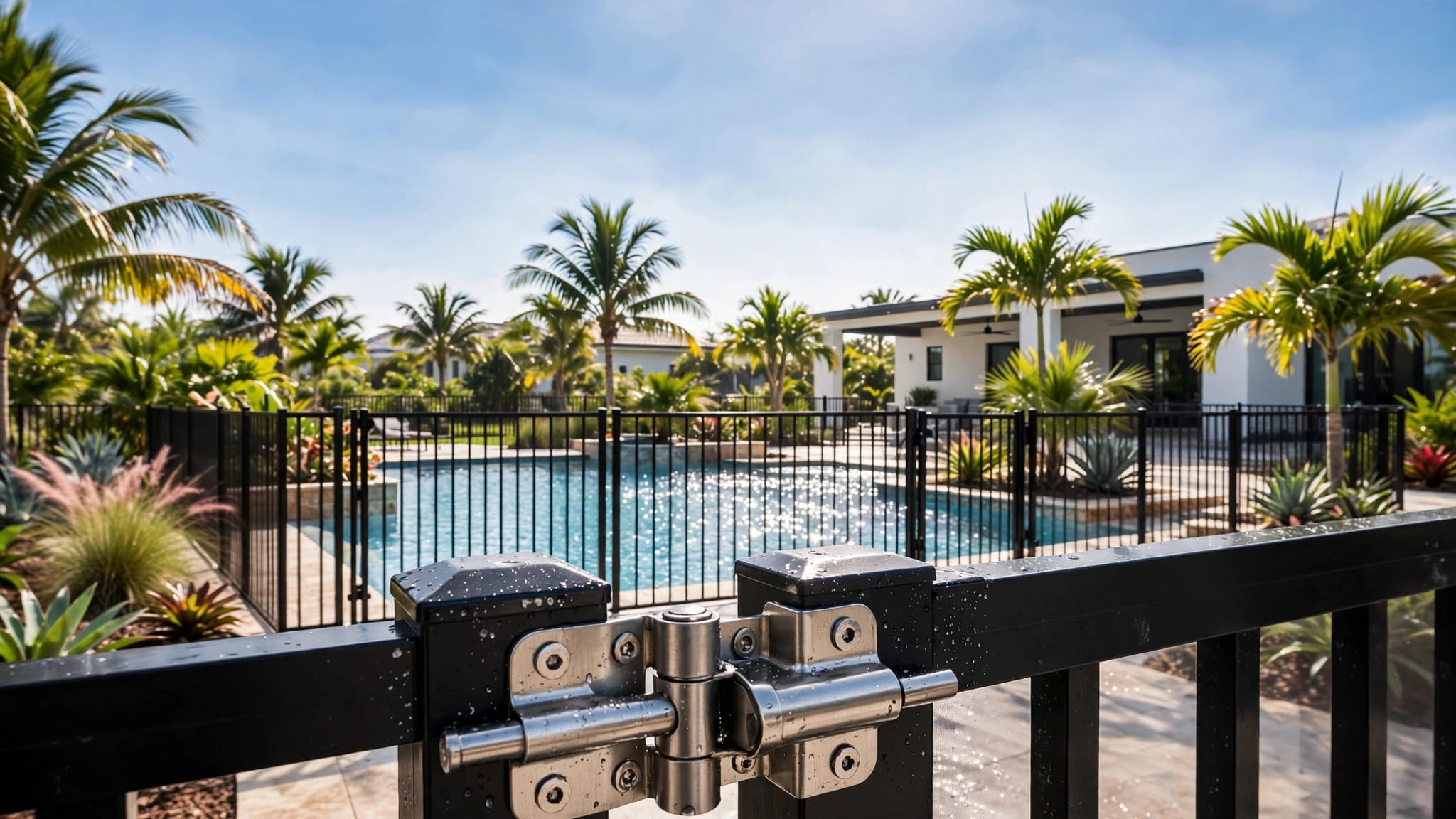
- Pool fences and pool barriers generally require permits and inspections because they're safety items, not just property upgrades.
- Short fences under 4 feet may be exempt from permitting in some cases, but you still must follow placement rules and any deed restrictions or HOA rules.
You'll also want to plan around basic dimensional limits. Realtime Hendry guidance commonly cited for residential properties includes front yard fences limited to about 4 feet , and side and rear yard fences commonly limited to about 6 feet . Pool barriers often fall in the 4 to 5-foot range, with gate requirements that matter as much as height.
The same realtime summary also lists common setback expectations to confirm before you place posts, including about 5 feet from side or rear property lines and about 25 feet from the front road right-of-way . Setbacks can vary by zoning, corner-lot conditions, drainage features, and easements, so treat these as planning numbers until the county confirms them for your address.
To keep it easy to scan, here's a quick reference table based on those commonly cited 2026 checkpoints (always verify):
| Item to confirm | Common unincorporated expectation | Why it matters |
|---|---|---|
| Permit trigger | Over 4 ft (typical) | Changes paperwork, review, inspection |
| Front yard height | About 4 ft | Visibility and streetscape safety |
| Side/rear height | About 6 ft | Standard residential privacy/security |
| Side/rear setback | About 5 ft | Avoids encroachment disputes |
| Front setback (ROW) | About 25 ft | Keeps fences out of road right-of-way |
| Pool barrier | Permit and inspection | Child safety, code compliance |
Fees can also change year to year. Realtime county guidance for 2026 mentions a base permit fee often landing around $50 to $100 for a basic fence, with variables based on scope and special conditions. Call before you budget.
How to get approved without rework: documents, 811 locates, and layout mistakes to avoid
Think of a permit application like a recipe. If you skip one ingredient, you don't get dinner, you get a trip back to the store.
For a typical Hendry County fence permit application, expect to show three things clearly: where the fence goes, what you're building, and how tall it will be. In practice, that usually means a simple site plan (often based on a survey), fence specs, and gate details.
A simple step-by-step plan that works
- Confirm jurisdiction and zoning (county vs city, and your zoning district). Ask about special overlays if you're near canals, drainage features, or agricultural land.
- Get a current survey or boundary information . If pins are missing or the survey is unreadable, don't guess.
- Sketch the fence line on the survey . Mark heights, gate locations, and distances to property lines.
- Call 811 before digging . Even "just a few post holes" can hit buried lines. Call 811 several business days before you dig, then respect the markings.
- Submit, wait, then build to the approved plan . If you change height, location, or gate type mid-job, ask if a revision is needed.
Common fence permit "gotchas" in Hendry County
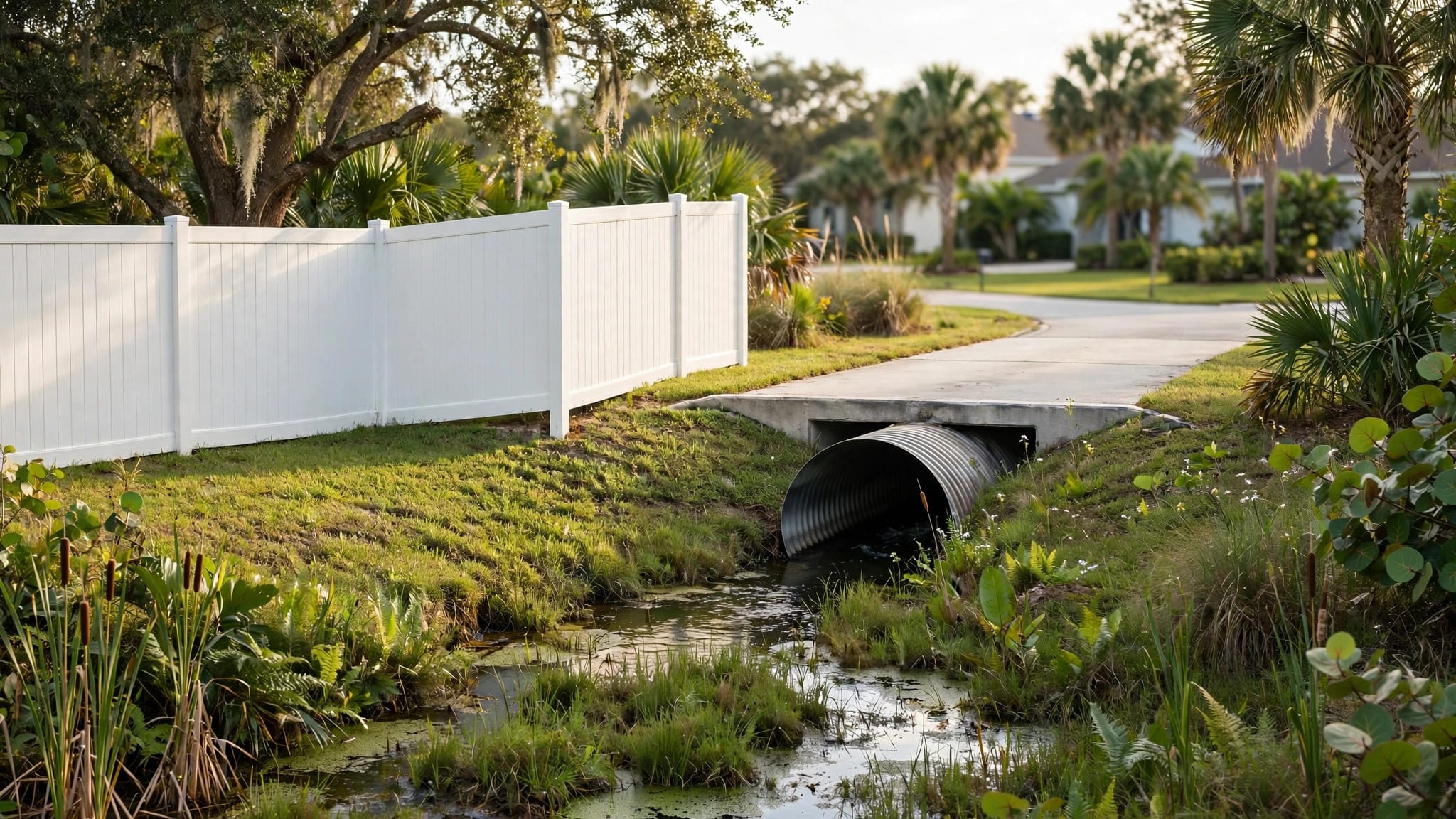
Easements are the big one. A fence can be inside your property line and still violate a utility or drainage easement . That's why permits often ask for a plan view, not just a material description.
Neighbors also matter, even when they're friendly. If you're building close to the line, it helps to talk early and keep everything in writing. If you're unsure how Florida handles boundary and shared-fence expectations, read this plain-English overview of Florida shared fence laws and cost sharing.
Pool barriers deserve extra care. Gate hardware, latch behavior, and climb-ability can fail an inspection even if the fence looks "tall enough." For a practical breakdown of barrier basics that inspectors look for, this guide on pool fence rules and self-latching gate standards is a helpful starting point (then confirm the exact standard used on your permit set).
Finally, don't ignore maintenance in your material choice. In Southwest Florida, sun, moisture, and fastener corrosion can shorten fence life fast. If you're leaning toward wood, this article on wood fence lifespan in Southwest Florida explains what makes fences fail early.
Printable-style homeowner checklist (save this)
- Jurisdiction confirmed : County (unincorporated) or city (LaBelle, Clewiston, others)
- Permit trigger confirmed : Height threshold, pool barrier rules, special zoning limits
- Survey in hand : Corners and property lines verified, easements identified
- Fence plan drawn : Heights, materials, gate widths, and hinge side noted
- Setbacks checked : Side, rear, and road right-of-way distances confirmed
- 811 locate completed : Utilities marked, post locations adjusted as needed
- HOA or deed rules reviewed : Style, color, "finished side," and approval steps
- Inspection plan set : Know when the inspector needs to see posts, rails, or final install
Conclusion
A fence should feel like a boundary, not a bureaucracy. In 2026, the smartest way to approach a Hendry County fence permit is to confirm jurisdiction first, build your plan around setbacks and easements, and call 811 before digging. If you do those three things, most permit headaches never start.
When in doubt, verify current requirements with Hendry County Building Code Enforcement or your city office, then build the fence you'll feel good about for years. Getting it right on paper is usually what makes the installation easy.