High Water Table Fencing in Southwest Florida
Your lawn can look dry while a newly dug fence post hole fills with water. For high water table fencing in Southwest Florida, soil stability and suitable footings matter more than surface appearance.
Shallow groundwater can cause holes to collapse, complicate concrete placement, and leave posts vulnerable to movement. However, a wet yard doesn't automatically rule out a durable fence.
Start by checking how groundwater, soil, and your chosen fence design affect the installation.
Key Takeaways
- Shallow groundwater can destabilize sandy post holes, so crews must assess each hole before setting a post.
- Concrete, compacted stone, and specialized support systems work under different conditions; none fixes every wet-soil problem.
- Post depth, footing size, wind exposure, and gate loads belong in the installation plan.
- A dependable estimate explains how the contractor handles unexpected water, protects drainage, and prices additional work.
How High Groundwater Changes Fence Installation
The water table is the upper surface of groundwater-saturated soil. When it's close to ground level, excavation can reach water before reaching the planned post depth.
Water Can Return After Pumping
Rainfall, nearby waterways, and local drainage conditions affect groundwater levels. In low-lying parts of Cape Coral and other Southwest Florida communities, water may enter a hole even without standing water nearby.
Pumping can remove water temporarily. However, if groundwater keeps entering, the hole may refill before the crew can prepare the bottom.
Tell your contractor where water collects after storms and whether existing posts lean seasonally. These observations help identify problem areas, although they don't replace checking conditions along the proposed fence line.
Saturated Sand Can Lose Stability
Damp sand and saturated sand behave differently. Some damp soil holds its shape during excavation, while saturated sand can slump into the hole.
That falling material changes the hole's depth and width. It can also contaminate footing material or leave loose soil beneath the post.
Later, movement may show up as a leaning panel or a gate that stops latching. Gate posts deserve close attention because they carry moving loads as well as wind pressure.
Post Depth Must Match Soil and Wind Loads
A high water table doesn't create a single correct post depth. The contractor must consider the soil, fence height, panel design, and exposure together.
Local Depth Guidance Is a Starting Point
Supreme Fence of SWFL's Cape Coral fence post depth guide describes at least 36 inches as a common sandy-soil baseline. It also notes that some contractors use 42 to 48 inches, particularly for 6-foot privacy fences and exposed runs.
These figures aren't universal code requirements. Your project may need different dimensions based on its design and site conditions.
Also, total hole depth doesn't necessarily equal post embedment if the footing includes a prepared base. Ask the contractor to explain both measurements.
Solid Panels Put More Pressure on Posts
A solid vinyl privacy fence catches more wind than an open aluminum or chain-link fence. Therefore, privacy fencing needs a support system designed for that greater load.
Waterfront exposure, long uninterrupted runs, and corner locations can affect the design. Meanwhile, gates may require different posts or footings than neighboring panels.
Adding privacy slats to chain link also increases wind resistance. Tell the installer about planned additions before the fence goes up, because those additions change what the posts must support.
Choosing Footings for High Water Table Fencing
Concrete is common for privacy fences, corners, terminals, and gate posts. However, the right choice depends on whether the crew can build a sound footing in the actual soil.
Concrete Needs Controlled Placement
Before placing concrete, installers need the planned hole dimensions, a stable bottom, and properly aligned posts. Loose sand falling into the hole can undermine that preparation.
Concrete can cure in wet conditions because curing involves a chemical reaction with water. However, uncontrolled water can wash fresh cement paste away or disrupt placement. Pouring ordinary bagged material into a collapsing, water-filled hole isn't a reliable substitute for proper preparation.
Where appropriate, the crew should shape the exposed footing top to shed surface water away from the post. They must also follow the product's curing instructions before attaching panels or loading gates.
The site's Southwest Florida fence footing options compare concrete and no-concrete approaches for different conditions.
Stone and Specialized Systems Have Limits
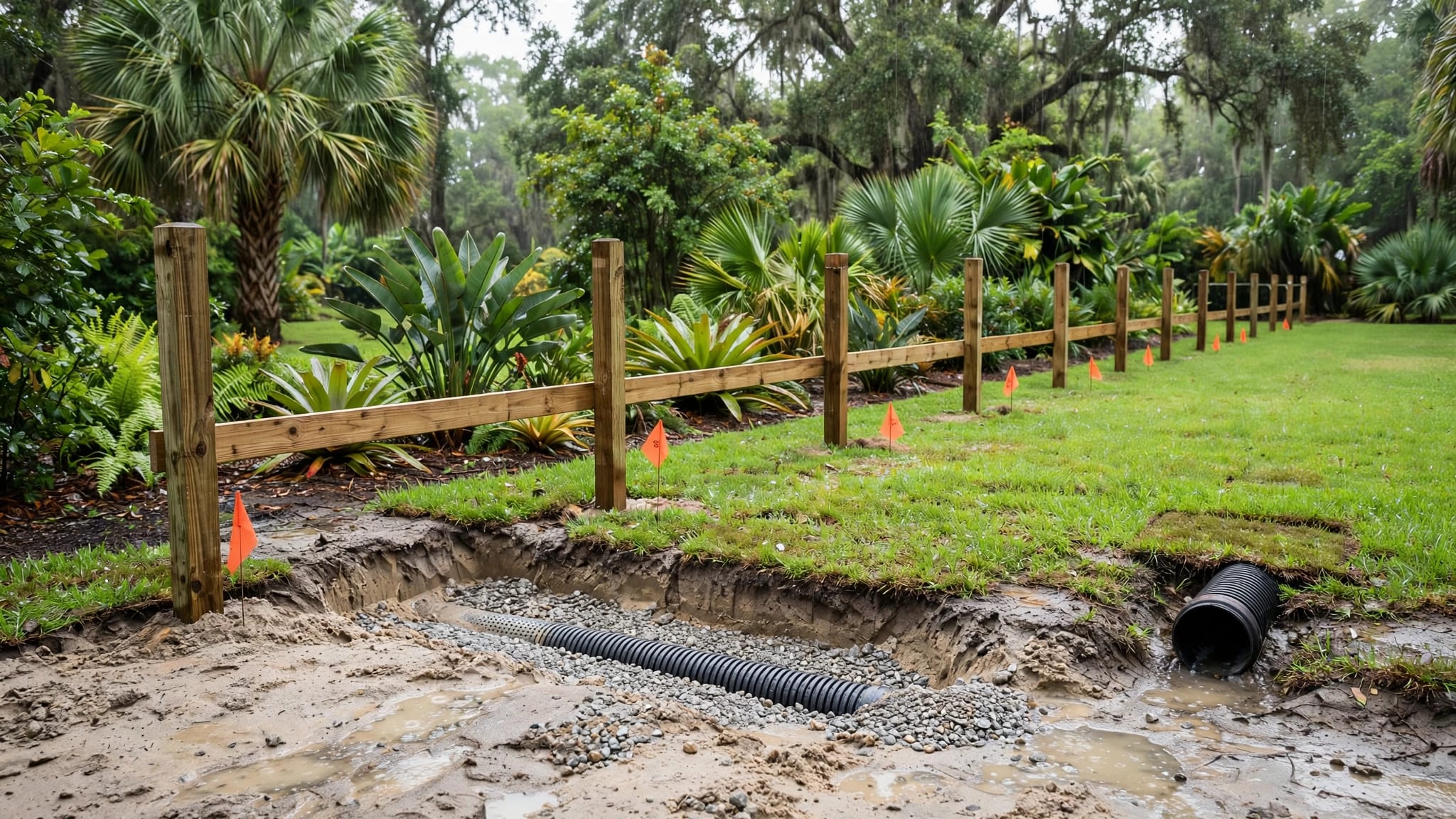
Compacted crushed stone can suit some installations when the soil, fence load, and drainage allow it. Crews must compact it in layers rather than dump loose gravel around a post.
Gravel below the water table doesn't lower groundwater. A gravel base can't drain water away without somewhere for that water to go.
Some difficult sites may call for driven posts, helical supports, or posts mounted on structural concrete. Those systems need suitable soil support, compatible components, and any required design review.
Ordinary patio pavers aren't a structural foundation for surface-mounted fence posts. Similarly, a small post base isn't automatically suitable for a tall privacy fence.
Fence Materials Need Moisture and Wind Planning
Moisture resistance helps, but it doesn't compensate for weak post support. Compare the complete fence system, including posts, reinforcement, connections, and gate hardware.
Aluminum, Vinyl, and Chain Link Offer Different Benefits
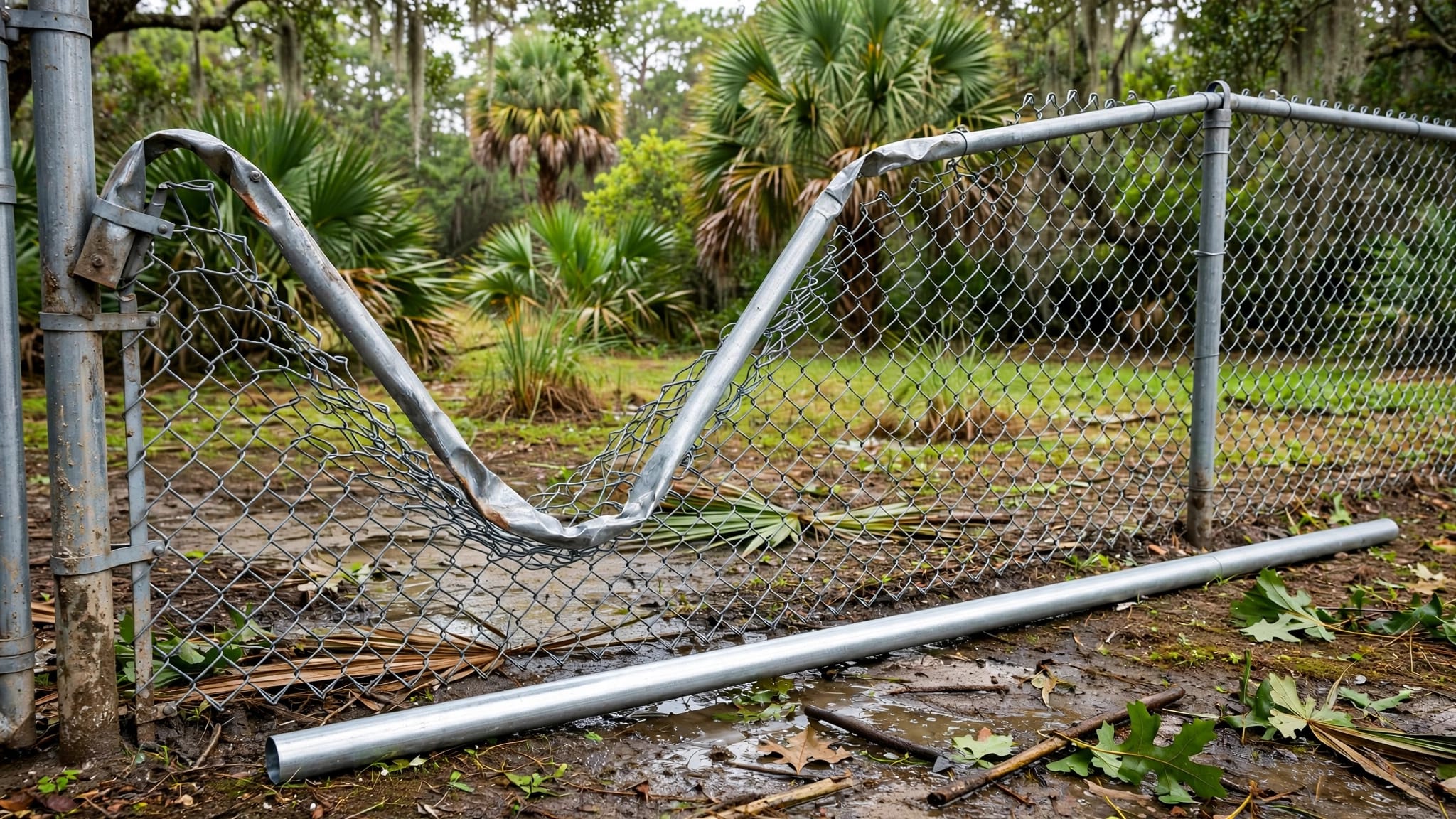
Aluminum and chain link usually allow more airflow than solid privacy fencing. They can suit yards where visibility and reduced wind resistance matter.
Vinyl doesn't absorb water like wood and offers privacy with less routine finishing. However, solid vinyl panels still need posts and footings that match their wind load.
For a wider comparison, review fence materials for flood-prone yards. Flood exposure and shallow groundwater aren't identical problems, but both affect material and installation decisions.
Pool barriers also have separate safety requirements. An open fence must meet those rules when it encloses a pool.
Wood and Hardware Need Extra Attention
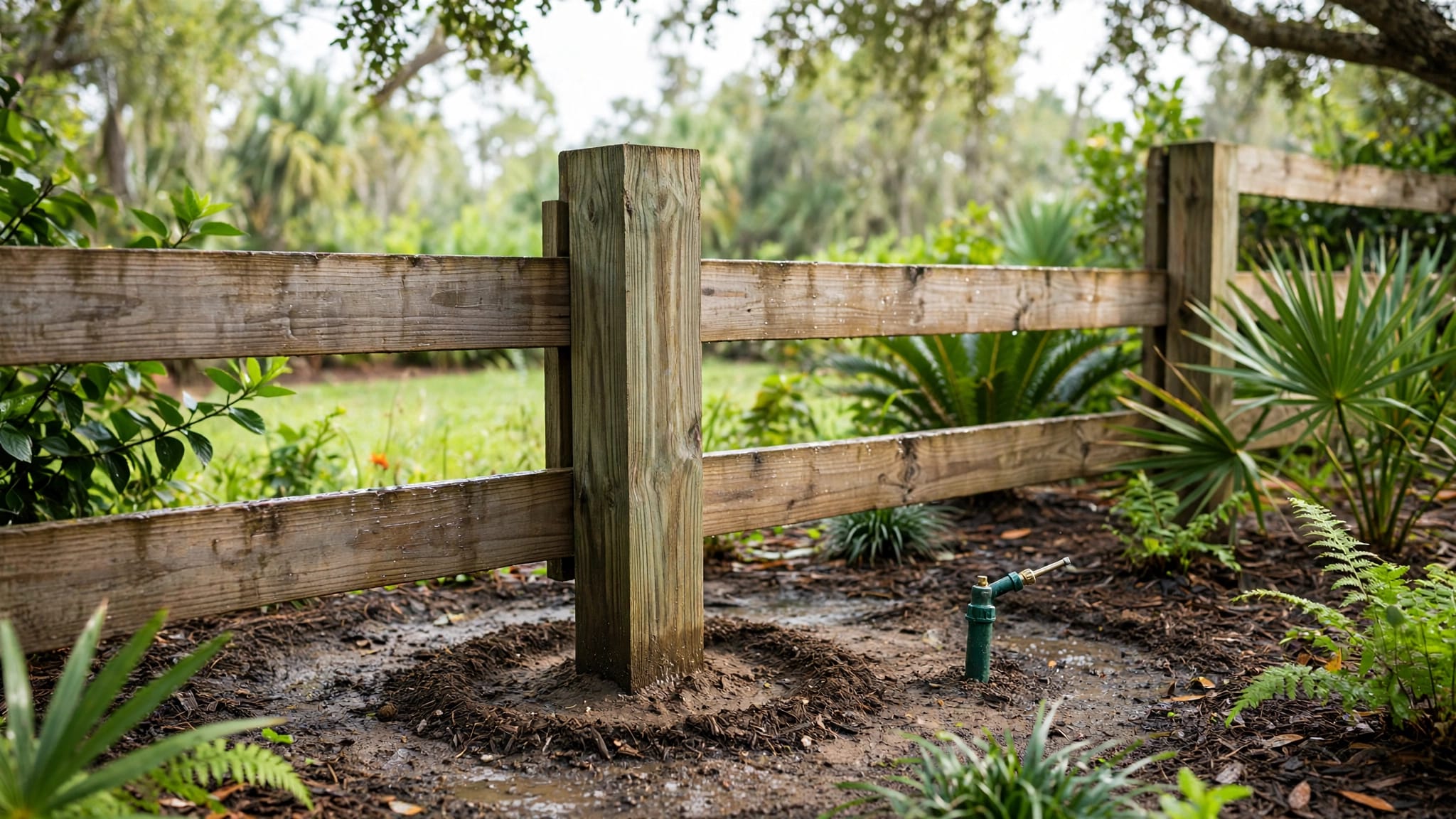
For buried wood posts, ask for lumber labeled for the required ground-contact use. Persistent moisture and termite exposure make treatment selection important.
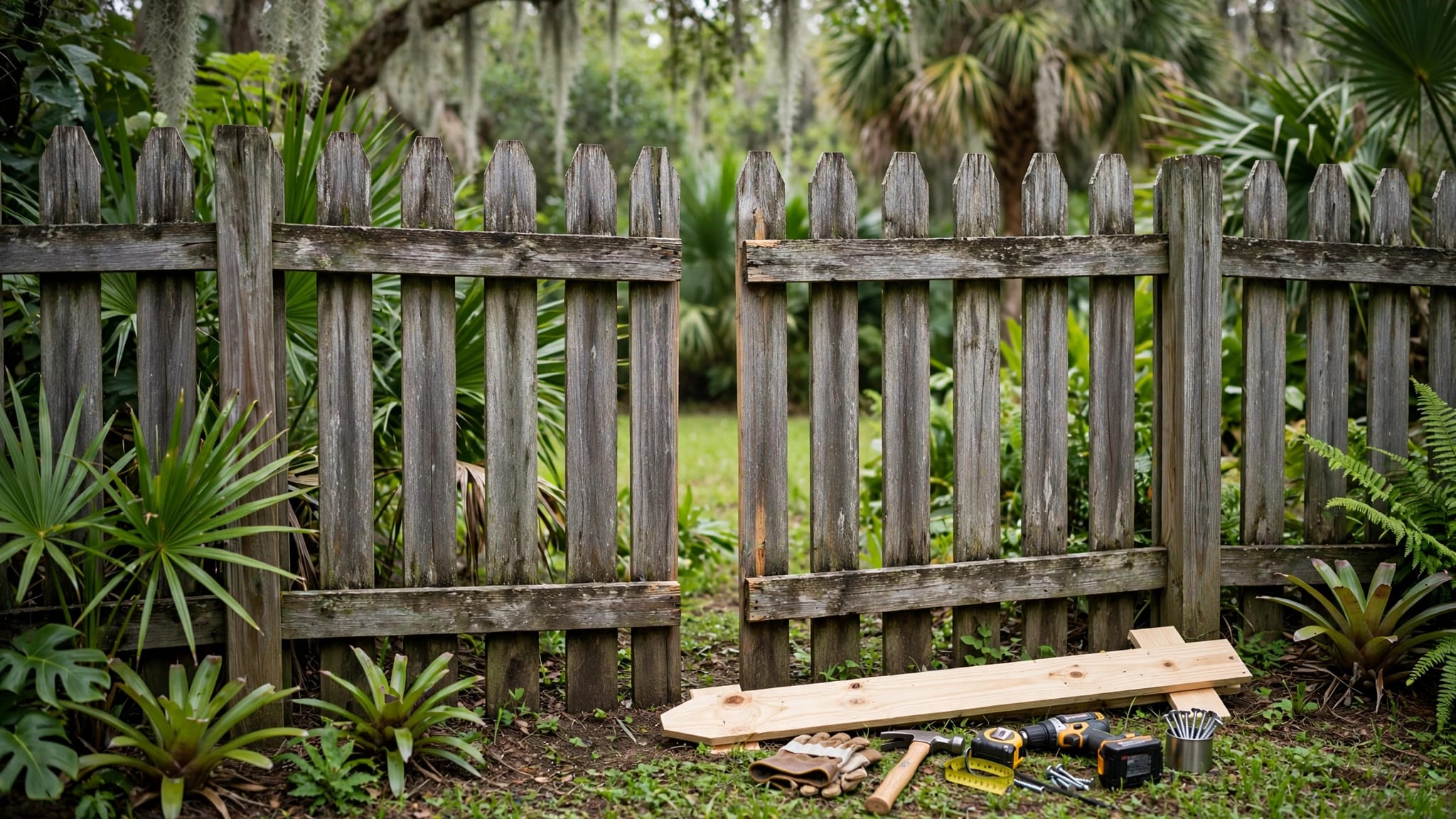
Keep wood pickets clear of wet soil, and avoid details that collect water at the post base. Although treatment improves resistance, it doesn't eliminate inspection and maintenance.
Near canals and the coast, fasteners and hinges also face salt exposure. Ask for corrosion-resistant hardware compatible with the fence system. Stainless steel or hot-dip galvanized components may be appropriate, depending on the application and manufacturer requirements.
Installation Timing and Drainage Matter
Scheduling during drier weather can improve working conditions, but it doesn't guarantee low groundwater. A yard may remain saturated after rainfall ends, especially in low spots.
A contractor should check each excavation rather than assume the whole property has matching conditions. Soil beside a driveway may hold firm while a nearby swale stays unstable.
If water returns faster than crews can manage it, or the hole keeps collapsing, pausing protects the installation. These considerations also apply to fence installation during rainy weather.
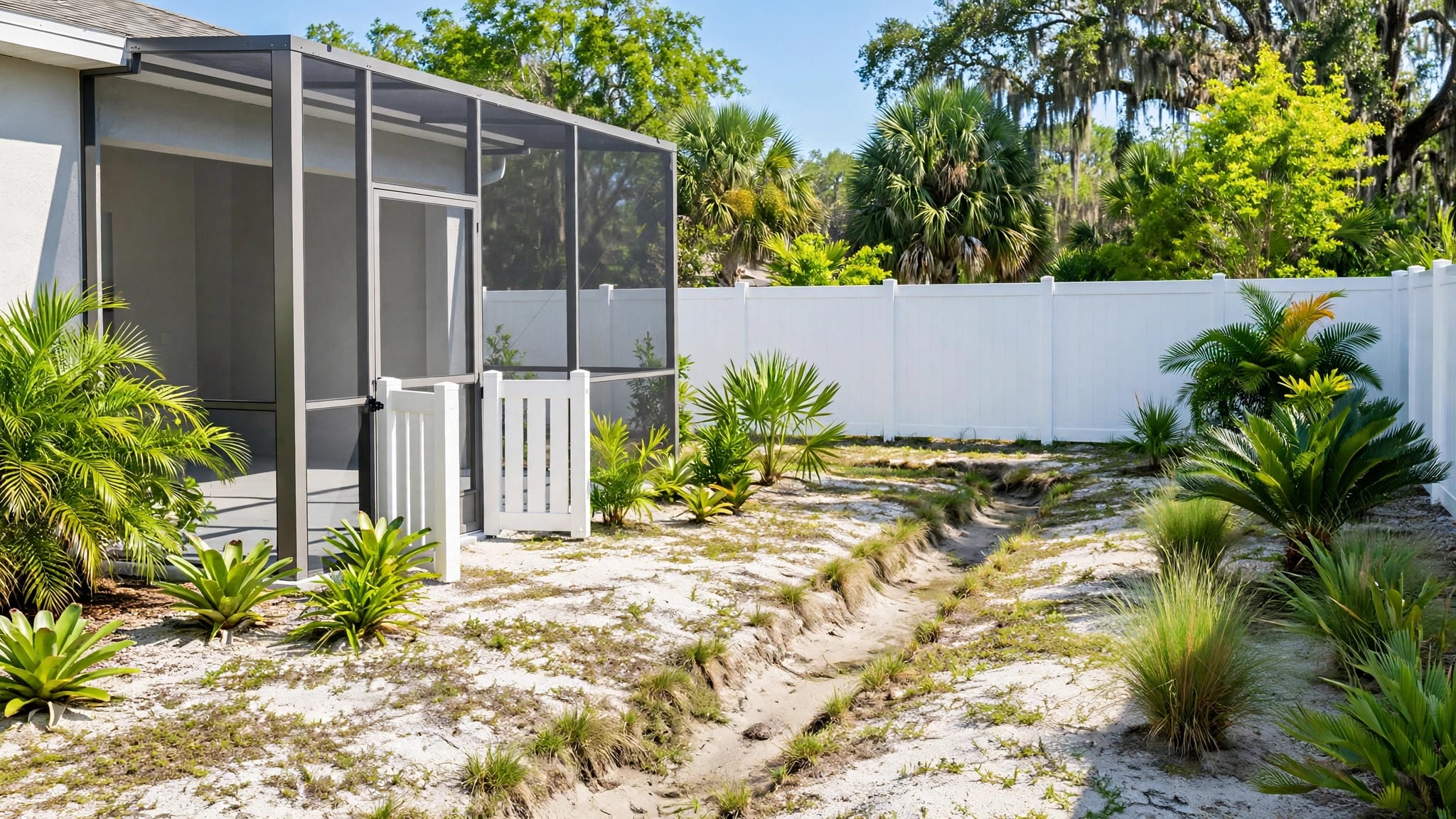
Also, preserve the yard's existing drainage paths. Don't fill a swale or raise the fence line simply to make excavation easier.
Shallow groundwater, stormwater drainage, and flooding need different responses. A fence contractor can plan appropriate post installation, but persistent yard drainage problems may require separate evaluation. Neither a concrete collar nor gravel backfill corrects a property-wide water problem.
What to Ask a Southwest Florida Fence Contractor
For high water table fencing, a useful estimate describes the installation approach rather than listing panels and a total price.
Before signing, ask:
- How will you handle holes that refill with water or collapse during excavation?
- What post embedment and footing dimensions are planned for straight runs, corners, and gates?
- Which conditions would require a different method, extra charges, or a scheduling delay?
- Who handles permits, inspections, and any required engineering?
Also, confirm property lines, easements, underground utilities, and HOA approval before layout. Contact 811 before digging, and discuss private lines such as irrigation or pool plumbing that utility locating may not cover.
If the fence approaches a wetland, septic system, or drainage feature, placement needs additional review. Wet ground doesn't give permission to disturb a protected area or block maintenance access.
Groundwater-related work can add labor, equipment use, materials, or return visits. There isn't a dependable flat surcharge for every wet yard.
Instead, request written allowances or unit prices for foreseeable changes. Confirm that the contractor needs your approval before extra work proceeds. Supreme Fence of SWFL offers free estimates for homeowners planning installation in Southwest Florida.
Frequently Asked Questions
Can Fence Posts Be Installed Below the Water Table?
Yes, a suitable system can place posts or foundations below groundwater level. The challenge is creating stable support under those conditions.
The contractor must control excavation and placement, or select a method suited to the site. Simply stopping every hole where water appears can leave posts shallower than the fence design requires.
Will More Concrete Fix a Loose Post in Wet Soil?
Additional concrete only helps when the resulting footing matches the soil and structural demands. Concrete placed around loose, disturbed material may still move.
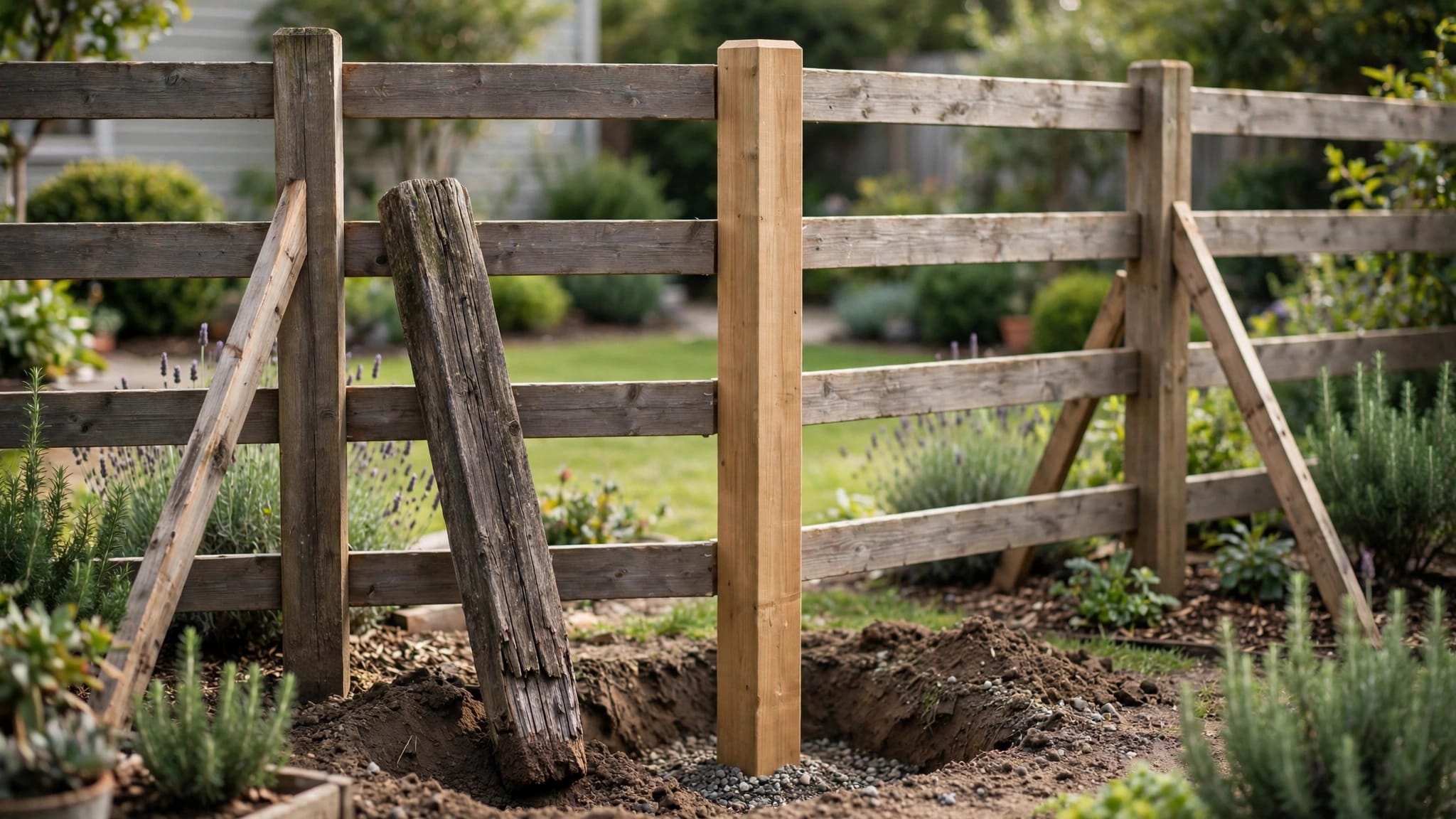
A repair should examine the post, footing, surrounding soil, and attached fence loads. Gate alignment problems may involve more than the hinge adjustment homeowners first notice.
Is a Dry-Season Installation Always Safer?
Drier weather often makes excavation easier, but groundwater can remain high. The planned installation still needs a site-specific check.
Also, a fence installed in dry soil must withstand wetter conditions later. Ask how the footing design accounts for seasonal saturation rather than relying on the weather during construction alone.
A Stable Fence Starts Below Ground
A dry-looking yard can hide the conditions that determine whether your fence stays straight. Stable support comes from matching the installation to groundwater, soil behavior, and fence loads.
Choose a contractor who explains footing choices and makes wet-ground decisions clear in the estimate. That preparation gives your fence a sound foundation before the first panel goes up.