How to Plan a Fire Pit Fence in a Florida Backyard
A fence can make a backyard fire pit feel more private, but it can also put a combustible surface too close to the flames. If you're planning a fire pit fence in Southwest Florida, start with the fire rules and the space available, then choose the fence.
The right layout leaves room for people to move, keeps the gate usable, and suits your yard's weather. In Cape Coral, it also means checking fire regulations and fence requirements separately before installation.
Check the fire rules before drawing a fence line
Florida doesn't have one clearance number that fits every backyard fire pit. The fuel, the type of fire, and local rules all matter. A fence plan based on a cooking-fire rule could be wrong for an evening wood fire.
Recreational fires in Cape Coral
Cape Coral Fire's burn regulations say a qualifying recreational burn, including a fire pit, must be 25 feet from any structure . The burn area can't exceed 3 feet in diameter or 2 feet in height. The city also calls for a cleared area, a way to fully extinguish the fire, and fuel limited to firewood or clean unsawn wood. Under the stated conditions, no burn permit is required.
Don't assume the 25-foot figure automatically tells you where a fence may go. Ask Cape Coral Fire how its structure rule applies to your proposed fence and pit. Provide a sketch with measurements rather than relying on a verbal description.
Cooking fires and other equipment
Cape Coral has a separate rule for a fire used solely for cooking in a barbecue grill or similar device. That category calls for 10 feet from any structure . It isn't a shortcut for locating a recreational wood fire.
Manufactured gas pits, portable fireplaces, and other contained devices may involve different requirements. Check the product manual and ask the local fire authority how it classifies your setup. Also check the latest city notice for any burn restrictions before lighting a fire. Florida's burn-ban status can change.
Choose a fire pit fence layout that fits the yard
Start with the usable area, not a fence style. Mark the pit's proposed location, nearby structures, seating, plants, and the route back to the house. Then measure the fence line against the applicable fire rule and the manufacturer's instructions.
Decide between a yard fence and a separate enclosure
For many backyards, an existing or planned perimeter fence can provide privacy without putting panels beside the pit. You can place the gathering area farther inside the yard while keeping access around it.
A smaller enclosure around the seating area needs more careful planning. Chairs move, guests stand near the fence, and a gate takes space to open. If the enclosure leaves little room between the heat source and its panels, enlarge the layout or reconsider the enclosure. Don't assume a short decorative fence needs less clearance than a full-height one.
Leave a clear way in and out
Walk the proposed route as though you're carrying a chair or a bucket of water. People should be able to leave the area without squeezing past the fire or moving furniture. Keep gates, latches, and any shutoff for a gas unit easy to reach.
On a drawing, show the pit, every nearby fence panel, and any overhanging branches or structures. Include the full area the fire equipment occupies. A contractor and the local fire authority can give more useful feedback when they can see the actual layout.
Match fence materials to heat and Florida weather
Fence materials solve different yard problems, but none makes close placement automatically safe . Keep the required separation regardless of whether the fence is metal, vinyl, wood, or composite.
Aluminum and chain link keep sightlines open
Aluminum is a useful choice when you want to define the area without blocking the view of the fire. Its open design also lets you see whether chairs, debris, or plants have moved toward the pit. Near the coast, ask about the finish and corrosion-resistant hardware.
Coated or galvanized chain link is another open option, though it has a different look. Metal panels and hardware can still get hot or deteriorate, so placement and routine inspection matter. Open fencing also won't replace supervision when children or pets are nearby.
Privacy materials need more separation
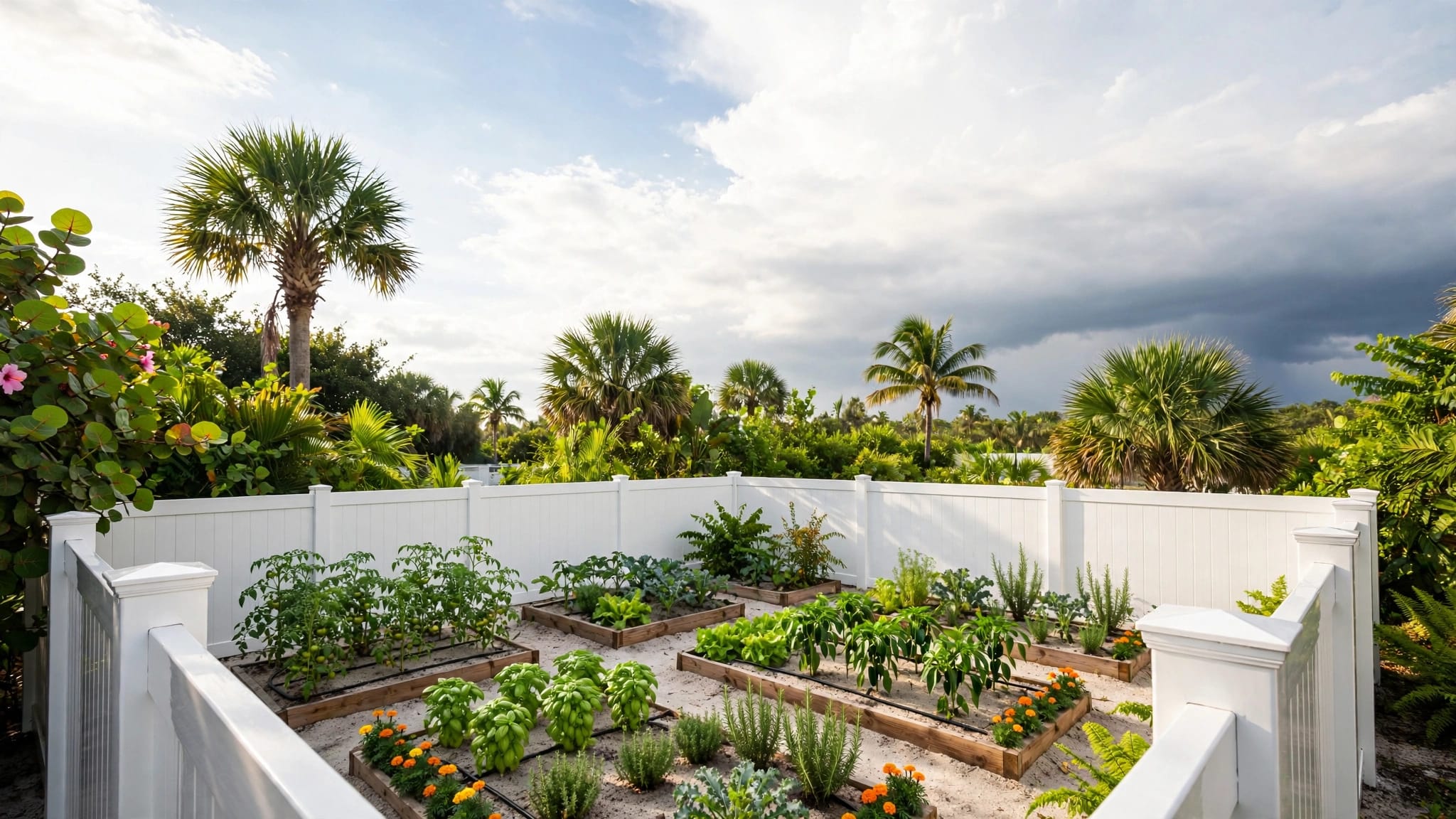
Vinyl offers privacy and relatively simple upkeep in a humid yard, but heat can damage it. Wood is combustible and needs regular attention in Southwest Florida's moisture and termite conditions. Composite panels differ by product, so consult their installation and heat-exposure guidance.
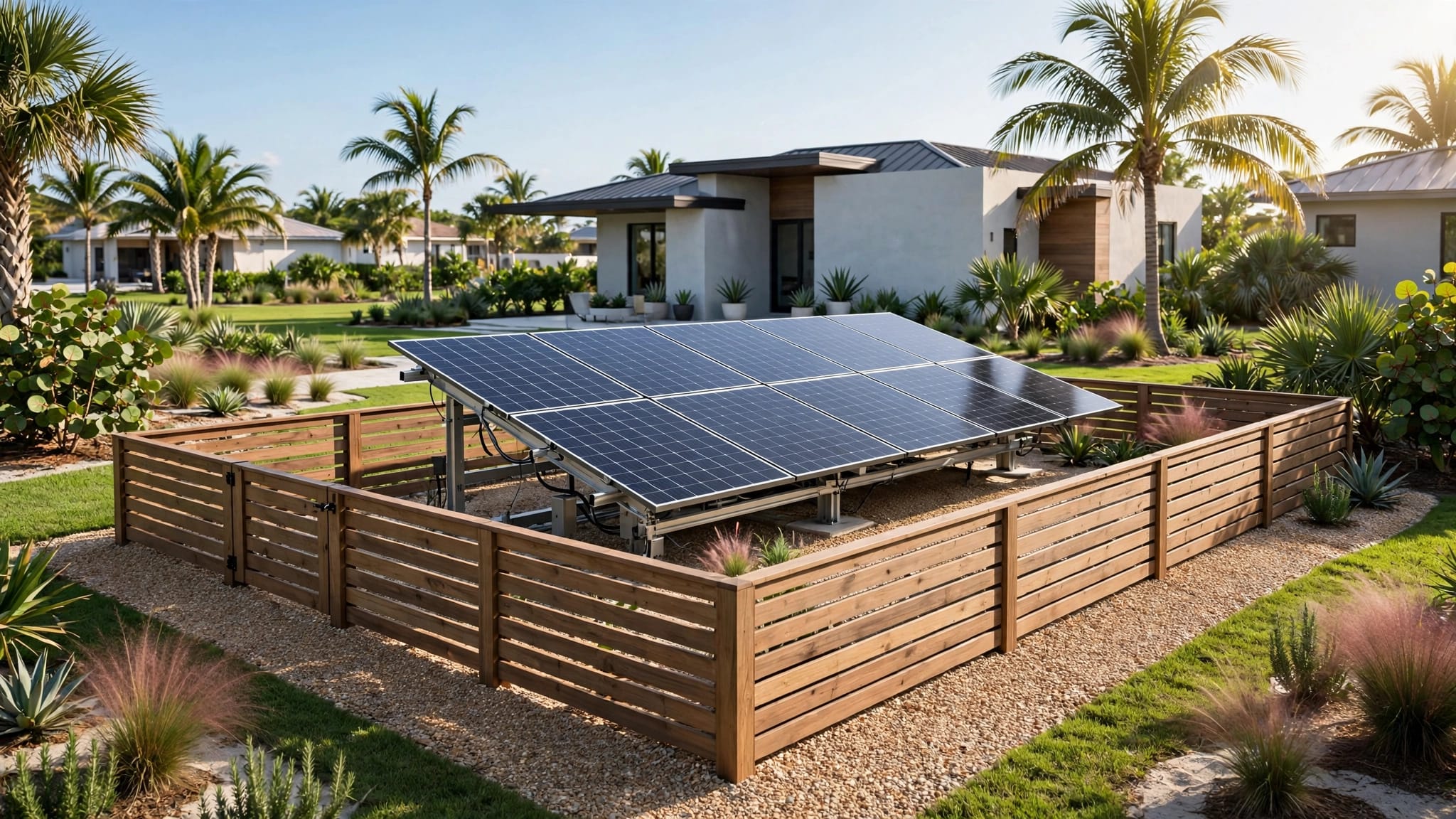
A solid privacy fence may be useful along the property edge, away from the gathering area. For a closer visual boundary, consider whether an open fence layout better fits the space, subject to local approval and safe clearance. The Cape Coral fence material comparison can help you weigh maintenance and appearance, but it doesn't set fire-pit clearances.
Make the gate useful without creating a false sense of security
A gate can help manage access to the fire-pit area. Choose a location people can see from the seating area, and keep its swing clear of chairs and planters. If young children use the yard, discuss latch placement with your installer and check whether another feature, such as a pool, triggers separate barrier rules.
A fence can limit access to an unlit pit, but it cannot supervise an active fire or make hot ashes safe to touch.
Don't use a fire-pit enclosure as a substitute for a required pool barrier. Pool fencing has its own rules, including requirements that may affect gates and latches. If the same fence line runs near a pool, have the local permitting office review both uses before you select hardware.
Think about everyday access, too. Someone will need to carry fuel, clean the pit, and reach a hose or other suitable extinguishing equipment. A gate that works on the drawing may be awkward once furniture is in place.
Plan for Southwest Florida's rain, salt, and wind
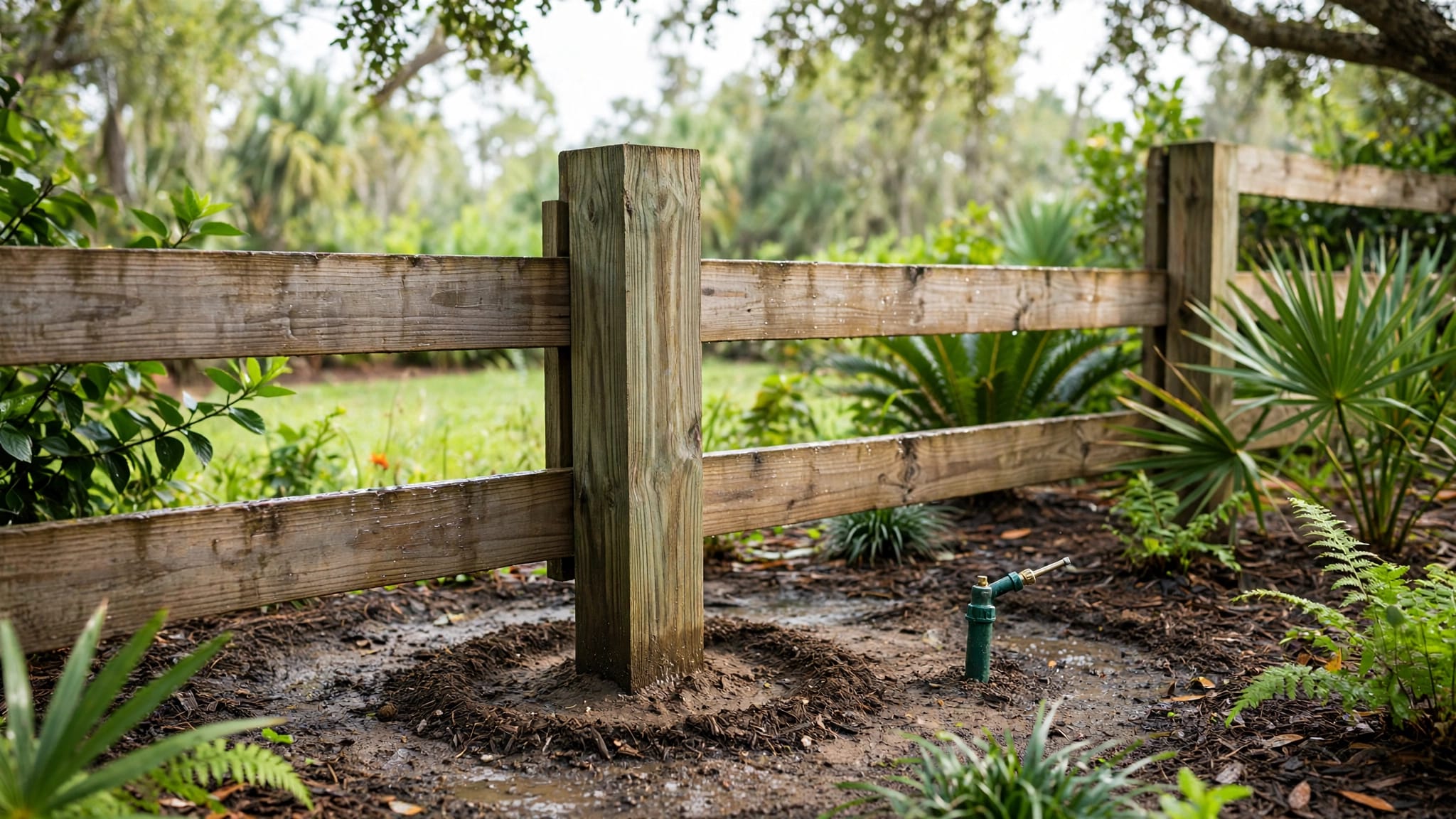
Heat isn't the only challenge for a fence near an outdoor gathering area. Heavy rain can leave soil soft around posts, while sprinkler overspray keeps hardware wet. Along coastal lots and canals, salt exposure adds another reason to inspect fasteners and hinges.
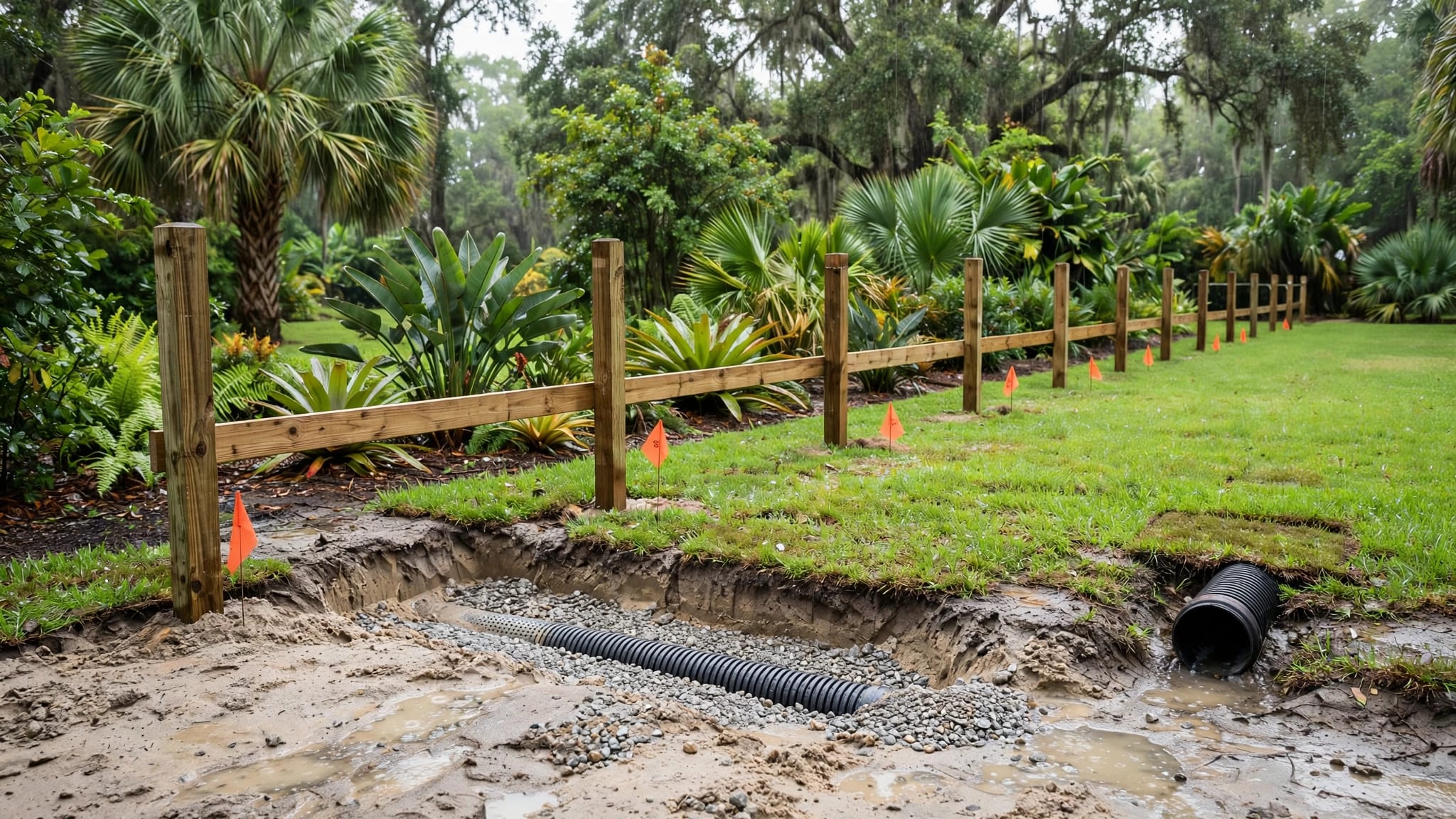
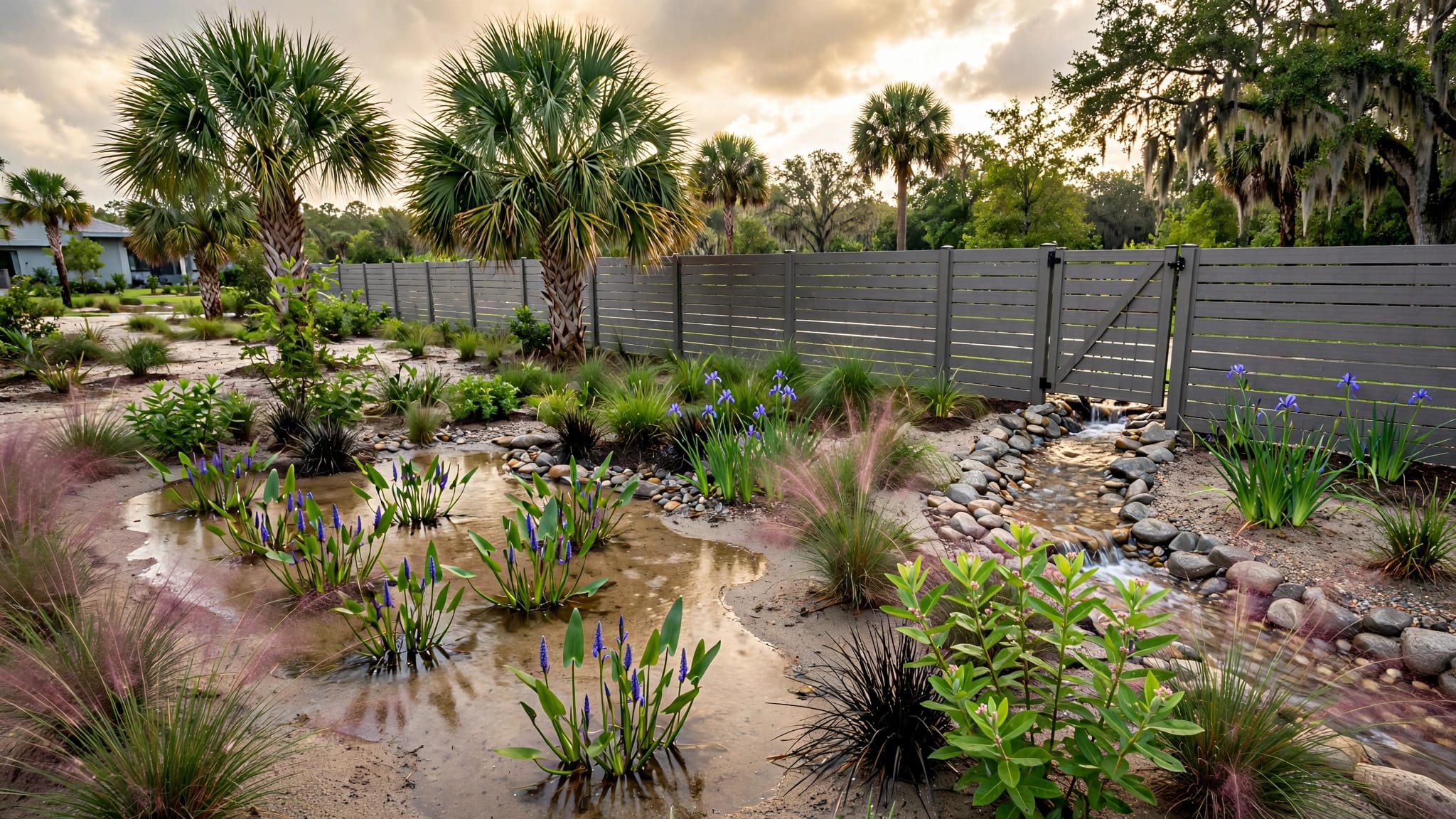
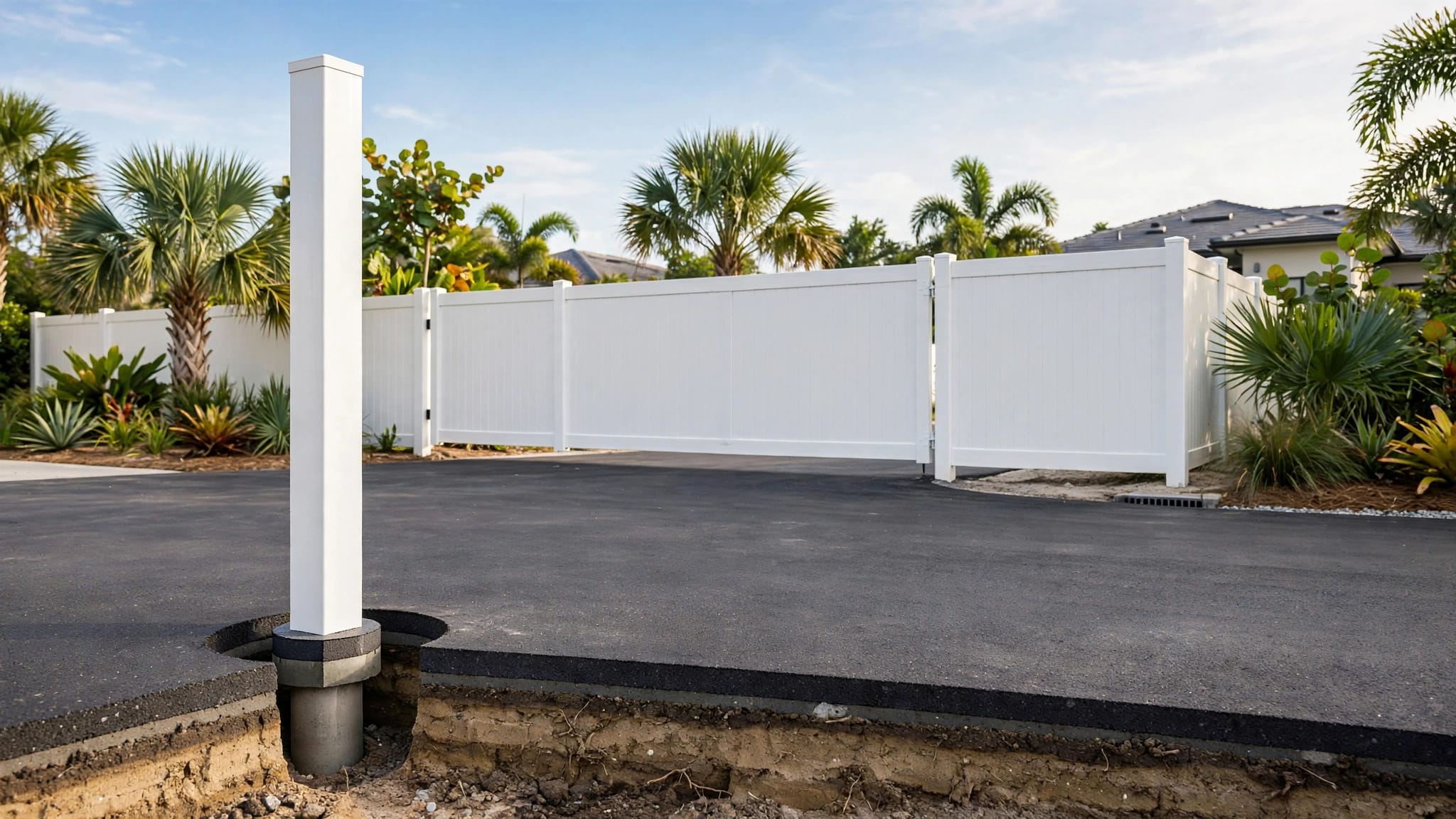
Have the installer assess the finished grade and drainage before setting posts. A fence shouldn't block a swale or access to an area that needs maintenance. Likewise, avoid placing a new post where underground utilities run. Request a utility locate before digging, and use a current survey to identify the property boundary.
Storms can move lightweight chairs and loose materials into the fire-pit area. Store those items when the pit isn't in use, and check the fence after severe weather for leaning posts, loose panels, or a gate that no longer latches. Remove leaves and other debris that collect around the fence and pit.
Confirm fire and fence approvals separately
Permission to have a qualifying fire doesn't grant permission to build a fence. Treat them as two checks, even if both projects are part of the same backyard update.
Review the local fence requirements
Cape Coral's zoning information directs homeowners to its Land Development Code for development and fence-specific regulations. The city's Permit Document Center also lists a residential fence guideline for fences that aren't pool barriers. Requirements can depend on your lot and the fence's location, so confirm the applicable rules rather than borrowing a neighbor's measurements.
The Cape Coral fence permit checklist is a useful starting point for the documents to gather. If you live outside Cape Coral, contact your own city or county. Check HOA rules as well, especially for fence height, appearance, and placement.
Keep burning rules in their proper category
The Florida Department of Environmental Protection's open-burning guidance says recreational open burning must be attended and fully extinguished before you leave the premises unattended. It doesn't supply a single statewide setback for every residential fire pit.
Florida's yard-waste burning rules are a different category. Their distances shouldn't be copied into a plan for a recreational fire. If you're unsure which rules cover your equipment and intended fuel, describe both to your local fire authority before finalizing the fence.
Turn the approved layout into an installation plan
Once you've confirmed the fire location and fence requirements, ask a contractor to price the actual layout. Provide a survey, your pit's product information if applicable, and a sketch showing gates and nearby structures. That gives the installer a better basis for discussing materials, posts, and access.
Ask what the estimate includes: removal of an old fence, gate hardware, permit work, and any changes needed around drainage or utilities. A narrow enclosure with a gate can have different hardware and labor needs than a straight run of yard fencing, so a price per linear foot alone may not describe the whole job.
Supreme Fence of SWFL offers fence installation services in Cape Coral and surrounding Southwest Florida communities. A site visit lets you compare an open metal boundary with a more distant privacy fence using the conditions in your own yard.
Key takeaways
- Identify the fire type before using any clearance figure. Cape Coral's recreational-fire and cooking-fire rules are different.
- Confirm the pit location with the local fire authority, then check fence rules and permits with the relevant building or zoning office.
- Give seating, gates, and maintenance access real space on the plan. A fence material alone can't make a tight layout safe.
- Choose materials for the yard's humidity, salt exposure, drainage, and upkeep needs as well as appearance.
Fire pit fence questions homeowners ask
How far should a fence be from a fire pit in Florida?
There isn't one verified fence-to-pit distance for every Florida home. Local fire rules, the equipment, and manufacturer instructions all affect the answer. Cape Coral requires a qualifying recreational burn to be 25 feet from any structure, but you should ask Cape Coral Fire how that rule applies to your proposed fence. Don't treat the separate 10-foot cooking-fire rule as a general fire-pit clearance.
Can I put a wood fence around a fire pit?
A wood fence can form part of a backyard layout if its placement meets applicable rules and keeps it safely away from heat and embers. Wood is combustible, so don't choose a close-fitting enclosure based on appearance alone. Check the planned location with the fire authority before ordering panels.
Do I need a permit for the fence or the fire?
Cape Coral Fire says no burn permit is required for a recreational fire that meets its stated conditions. Fence permitting is a separate matter; confirm current requirements with the local permitting office. Outside Cape Coral, ask the authority responsible for your property rather than assuming the same rules apply.
Build the space around safe separation
A fence should give your fire-pit area useful boundaries without crowding the fire. Location comes first : confirm the fire category, measure the yard, and check how the proposed fence fits local rules.
After that, choose the material and gate that suit the space. You'll end up with a more practical backyard than one planned around fence panels alone.