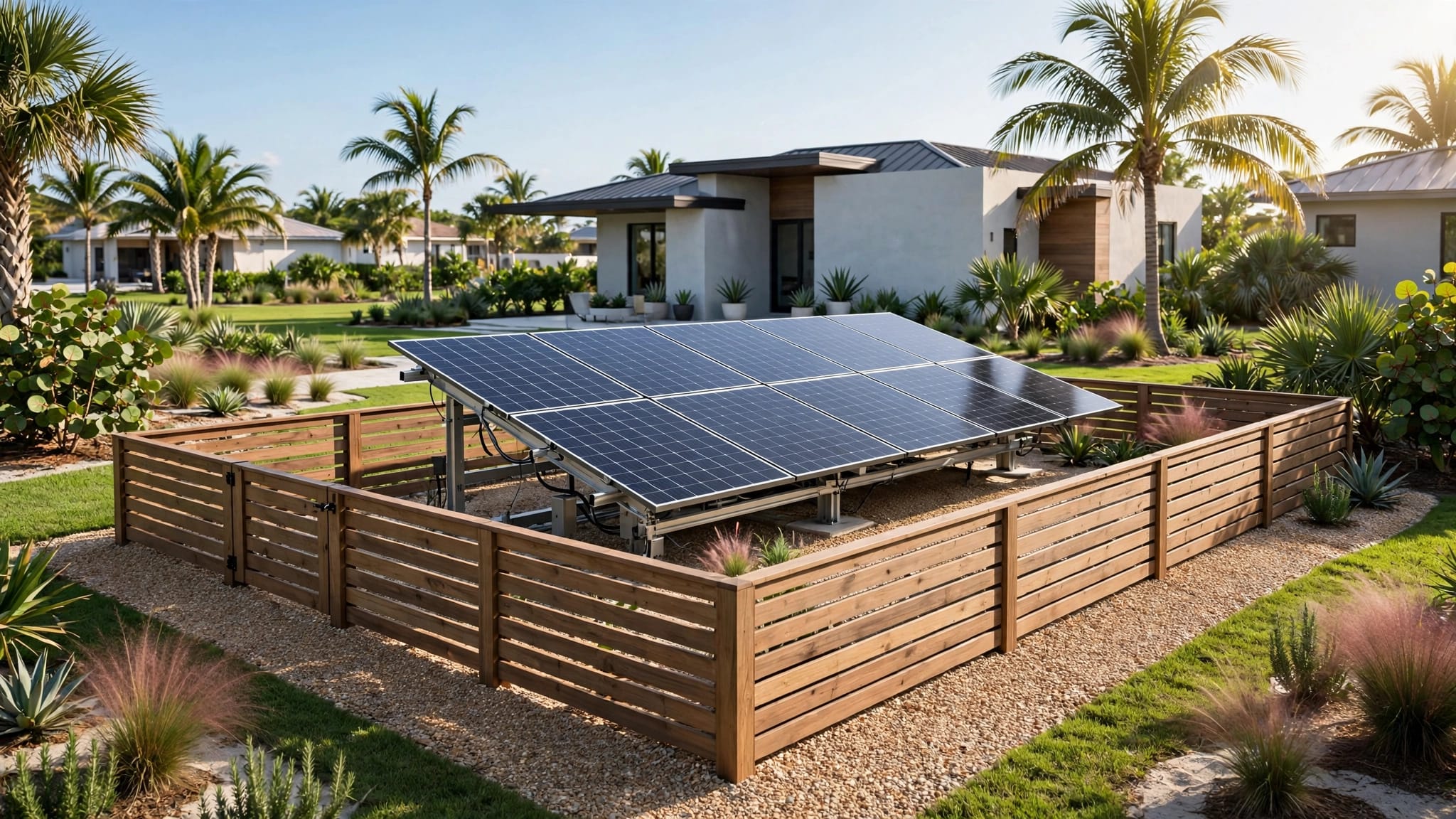
Fence Post Rot Prevention for Southwest Florida Yards
A fence can look solid above ground while a wood post softens at the soil line. In Southwest Florida, summer rain, wet soil, and sprinkler overspray can keep that vulnerable spot damp. Fence post rot prevention starts with keeping water away from the base and choosing an installation that suits your yard.
If you're planning a new fence or checking an older one, focus first on what happens where each post meets the ground.
Why wood fence posts fail in Southwest Florida
Wood posts carry the rails, panels, and gates. When one weakens, the fence may lean even if every picket still looks sound.
Moisture stays where the post meets the soil
Wood decay develops when moisture remains in the wood long enough for fungi to grow. The soil line is vulnerable because rain, damp soil, and irrigation repeatedly wet the same area. Mulch piled against a post can hold moisture there longer.
Conditions vary across a single yard. A post beside a low spot may stay wet after storms, while one farther uphill dries sooner. That difference helps explain why an otherwise straight fence can develop one failing section.
Movement can reveal hidden damage
Watch for leaning after rain, a gate that suddenly drags, or rails pulling away from a post. Soft wood near ground level deserves attention even if the upper post feels firm. Dark staining alone doesn't prove rot, but softness and crumbling wood are stronger warnings.
For more signs to check, see how to extend the life of a wood fence.
Fence post rot prevention starts with drainage
The simplest improvement is often to shorten the time water sits against a post. Start by watching your yard during rain and after the sprinklers run.
Keep the post collar clear
Pull mulch and piled soil back from wood posts so you can see the point where each post enters the ground. Trim plants that hold wet leaves against the wood, and remove debris that collects around the base.
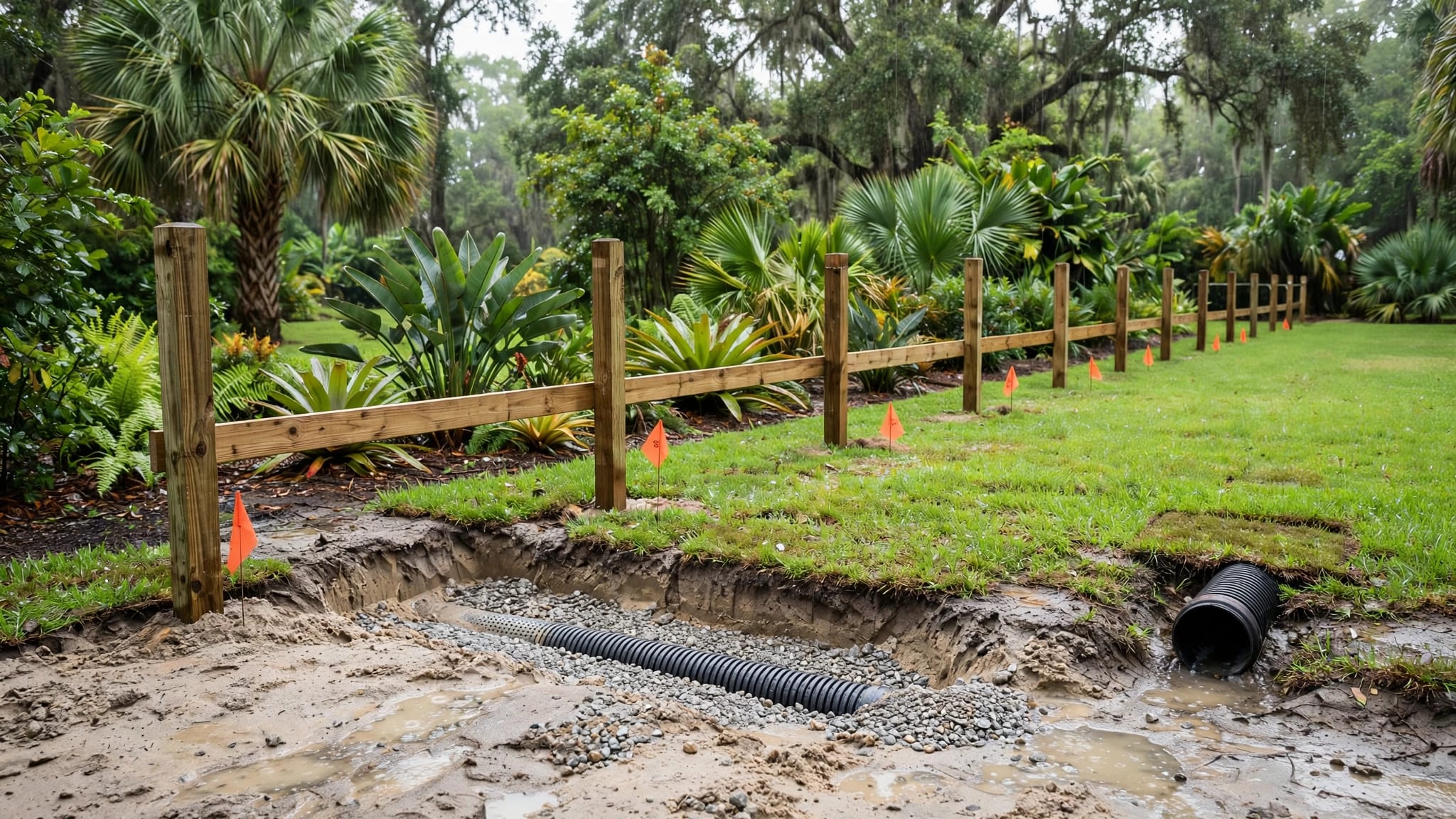
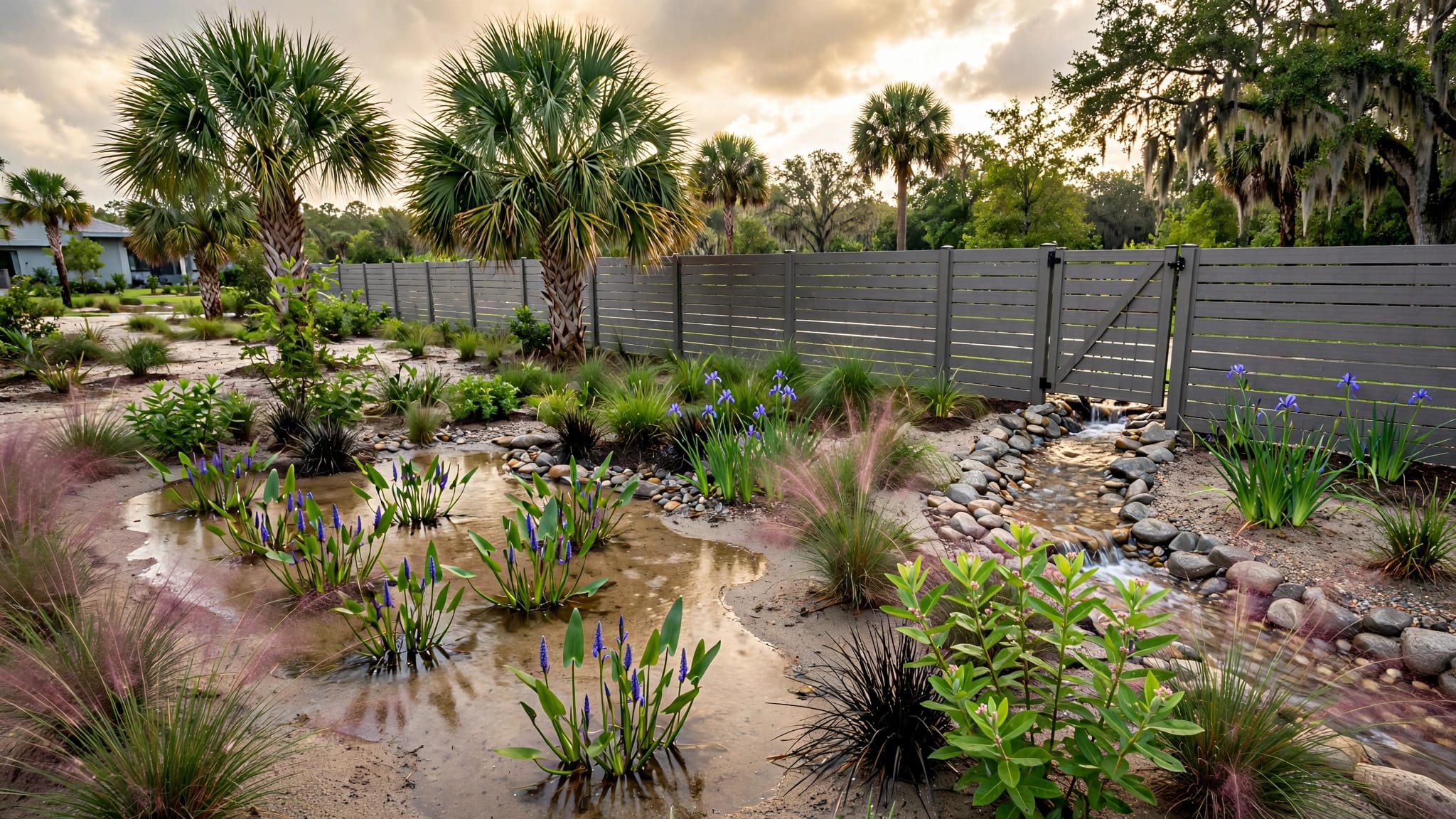
Check whether the finished ground slopes toward a post. Where practical, adjust the immediate grade so water moves away instead of collecting at the collar. Avoid redirecting runoff toward your house, a neighbor's lot, or a drainage swale. If a fence crosses a low area that carries stormwater, ask a contractor how to protect the post without blocking that flow.
Fix repeated sprinkler exposure
A sprinkler head that strikes a post every morning creates a moisture problem even during a dry stretch. Adjust its direction or spray pattern where possible, then confirm the lawn still gets the water it needs.
Pay attention to gate posts and shaded fence runs. Gates take repeated movement, while shade can slow drying. If those spots stay damp, correcting the water source will do more than covering a stain.
Choose footings that support the fence and shed water
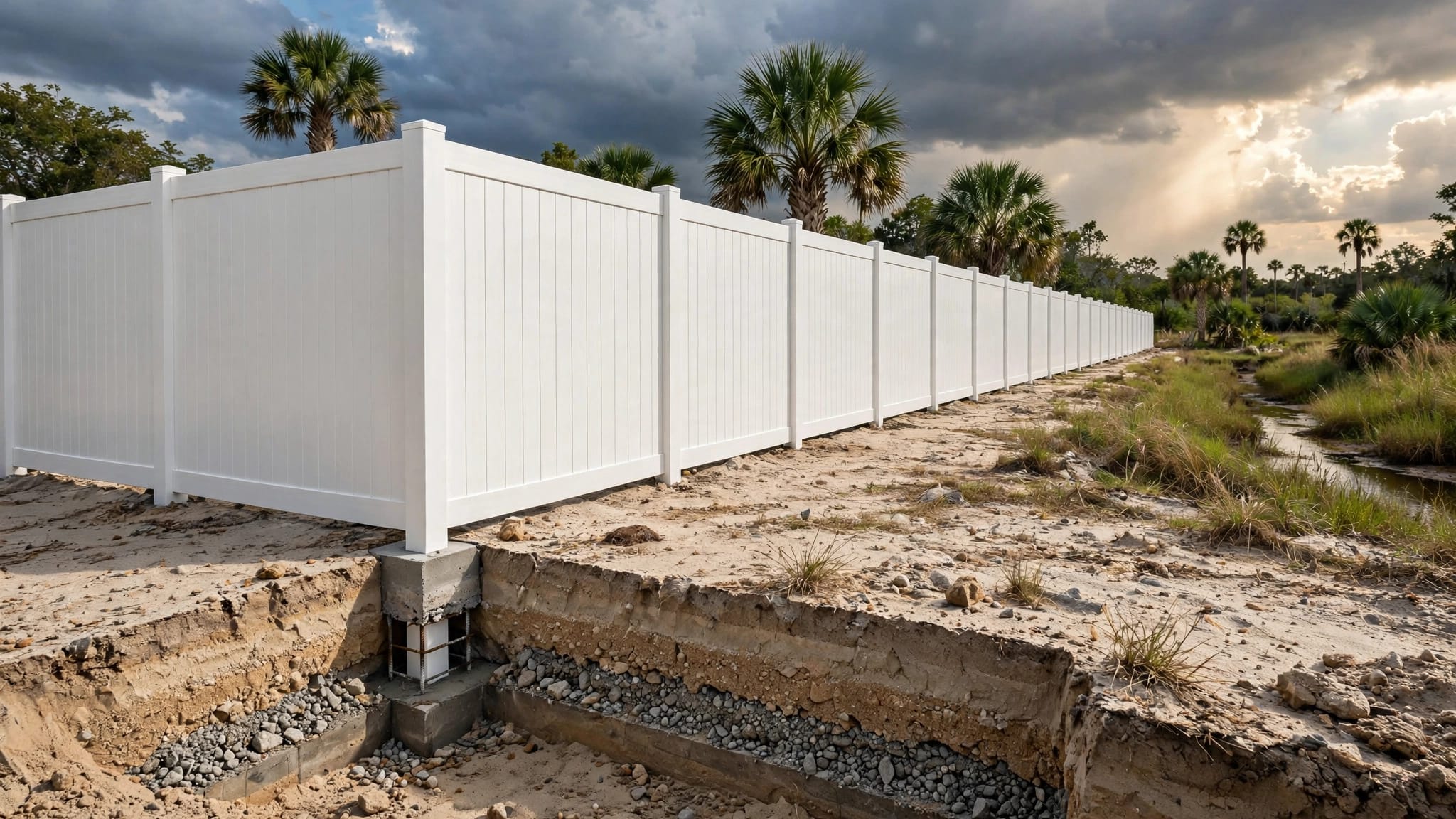
A footing must hold the post steady in local soil. For wood, its design also affects whether water collects around the buried section. Neither concrete nor stone is automatically right for every Southwest Florida yard.
Concrete needs attention at the surface
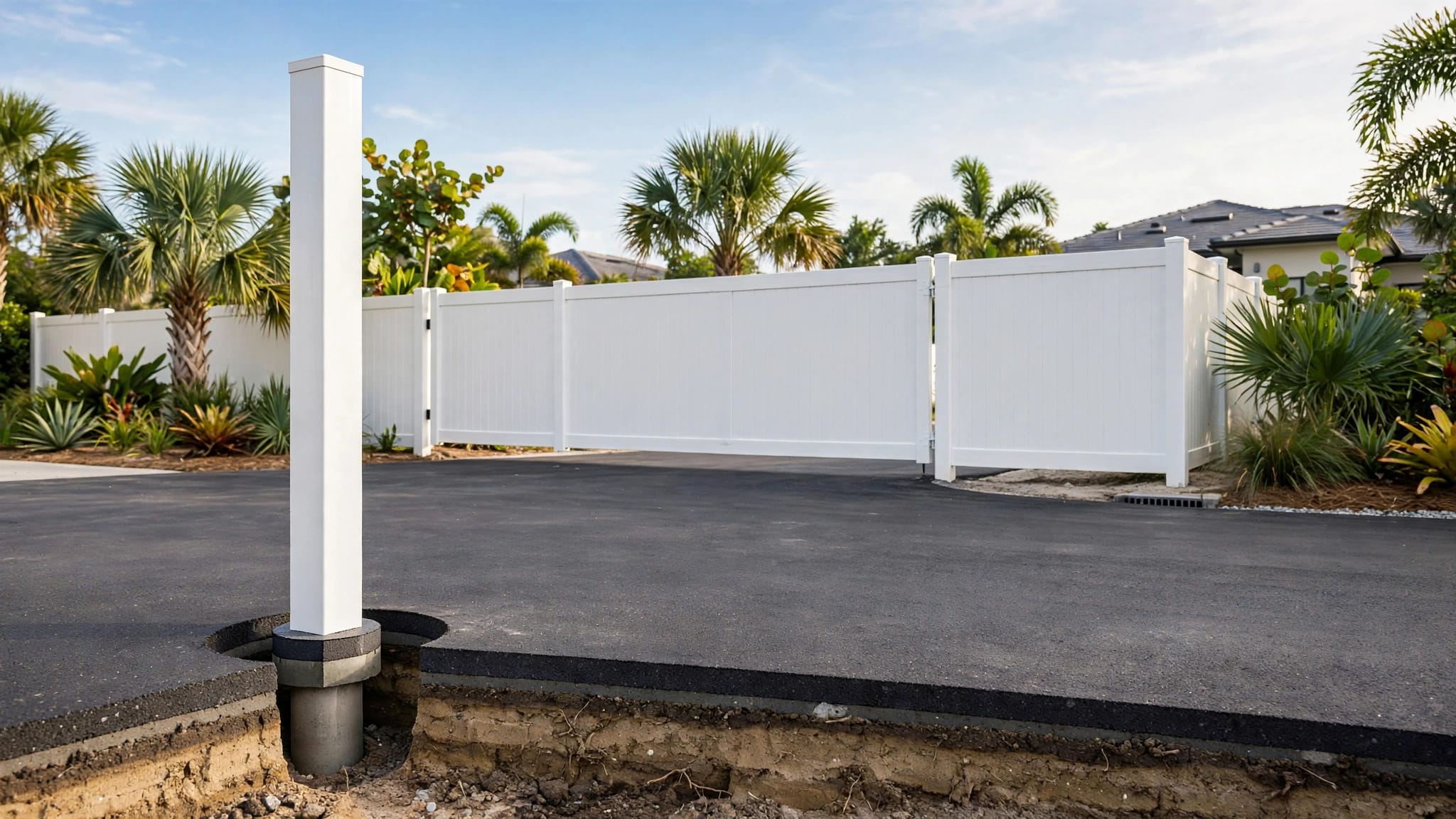
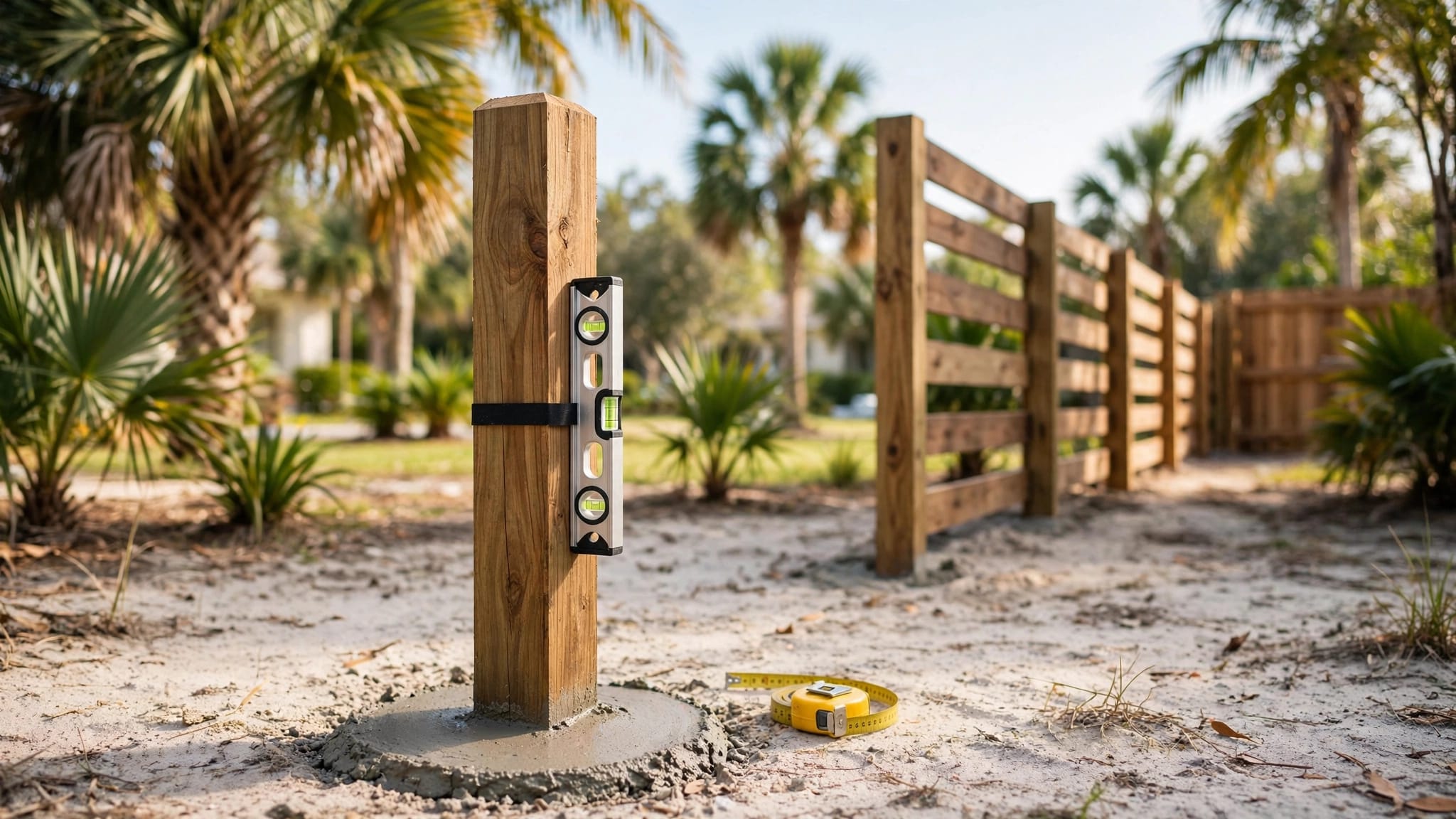
Concrete can provide needed support, particularly at gates and wind-exposed fence runs. Problems arise when water ponds against the wood at the top of the footing. A poorly finished collar can leave that contact area wet long after a storm.
Ask how the installer will shape the finished surface and manage runoff. The answer should account for both drainage and the loads on your fence. A privacy fence on an open lot places different demands on its posts than an open picket fence.
Stone depends on site conditions
Compacted crushed stone can drain around a post and help reduce moisture exposure. However, a stone-set footing still needs enough stability for the fence, and drainage offers limited help if groundwater keeps the hole saturated.
A post-depth guide for Cape Coral discusses a 4 to 6 inch compacted gravel base when groundwater is a concern . That detail isn't a universal specification. Compare fence footing options in Southwest Florida with the soil and water conditions on your property before choosing a method.
Get the installation details right before digging
Good surface drainage won't compensate for a post that shifts in wet sand. Installation should address the whole fence system, including its gates, corners, and end posts.
Check depth against the actual site
There isn't one post depth that fits every fence and lot. Soil conditions, fence height, panel style, wind exposure, and applicable requirements all matter. Shallow or poorly supported posts may move after heavy rain, even when rot isn't present.
Ask your contractor how they determine footing dimensions and what they expect to find below grade. The Cape Coral fence post depth guide explains why sandy ground and groundwater need attention during planning.
Give gates their own assessment
Every opening and closing motion pulls on the gate posts. A heavy gate also puts more demand on its hinges and connections than a typical line post faces.
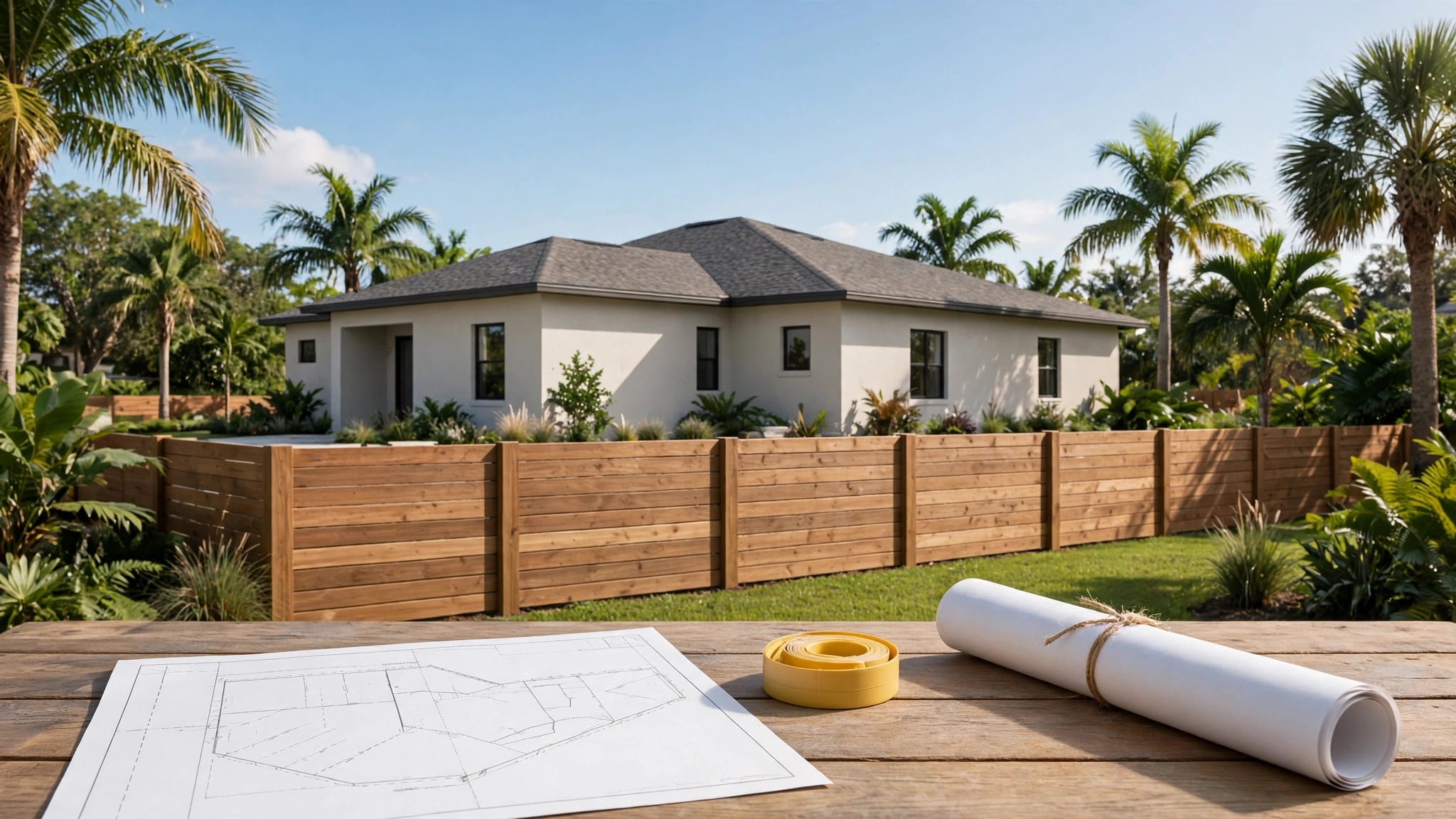
Have the installer assess gate-post support separately. Before work begins, confirm the fence location, utility markings, and any relevant HOA, permit, or property-line requirements. A post placed in the wrong location creates a problem that better drainage can't solve.
Match posts and hardware to your property
A wood fence can be a good choice when you like its appearance and are willing to maintain it. Ask whether the proposed posts are suitable for their intended ground-contact use, and check the manufacturer's instructions for the materials being installed.
Consider exposure across the fence line
A canal-side run, a shaded side yard, and a sunny front boundary may face different conditions. Wet ground increases concern at the post base. Meanwhile, salt air can speed corrosion at exposed connections, especially near coastal water.
Tell your contractor about puddling, irrigation spray, and past fence movement. If one section has failed repeatedly, replacing it with the same post and footing detail may leave the underlying moisture problem unchanged.
Don't overlook fasteners
A sound post still needs dependable rail connections, brackets, and gate hardware. Corroded fasteners can loosen and make a fence feel unstable before the wood itself fails.
Ask for hardware suited to the property's salt exposure and compatible with the fence system. Stainless steel and suitable galvanized components are common options, but the right choice depends on the metals and coatings they contact. Check salt-resistant fence hardware for Cape Coral homes when comparing specifications for a coastal installation.
Inspect wood posts through the rainy season
A quick look at the base of each post can catch a developing problem before an entire fence run shifts. Make inspections part of routine yard care, with an extra check after prolonged rain or strong wind.
Look and test without damaging the post
Clear loose debris so the soil-line area is visible. Look for splitting, crumbling wood, gaps around the post, loose rails, and a change in alignment. Gently check a suspect area for softness; don't force a tool into sound wood.
Next, watch the fence while a gate opens and closes. If the gate post rocks or the latch no longer lines up, arrange an assessment. Movement may come from decayed wood, a loose footing, or saturated soil, and each calls for a different repair.
Clean and coat at the right time
Remove dirt and mildew as appropriate for the wood and its finish. A Southwest Florida fence maintenance schedule by material suggests deep-cleaning and re-sealing or staining wood about every 2 to 3 years. Follow the coating manufacturer's directions and adjust for the fence's exposure.
Let wood dry before applying a finish. Coating a wet post won't fix a soft base or correct water pooling around it.
Know when a post needs replacement
Cleaning and finishing can protect sound wood, but they can't restore strength to a post that has decayed near the ground.
Separate rot from footing movement
A leaning post isn't always rotten. If the wood remains firm but the whole post shifts in its hole, the footing or surrounding soil may be the main problem. If the base crumbles or yields under gentle pressure, the post itself needs a closer look.
Avoid relying on the upper fence panels as proof that the structure is safe. Posts often show trouble first. A failing gate post deserves prompt attention because people use and pull on it every day.
Fix the cause along with the post
A contractor can assess whether one post can be replaced or whether adjacent rails and posts also need work. Ask what made the original installation fail. Was water trapped at the collar? Does a sprinkler soak the replacement location? Is the gate asking too much of its support?
Request a repair scope that addresses those conditions. The price depends on access, material, footing removal, and how much of the fence must come apart, so a site-specific estimate is more useful than a generic per-post figure.
Consider other materials where wood stays wet
If a fence line repeatedly floods or demands more upkeep than you want, changing materials may make sense. It won't remove the need for sound footings or regular inspections.
Vinyl and aluminum avoid wood decay
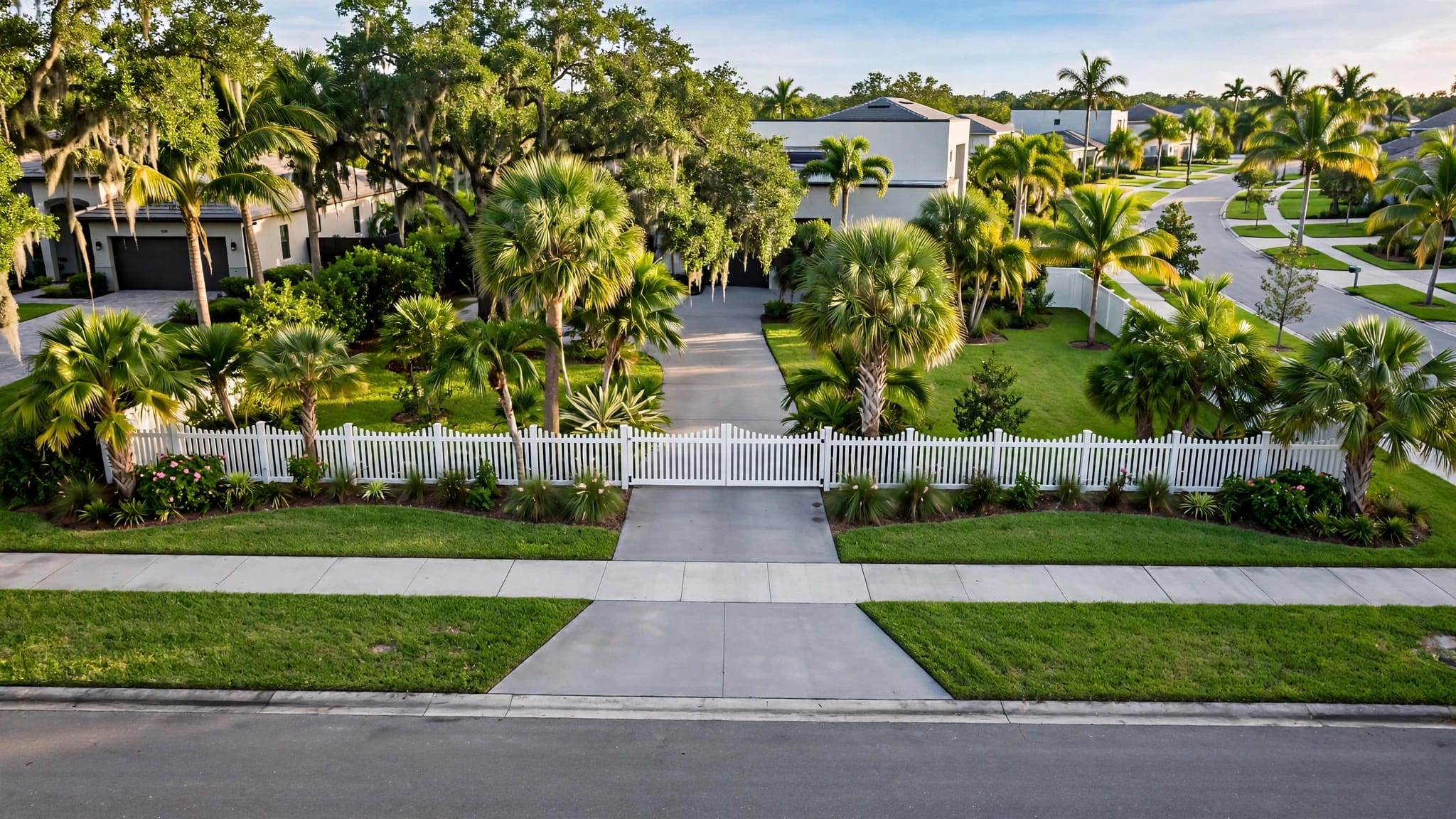
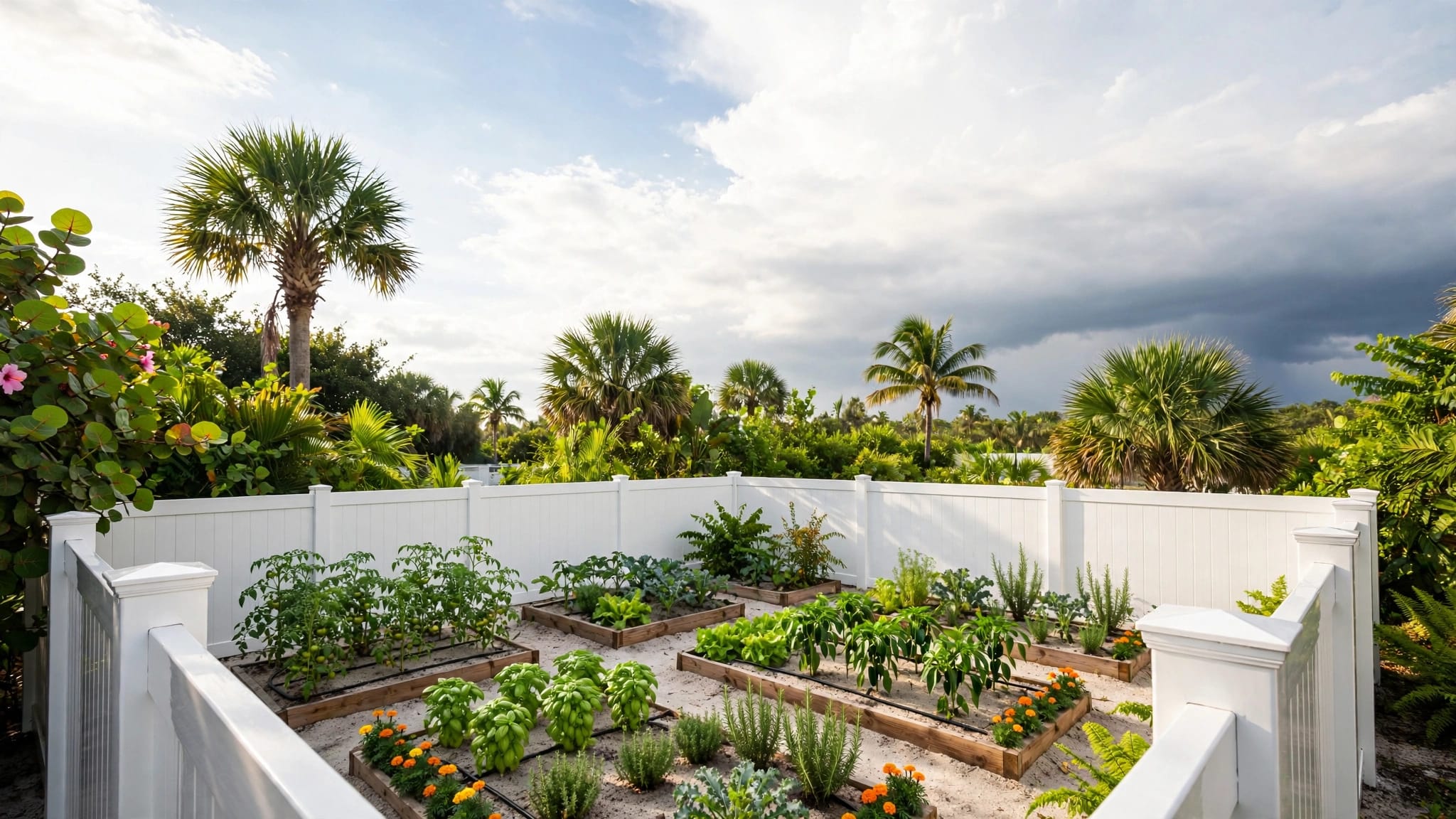
Vinyl and aluminum posts don't rot like wood. Vinyl can provide privacy, but solid panels catch wind and need appropriate support. Aluminum's open design can suit yards where sightlines matter; its connections and finish still need care, especially near salt air.
Compare the full system
Composite and metal fencing offer other choices, depending on the design and installation method. Compare posts, panels, hardware, and maintenance needs together rather than choosing by panel appearance alone.
Your yard's drainage, exposure, and applicable local requirements should guide the choice. A material change helps most when the new footing and hardware also address the conditions that damaged the old fence.
Key takeaways
- Keep mulch, soil buildup, and sprinkler spray from holding moisture against wood post bases.
- Choose footing details for both drainage and stability , based on the conditions at your property.
- Check posts after heavy rain, and investigate softness or new movement before a small repair grows.
Common questions about fence post rot
Does concrete make a wood fence post rot?
Concrete itself doesn't automatically cause rot. The concern is water that collects where the wood meets the footing and stays against the post. Footing design, surface grading, and local drainage matter more than a simple concrete-versus-no-concrete rule.
Can gravel prevent rot in a wet post hole?
Compacted stone may help water drain where the surrounding soil allows it. It can't make a persistently saturated site dry, and it still must support the fence properly. Have an installer assess groundwater and footing stability before relying on stone as the solution.
Will sealing repair a soft post?
No. A finish can help protect sound wood when applied under the right conditions, but it doesn't restore decayed wood's strength. If a post feels soft at ground level or moves when the gate operates, have its condition and footing assessed.
Keep the base sound, not just the panels
That good-looking fence above ground depends on what happens at each post base. Control repeat moisture, choose a footing suited to the site, and check for softness or movement after storms.
For Southwest Florida homeowners, the lasting improvement is often a drainage fix , not another coat of finish over a wet post.