How to Install a Fence Around a Screened Lanai in Florida
A fence can make your screened lanai feel more private, but a post in the wrong place can damage the enclosure or block its door. For a sound lanai fence installation , plan a separate fence line with its own support, then check your lot's rules before digging.
In Southwest Florida, that means accounting for wind, sandy soil, drainage, and sometimes a nearby canal. Start by mapping the space you need around the lanai.
Map the yard before choosing a fence line
Walk the lanai perimeter with your property survey in hand. Mark the enclosure corners, doors, pool equipment, air-conditioning equipment, irrigation heads, and any visible drainage swales. Then measure the space available for fence posts and gates.
Leave room to use and maintain the lanai
Position the fence far enough from the screen enclosure to open doors fully, replace screen panels, and clean both sides. A narrow gap that no one can access will collect leaves and make repairs harder.
Check the planned gate swing on the ground before settling on its location. A gate near the lanai should open without striking a screen door, enclosure frame, or patio furniture. If the fence is meant to contain a dog, inspect every corner for an escape gap rather than measuring only the straight runs.
Check what the ground is doing
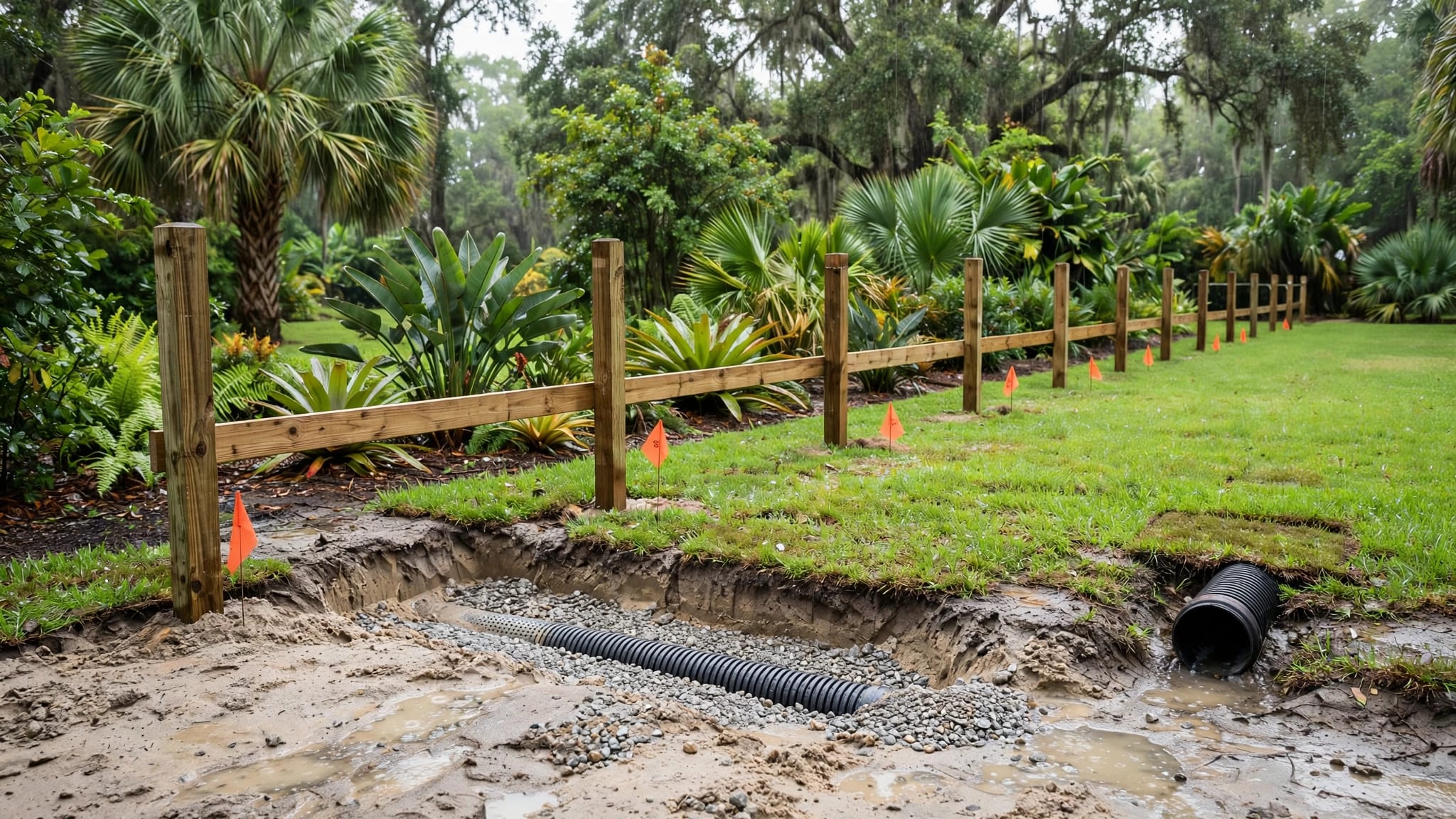
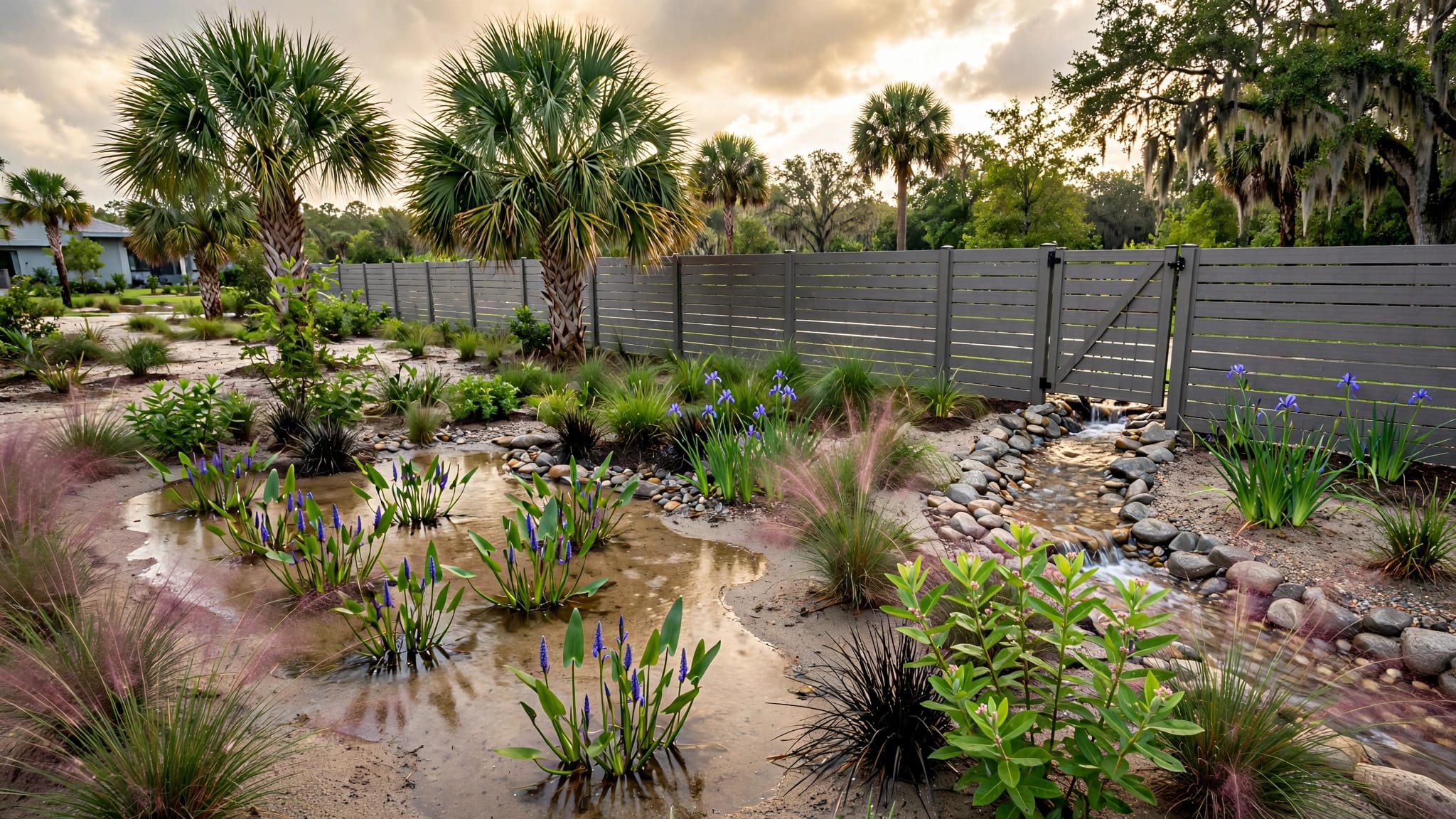
After heavy rain, look for puddles beside the lanai and water moving toward a swale or canal. A fence shouldn't dam that route or divert runoff toward the house.
Take note of soft sand, exposed roots, low spots, and pavers. These conditions can change post locations or footing design. Your survey may also show easements that aren't obvious during a walk through the yard.
Check permits and setbacks for your address
Florida doesn't have one permit or setback rule that applies to every residential fence. The city or county governing your property determines where the fence can go, how tall it can be, and what paperwork you'll need.
Confirm the jurisdiction and lot restrictions
A Cape Coral property follows city rules, while a home in unincorporated Lee County follows county rules. Collier County has its own permit process. Start with your building department and a current survey, then check your HOA documents if you have one.
For a Cape Coral project, review the local fence setback rules before drawing the line. Ask about easements and street-corner visibility as well as the property boundary. Don't assume that a fence can sit against the lanai because the enclosure was previously approved there.
Give waterfront lots a separate review
Waterfront rules can change the fence style as well as its placement. Cape Coral's residential regulations generally cap fences at 6 feet. In the rear 20 feet of a yard abutting a waterway, the portion above 3 feet must be open mesh.
Lee County has a different rule for fences within 25 feet of a body of water: the portion above 3.5 feet must be open mesh. These are local examples , not statewide measurements. If your lot borders a canal, ask the governing department which rules apply before buying privacy panels.
Keep the fence independent of the screen enclosure
A screen cage and a fence respond differently to wind. The enclosure's aluminum members weren't automatically designed to support a fence panel or resist the pull of a gate. Plan each fence post as part of an independent structure.
Don't fasten panels to the cage
Avoid screwing rails into enclosure uprights, anchoring a gate to the screen frame, or wedging a panel against the cage. Wind-driven movement could damage connections or tear screening.
Instead, give the fence its own posts and leave a workable gap at the enclosure. If a close fit matters for pet containment or privacy, ask an installer to design a freestanding end section. That approach can close the opening without asking the screen cage to carry fence loads.
Treat slabs and pavers with care
A patio surface may look like an easy place to mount a post, but pavers aren't a structural foundation. Don't drill beside the lanai slab or cut through a finished deck without confirming what lies below and how the post will be supported.
Where a fence must pass through a paved area, a qualified installer can assess the slab or plan a separate footing. Keep any excavation clear of the enclosure's supports. If you can't identify those supports, stop and get professional advice before digging.
Choose a fence that fits the lanai and weather
Privacy, airflow, and visibility pull the design in different directions. Around a Southwest Florida lanai, material choice also affects upkeep near salt air and the amount of wind a panel catches.
Compare privacy with airflow
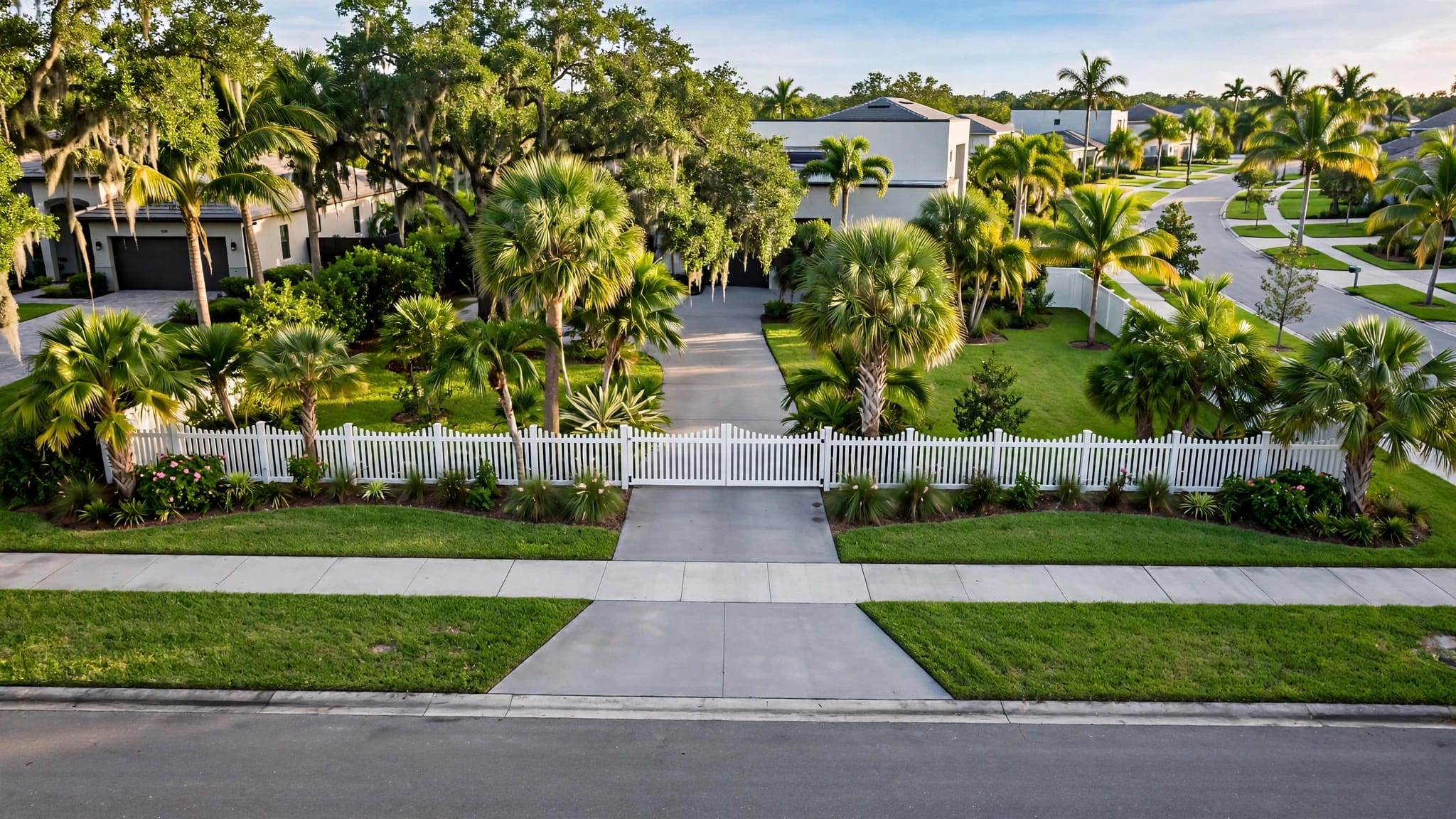
Solid vinyl panels can screen a seating area, but they present more surface to the wind than open aluminum pickets or chain link. Aluminum works well where you want a defined yard without losing the view. Chain link can contain pets while keeping the space visually open.
Wood offers a different look, though it needs more upkeep in wet, sunny conditions. On a canal lot, an open design may also help meet local visibility rules. Choose the style after confirming those rules, not before.
Specify the details that wear first
Ask about hinges, latches, screws, and post hardware, especially near the coast. Salt air can corrode hardware even when the panels themselves look sound. Powder-coated aluminum still needs occasional rinsing and hardware checks.
For a small area near the lanai, gate placement may matter more than the panel material. A well-placed gate gives you a usable route for lawn equipment and screen repairs. A poorly placed one makes both jobs awkward.
Get the permit and utility locates before digging
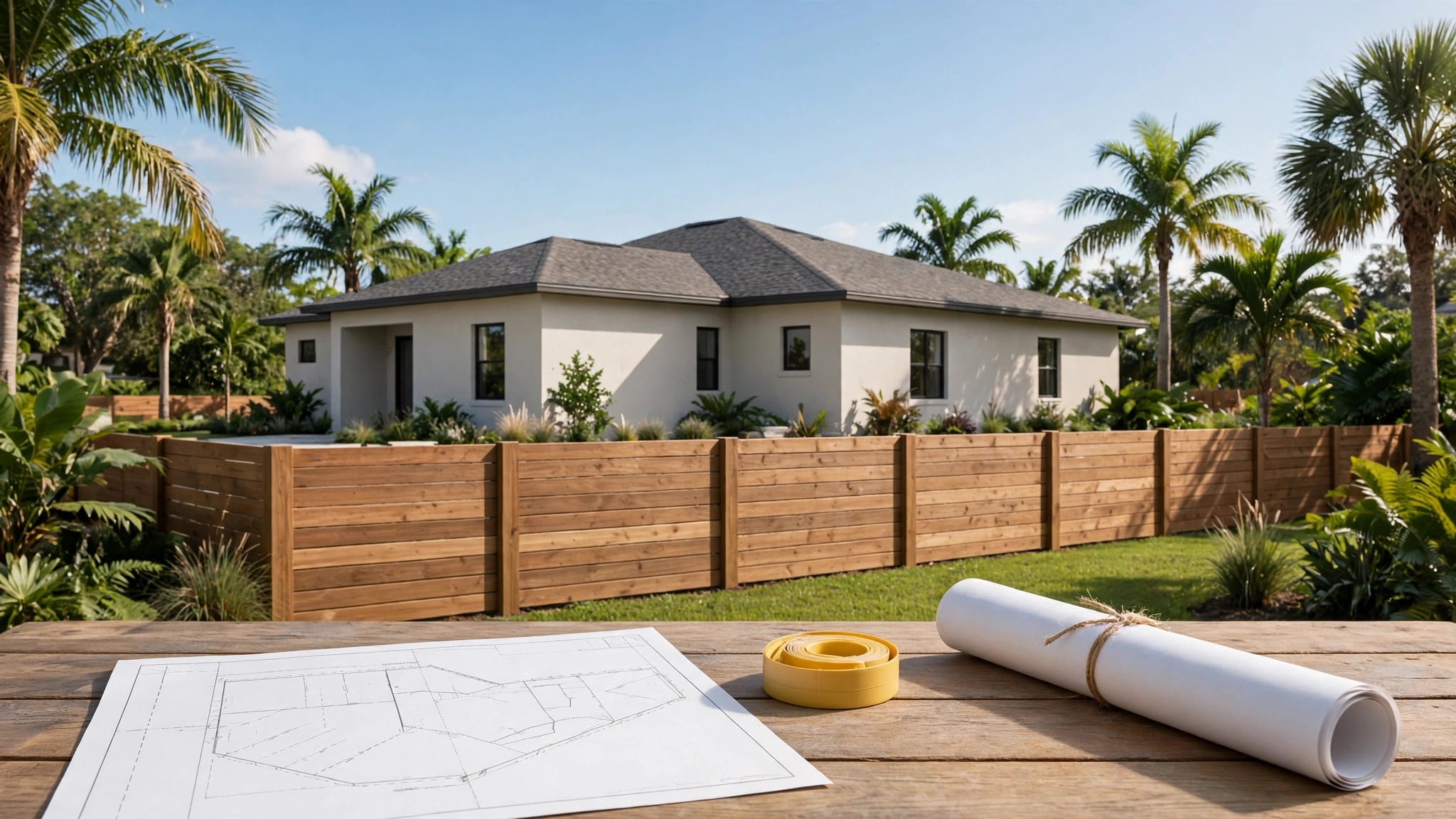
Once you've selected a route and material, put the fence on a site plan. Show the property lines, fence height and length, gate locations, and any nearby water or easements.
Submit a plan that matches the job
Cape Coral homeowners can use a fence permit checklist to prepare their application. For properties outside city limits, check the unincorporated Lee County fence rules. Collier County generally requires a building permit to erect a fence and asks applicants to show details such as gate location and swing.
Ask who will obtain the permit if you're hiring a contractor. Don't move the approved fence line during installation without checking whether the change requires a revised plan.
Contact Sunshine 811
Submit a locate request to Sunshine 811 at least two full business days before digging . The request day, weekends, and holidays don't count toward that wait. Utility members or their locators mark covered facilities; Sunshine 811 doesn't mark them itself.
Also identify private lines that may not be covered by the request, including irrigation, landscape lighting, and lines installed by a homeowner. If markings conflict with a planned post, adjust the layout or speak with the utility before excavating.
Set posts for the actual soil and wind exposure
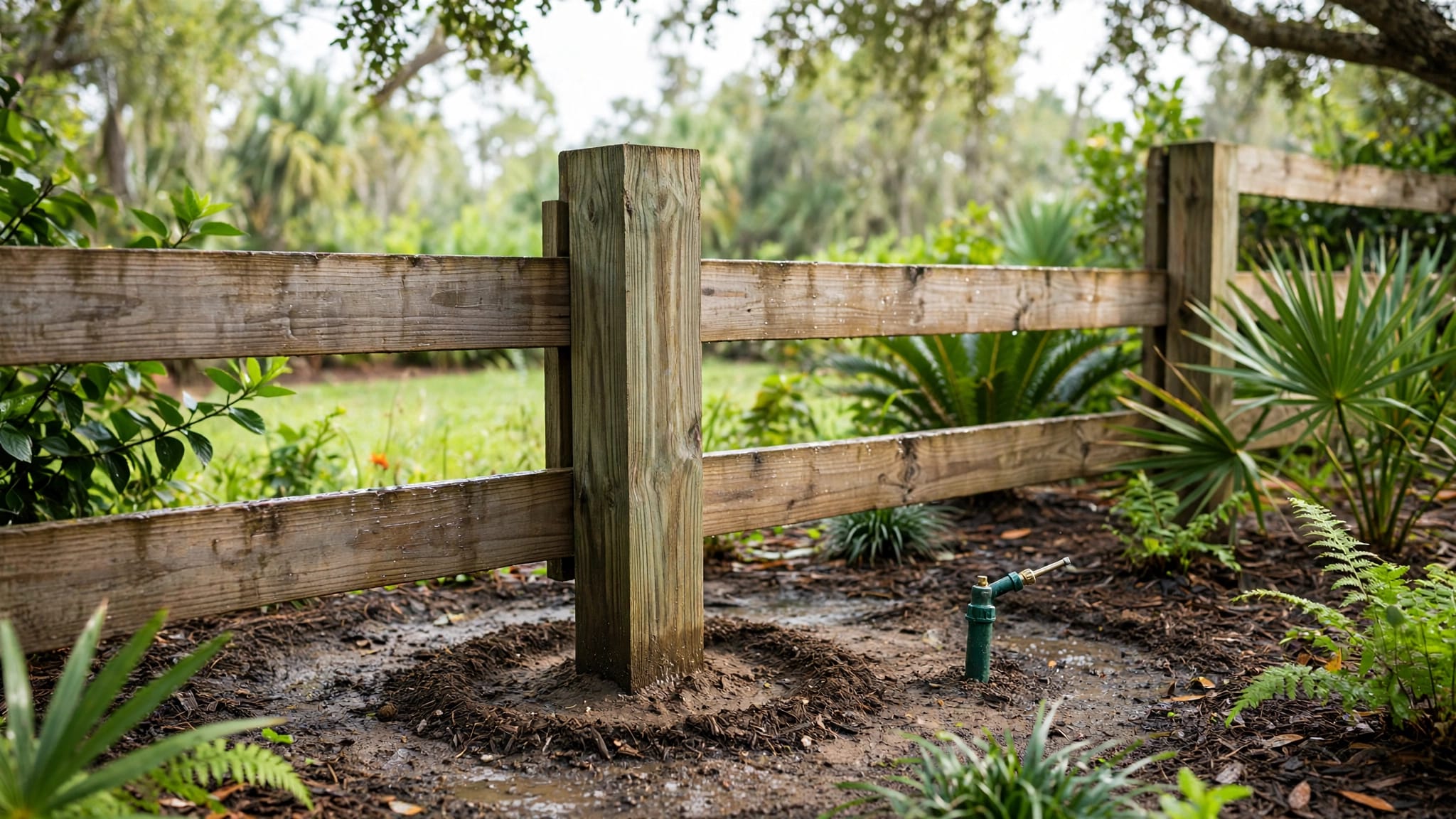
Fence posts carry the load, especially at corners, gates, and solid panels. Southwest Florida's sandy ground can lose support when saturated, while an exposed fence line faces repeated gusts. Post size, spacing, embedment, and footing design should suit the approved fence and the site.
Mark, dig, and align the posts
Set string lines for the approved route and mark every post before opening holes. Recheck property boundaries, gate widths, and the clearance around the lanai. Then dig without disturbing the screen enclosure's supports or any marked utilities.
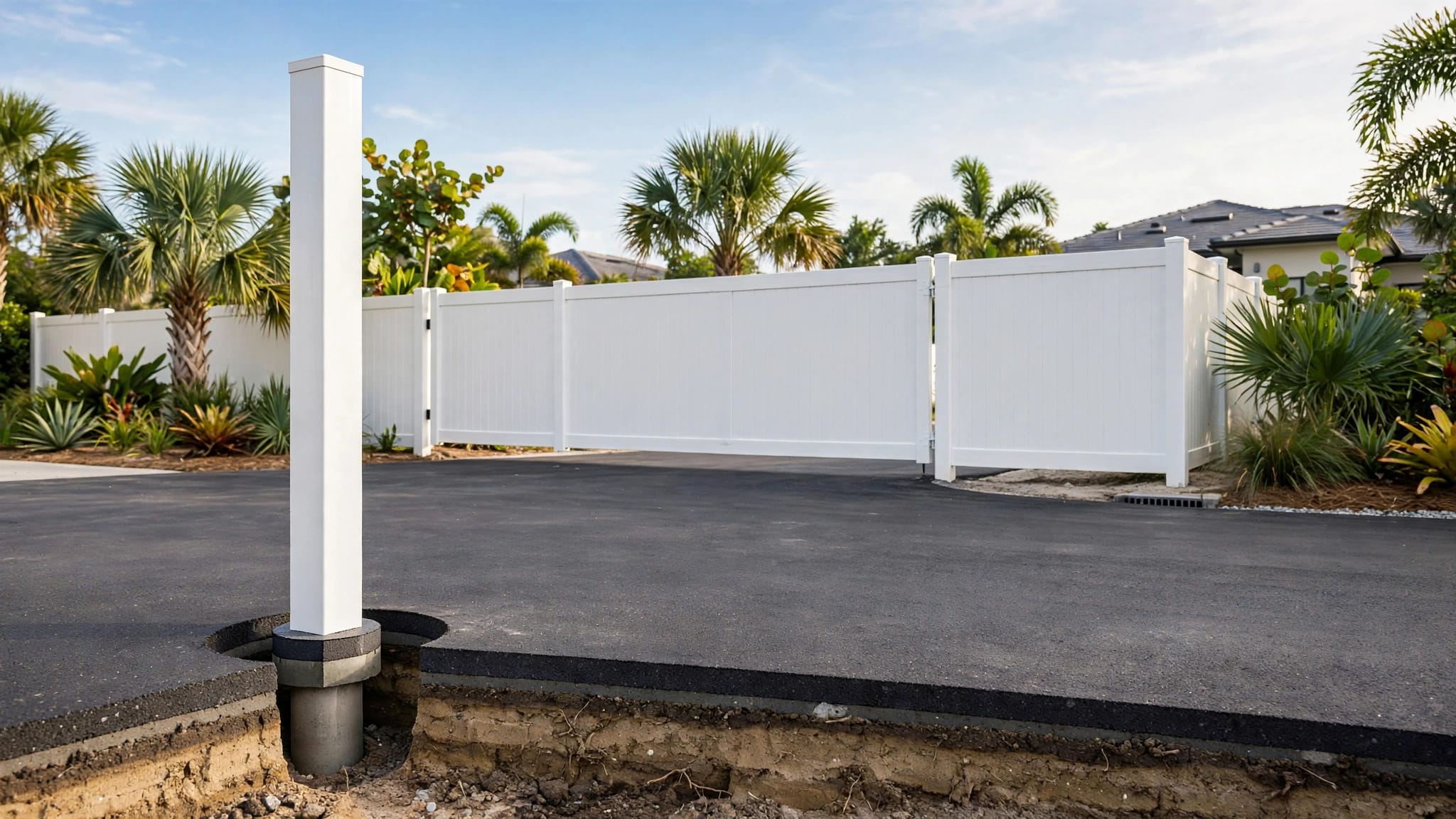
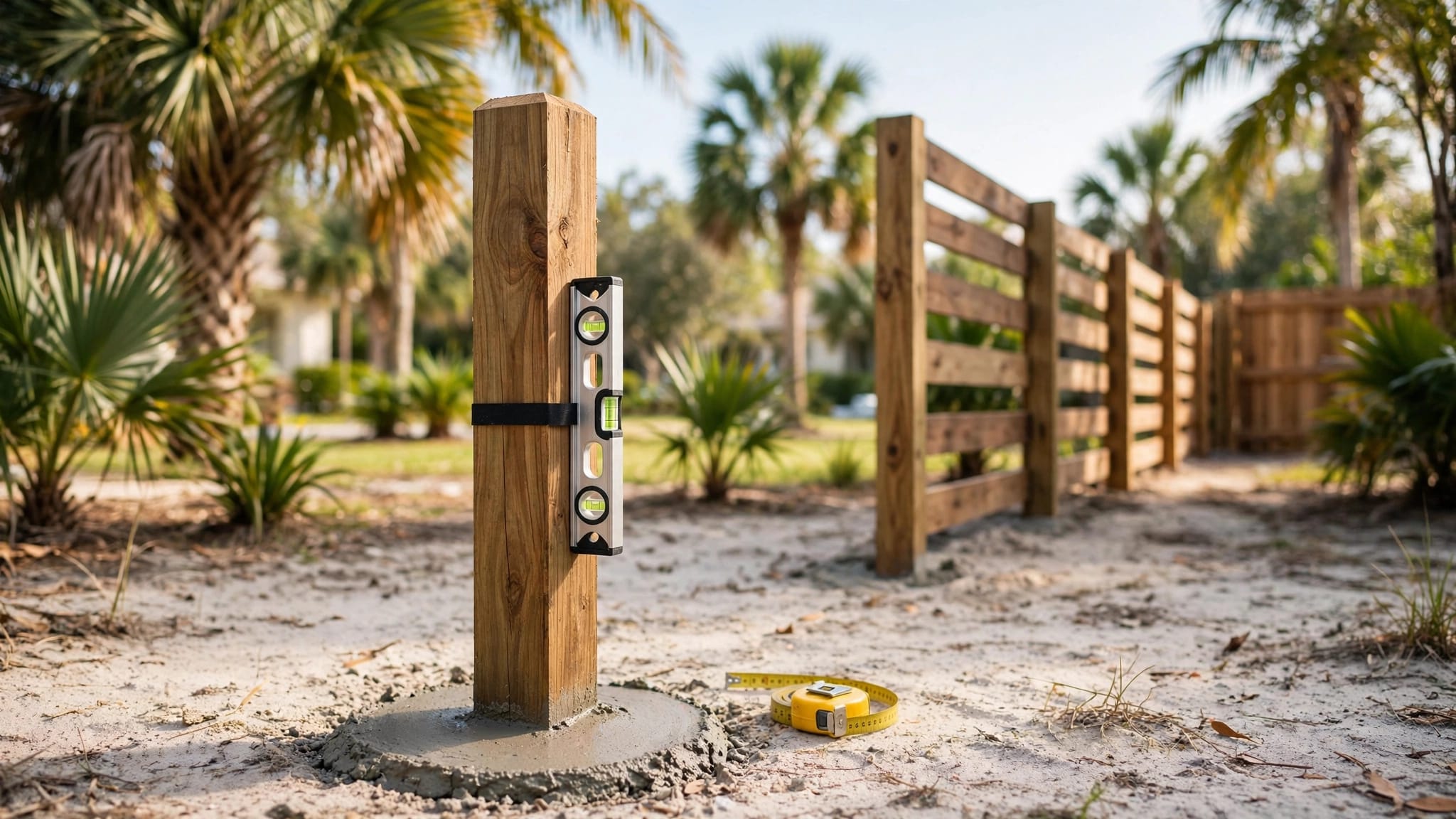
An installer may embed posts roughly 24 to 36 inches for a 6-foot fence in Southwest Florida, but that range is field practice, not a universal code minimum . Sandy fill, groundwater, gates, and exposure can call for a different design. Don't substitute the Florida Residential Code's general 12-inch exterior-footing provision for a fence-post specification.
Set posts plumb and at the spacing required for the selected fence system. Give the setting material time to cure according to its instructions before hanging heavy gates or loading the posts with panels.
Keep drainage paths open
As panels go up, preserve the yard's existing flow toward approved drainage areas. Don't pack excavated soil into a swale or build a continuous barrier across a low spot without a drainage plan.
Watch ground clearance where the grade changes. Too large a gap can defeat pet containment; too little clearance can trap debris and water. A contractor can adjust the layout or panel design without forcing a level fence into uneven ground.
Hang gates and inspect the finished fence
Install rails and panels to the chosen system's instructions, checking alignment as you work. Then hang the gate on its own fence posts, never on the screen enclosure.
Test everyday access
Open each gate through its full swing. Check that its latch engages, its bottom clears the ground, and its path leaves access for screen maintenance. Step back and look for panels touching the cage or posts leaning toward it.
If the fence is part of a pool barrier , pause before assuming a standard yard gate is enough. Ask the building department which barrier and gate requirements apply to your pool and permit.
Close out the permit
Schedule any required inspection and compare the finished fence with the approved plan. For Cape Coral jobs, a fence final inspection checklist can help you review posts, gates, spacing, and hardware beforehand.
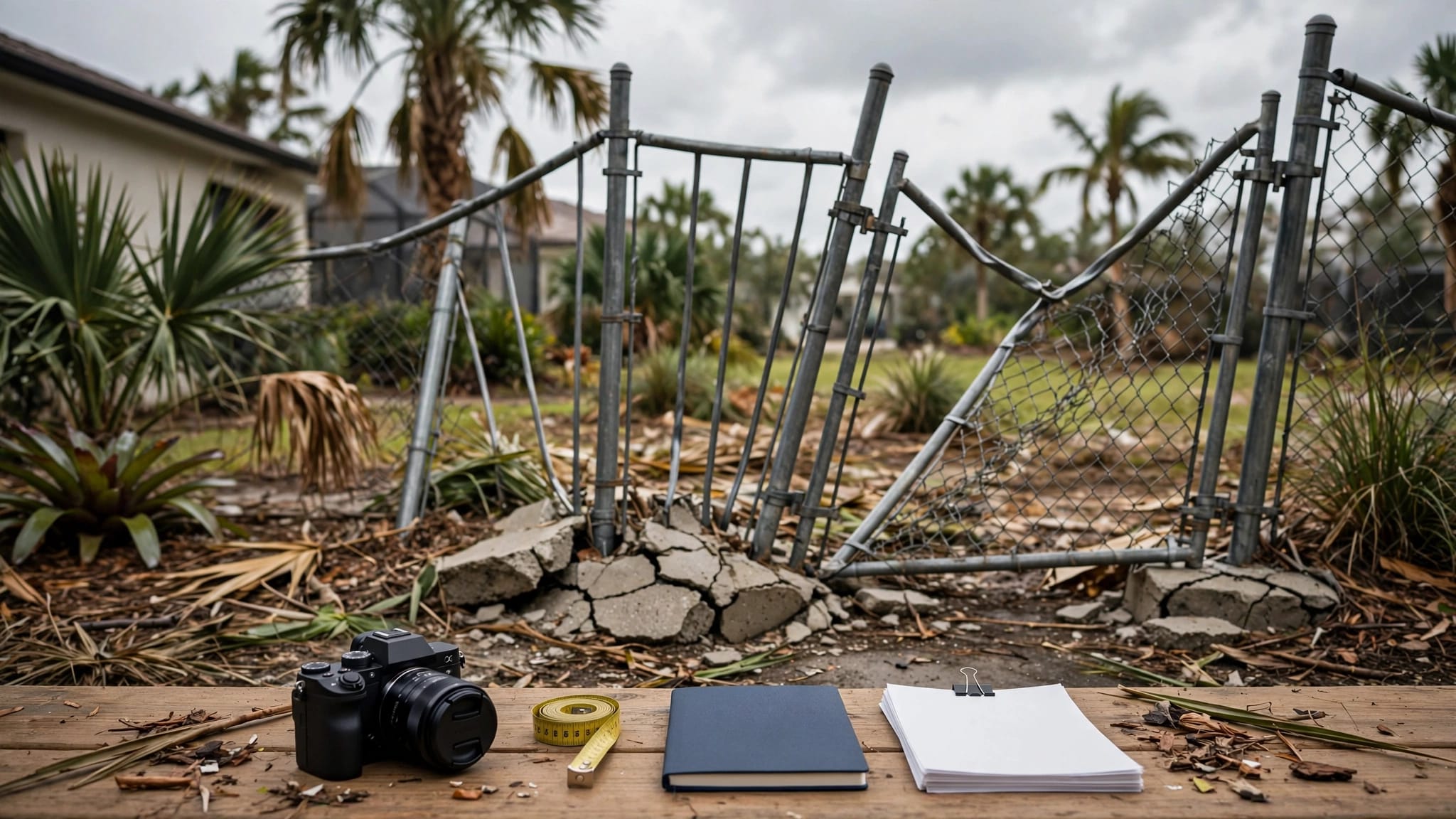
After storms, check for loose fittings, leaning posts, and panels that have shifted toward the lanai. Catching movement early protects both structures.
Know when to bring in a fence professional
A straightforward run through clear, firm ground is different from a fence beside a paved pool deck or an existing cage footing. Bring in a licensed local professional when the route crosses pavers, runs close to enclosure supports, or needs a gate beside the lanai door.
Professional input also helps on canal lots, in persistently wet soil, or where a solid privacy fence faces open wind. Ask for a plan showing independent posts, gate operation, drainage, and who handles permitting. Those details make competing estimates more useful than a panel price alone.
Key Takeaways
- Plan an independent fence line with enough clearance to use and maintain the screened lanai.
- Verify local permits, setbacks, easements, and waterfront rules before ordering materials.
- Request a Sunshine 811 locate at least two full business days before digging, and check for private lines.
- Size posts for the site, preserve drainage, and keep gates and panels off the enclosure.
Frequently Asked Questions
Can I attach a fence directly to my lanai screen frame?
Plan for separate fence posts instead. A screen enclosure shouldn't be assumed capable of carrying fence panels or gate forces. An installer can design a freestanding section if you need to close a small gap beside the cage.
How close can the fence sit to a screened lanai?
There's no single clearance that works for every lanai. Leave room for the screen door to open and for someone to clean or repair the enclosure. Set the final route only after checking property lines, easements, enclosure supports, and local placement rules.
Do I need a permit for a fence near my lanai?
Check with the city or county governing your address before work starts. Permit requirements differ across Southwest Florida; the fence's proximity to a lanai doesn't create a general exemption. If the fence also serves as a pool barrier, ask about those requirements separately.
Conclusion
The safest place for a lanai fence is on its own approved line , supported by its own posts and clear of the screen cage. Survey the yard, confirm local rules, and locate utilities before anyone digs.
That preparation protects the enclosure you already have while giving you a fence that works with your yard.