When Fence Posts Hit Buried Concrete
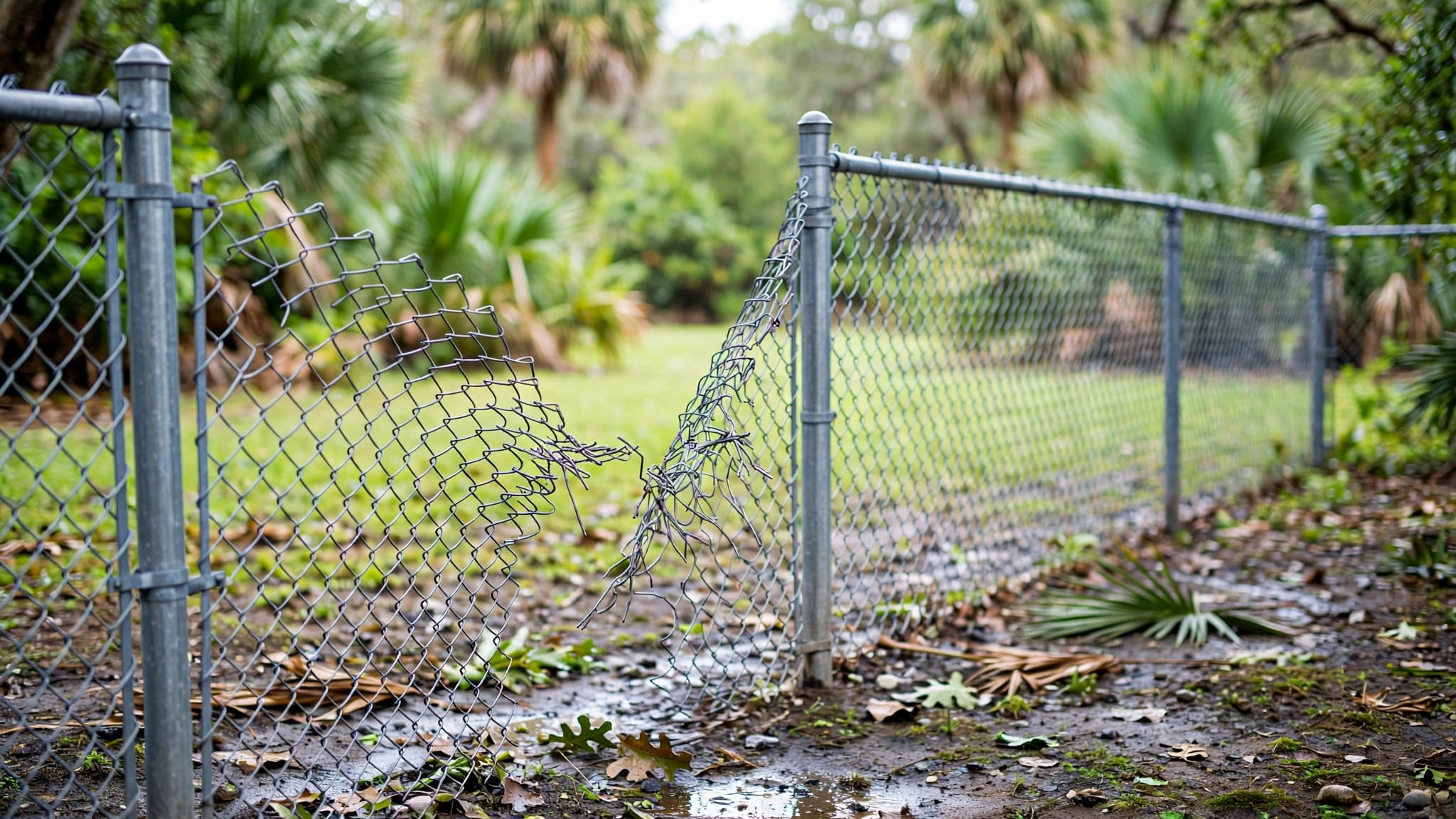
An auger can move easily through Florida sand, then stop hard against concrete left by a previous project. If you searched for fence posts buried concrete , you may have found the problem at the worst possible time, when a new fence line is already staked.
That hard stop rarely calls for more force. Instead, a contractor needs to identify the obstruction, verify the proposed post location, and account for nearby utilities or structures. A careful plan keeps the fence straight and the gate properly supported.
Fence Posts Buried Concrete: Identify What You Hit
The phrase "fence posts buried concrete" doesn't identify the material below grade. It might be an old fence footing, a section of walkway, a pool-deck edge, construction debris, or concrete tied to another part of the property.
Old fence footings are a common cause
A former wood, chain-link, vinyl, or aluminum fence may leave individual concrete footings behind. This often happens when the new fence follows a similar route but uses slightly different post spacing.
A round concrete mass near an old post location usually points to a former footing. However, a broad and continuous concrete surface deserves more investigation. Breaking into a driveway, patio, or structural slab can create a much larger repair.
An auger is not a demolition tool
Power augers create a lot of torque. When the blade catches concrete, it can jerk the machine, damage the auger, or widen the hole beyond the needed size.
The crew should stop digging, expose the obstruction by hand where practical, and measure its width and depth. That information helps determine whether removal, a layout adjustment, or a different mounting method makes sense.
Check the Fence Line Before Changing the Plan
Concrete may sit only a few inches from the intended post center. Still, moving a post without checking the full fence layout can create problems farther down the line.
Mark utilities and confirm property limits
Contact Sunshine 811 before any fence excavation. Utility markings help identify participating underground lines, although private irrigation, landscape lighting, and pool equipment may need separate locating.
A survey also matters. An existing fence doesn't prove the boundary is correct, and an old footing may sit inside an easement or right-of-way. This is especially important when a replacement fence shifts closer to a side yard, drainage swale, or corner lot.
Keep panel spacing and gates in balance
Fence panels have planned widths, and gates need square, stable posts. A small change at one footing can leave an awkwardly narrow panel at the end of a run or place a gate post out of alignment.
An old concrete collar can look solid while still being too shallow, cracked, off-center, or wrong for the new fence material. Before retaining it, review the practical checks for reusing fence post footings in Florida.
Fence Posts Buried Concrete: Choose a Safe Remedy
After the crew identifies the concrete and confirms the line, the solution should fit the fence design rather than force the design around an unknown obstacle.
Remove the old footing when a clean hole is needed
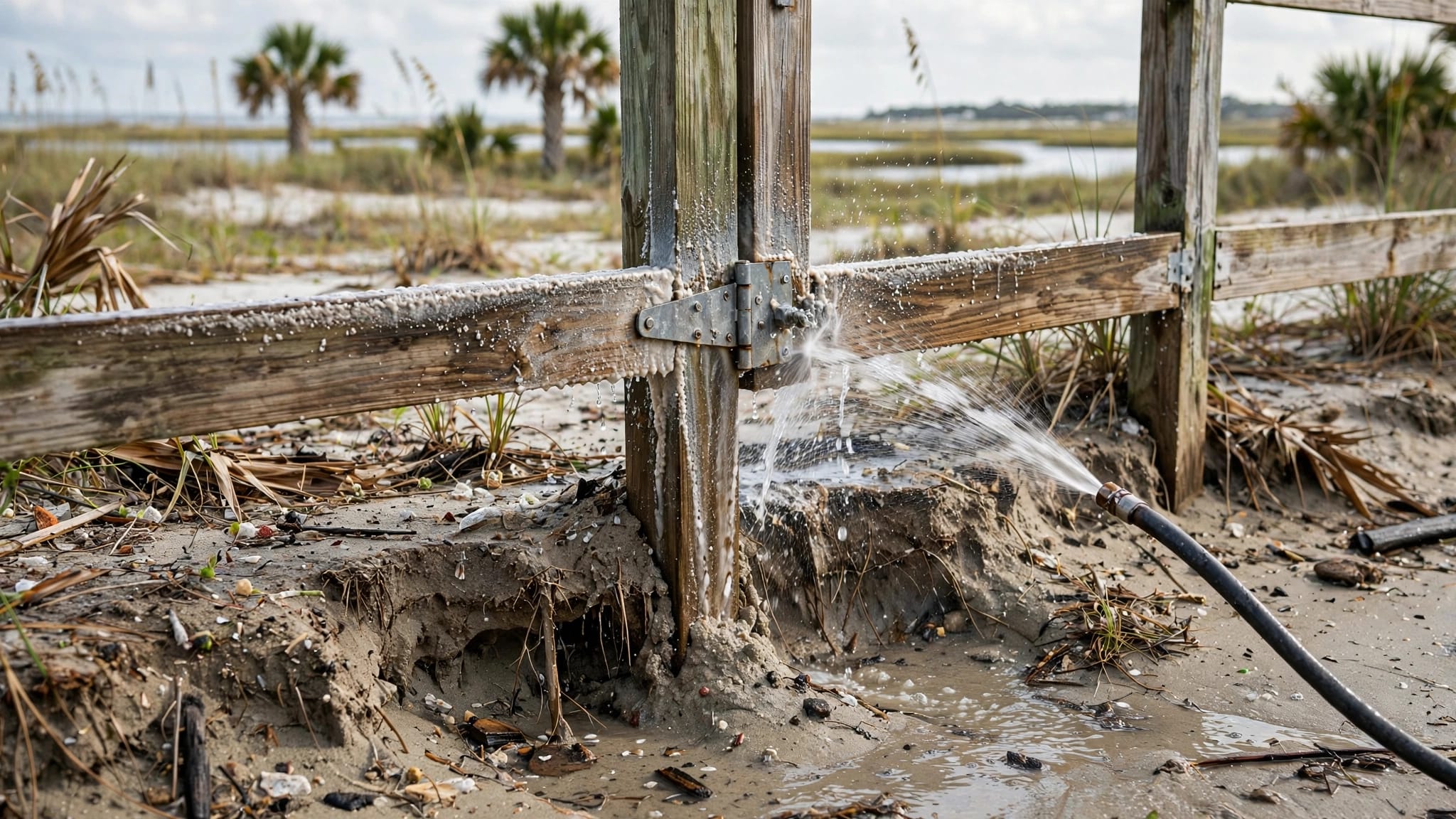
Removing an abandoned footing gives the installer a clean location for the new post. Depending on the footing's size and access, this may involve breaking the concrete into manageable pieces and excavating it from the hole.
After removal, the crew needs to rebuild the hole correctly. Loose concrete fragments and poorly compacted soil can leave the new post without consistent support.
Shift a post only when the layout allows it
A minor adjustment may work when the change preserves property-line clearance, panel spacing, and gate geometry. On a custom fence, a shorter end section can sometimes keep the entire run looking intentional.
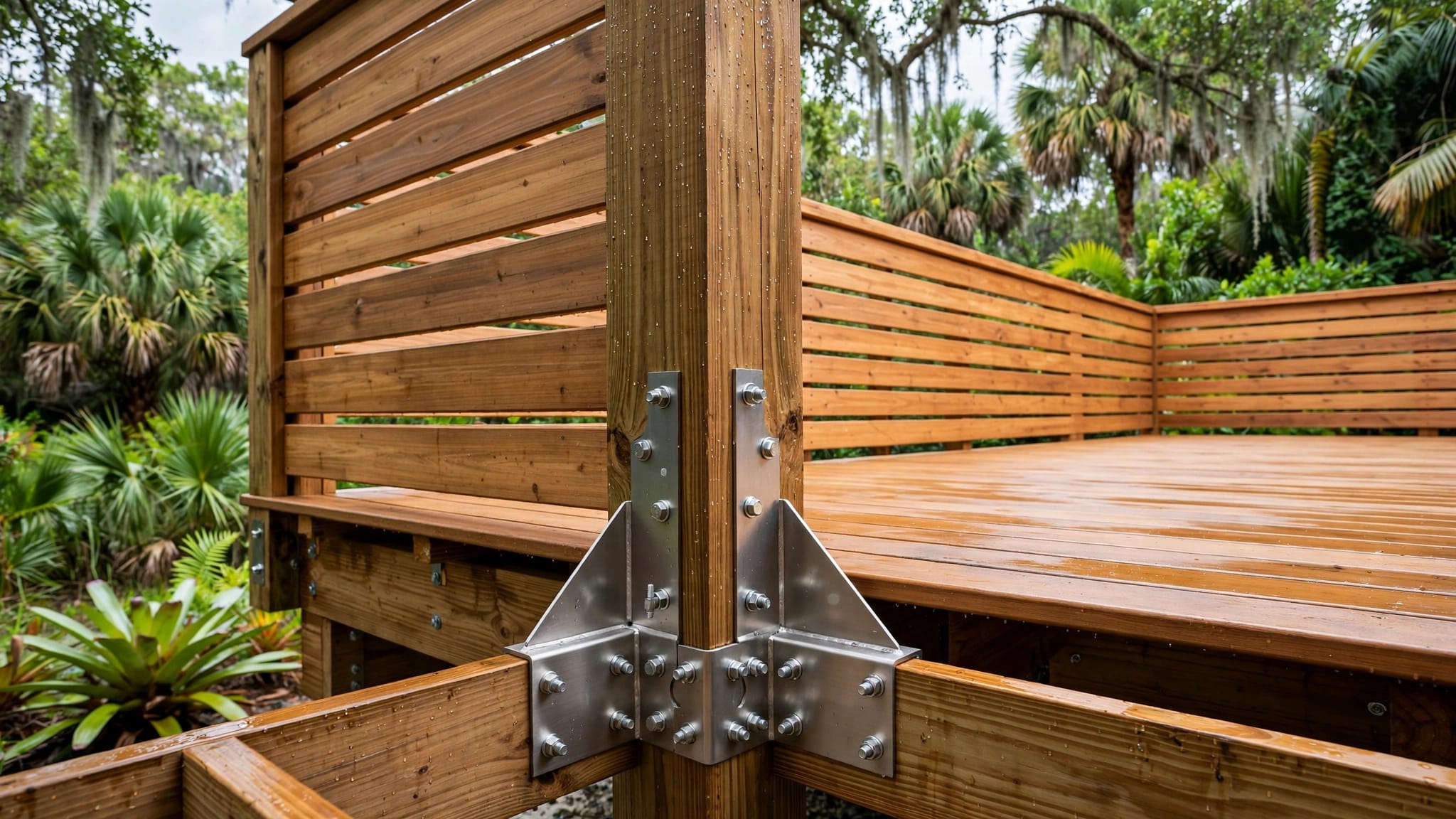
Surface-mounted aluminum fencing is another option in limited situations. It requires a sound concrete slab and a system designed for anchored base plates. No contractor should assume an unknown slab has the thickness or condition for that method.
A buried footing is evidence of an earlier fence, not proof that its depth, concrete, or placement will work for a new one.
Southwest Florida Soil Changes the Footing Decision
Southwest Florida's sandy soil and seasonal rain affect every post hole. Wet sand can fall into an open excavation, while wind loads put added pressure on privacy panels and gate posts.
Match the new support to the fence and site
Concrete may be appropriate for a heavy gate, a tall privacy fence, or an exposed yard. Yet concrete isn't automatic for every post. Drainage, soil conditions, fence height, and the material all affect the right choice.
Reviewing concrete versus no-concrete fence posts can help homeowners understand why a new installation may use a different footing method than the old fence.
Get approval before moving the fence line
Replacing a fence in the same location may follow a different path than changing its height, material, or placement. Local permit rules, setbacks, easements, and community requirements can affect the final plan.
A contractor should resolve those details before setting a replacement post. Correcting a shifted fence after installation costs far more than checking the site first.
A Solid Fence Starts Below the Surface
Buried concrete can delay an installation, but it doesn't have to derail the project. The right response is to identify the obstruction, protect the planned fence line, and build a new footing that suits the yard.
A straight, stable fence depends on more than visible panels. The work below grade determines how well the finished fence handles daily use, rain, and Florida weather.