Why a Sliding Driveway Gate Comes Off Its Track
A sliding driveway gate can come off its track after an obstruction, damage, or a change in the structure supporting it. The visible problem may be near the track, but the reason isn't always obvious.
Stop using the gate if it has shifted out of position. A heavy gate can move unexpectedly, and repeated operation can make an unsafe situation worse. Start with a visual inspection from a safe distance.
What to Do When Your Gate Comes Off Track
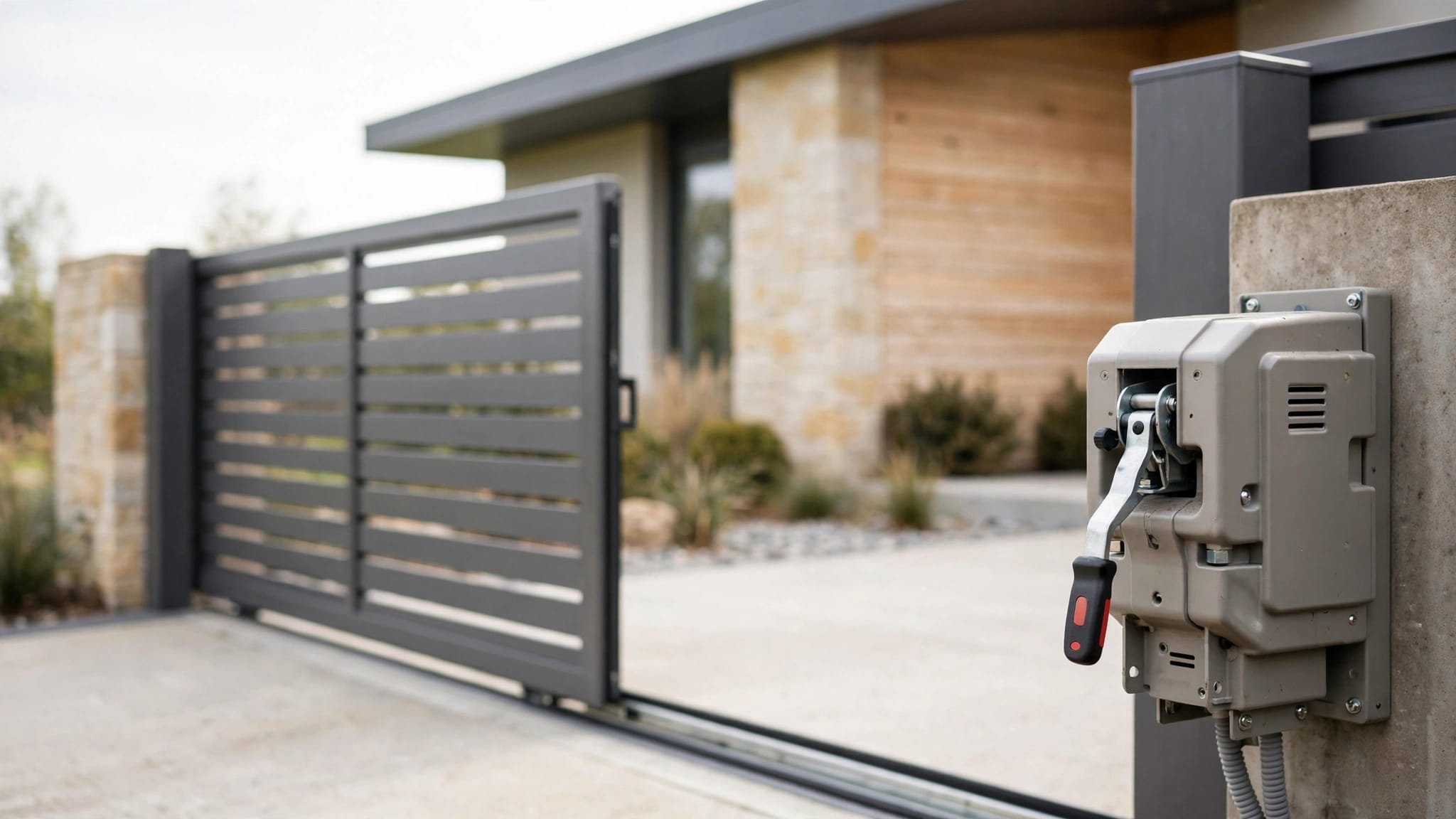
Keep people, pets, and vehicles away from the gate and its travel area. If the gate has an automatic operator, stop sending commands and follow the manufacturer's instructions for disabling automatic operation, if you can do so safely.
Don't try to lift the gate back into place or force it open. A gate that's partly supported can shift without warning, and its wheels and other hardware create pinch points.
Document What You Can See
Take photos from outside the gate's path. Include the gate's position, the exposed track, nearby posts, and any visible damage. If an automatic gate stopped before it came off track, note whether it was opening or closing and where it stopped.
Also record anything that happened beforehand, such as heavy rain, a vehicle impact, or recent driveway work. These details give a technician useful context without establishing a diagnosis on their own.
Leave the Gate Inactive
Don't repeatedly press the control to see whether the gate will move. Avoid reaching under the gate or into its hardware, and don't open electrical equipment or bypass safety devices.
If the gate blocks your driveway, explain that when arranging service. A technician can assess the situation without you trying to move an unstable gate.
First, Identify the Type of Sliding Gate
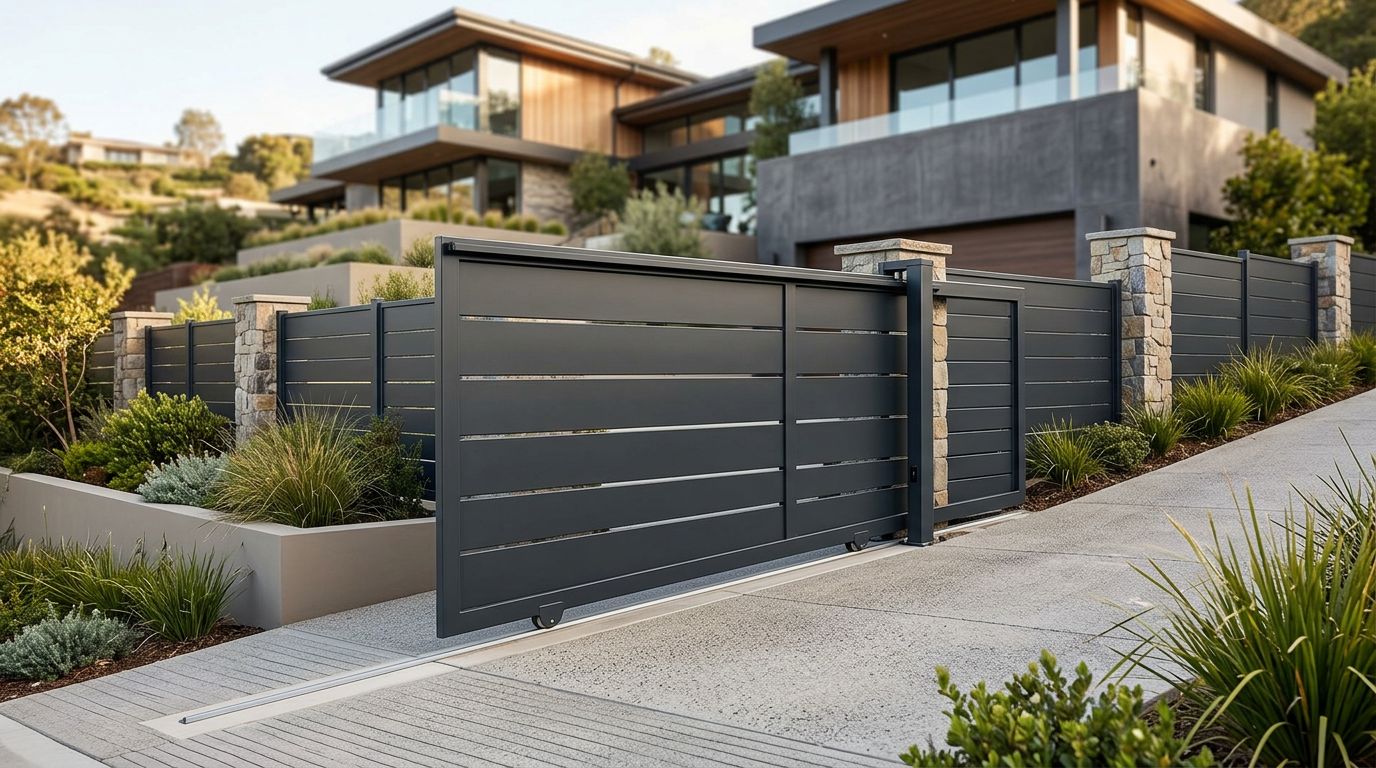
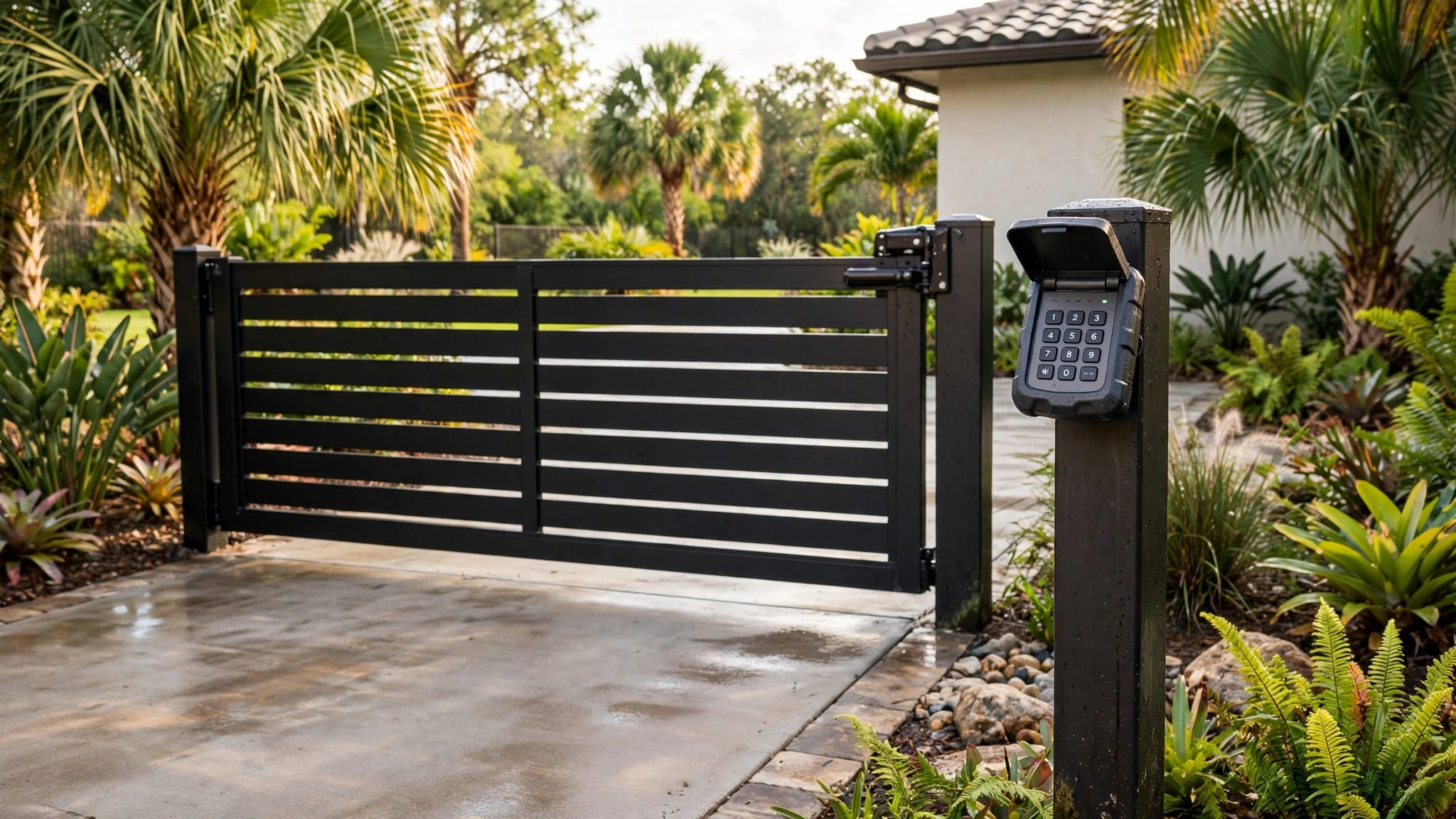
These checks apply primarily to a track-mounted sliding gate . This style has wheels that travel along a track at ground level. The track crosses the driveway and continues along the gate's opening path.
A cantilever gate works differently. It doesn't use a ground track, so sand or leaves on the driveway aren't evidence of a track obstruction. Its support hardware still needs attention if the gate shifts, sags, or stops operating normally.
Look at the ground beneath the gate from a safe position. If you can see a track along the driveway, the track-related clues below apply. If you aren't sure which system you have, include a photo when you request service.
Debris and Damage Along the Track
Southwest Florida driveways can collect sand, leaves, and small branches after rain and wind. Debris along a gate's route deserves attention, especially when the gate has scraped or stopped in the same place before.
Material in the Gate's Path
Look at the exposed track and surrounding pavement without entering the gate's travel area. Sand washed across the driveway, a fallen branch, or material left after landscaping can point to an obstruction.
If loose debris is accessible from outside the travel area, you can remove it after automatic operation has been safely disabled. Don't reach beneath the gate or around wheels to clear material. Leave anything trapped near moving hardware for a technician.
A clear-looking section doesn't establish that the full path is clear. Record where you see debris and where the gate stopped so the technician can compare them.
Changes to the Track or Surrounding Pavement
Look for visible damage along the exposed track, as well as cracks or changes in the pavement beside it. Fresh scrape marks can also help identify where contact occurred.
Avoid striking the track or attempting to move the gate over a damaged section. Even when damage appears limited to one spot, the gate and surrounding supports need assessment before normal operation resumes.
Sagging Gates and Changes Around Supports
A sliding gate that sits lower than it used to, rubs near a post, or has an uneven gap may have a structural problem. Those clues deserve attention even if you can't see an obvious issue along the driveway.
Watch the Frame and Gate Gaps
From a safe position, compare the gate's top line and the spaces around its frame with their usual appearance. A corner that appears unusually low, fresh rubbing, or a frame that looks out of square can help a technician narrow the inspection.
A photo taken from the same safe position can show whether a change is getting worse over time. Don't push the gate to test its movement or loosen hardware that may carry its weight.
Look at Posts, Footings, and Drainage
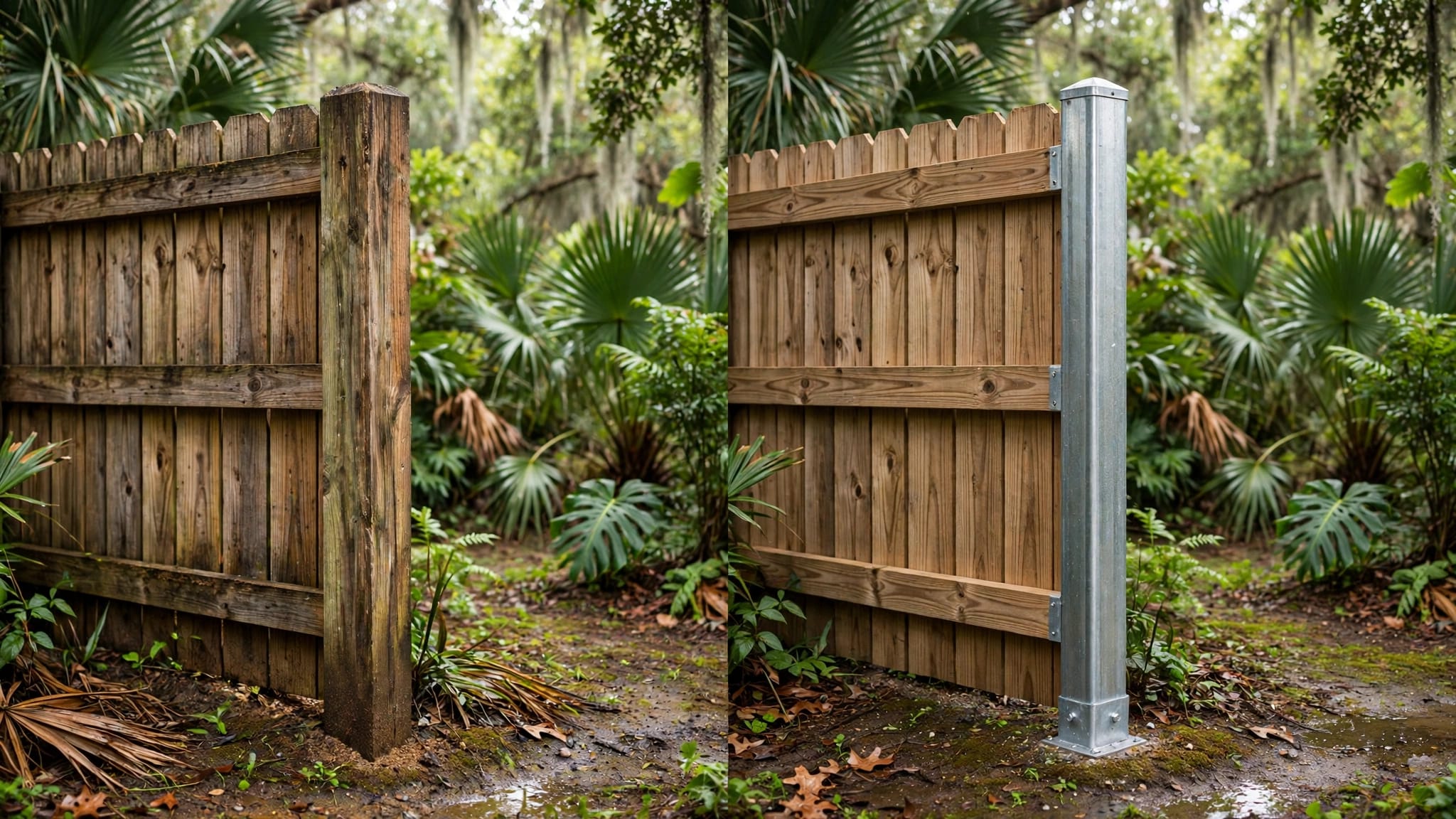
Heavy rain can wash soil away or leave water standing near a gate. Look for exposed footing edges, erosion, pooling, or a post that appears tilted. Don't push or shake the post to test it.
A shifted support may affect the gate's position, but a visual clue alone doesn't establish the full cause. Repeated pooling also deserves attention beyond clearing the track. The area may need grading or drainage work.
Hardware Wear and Coastal Conditions
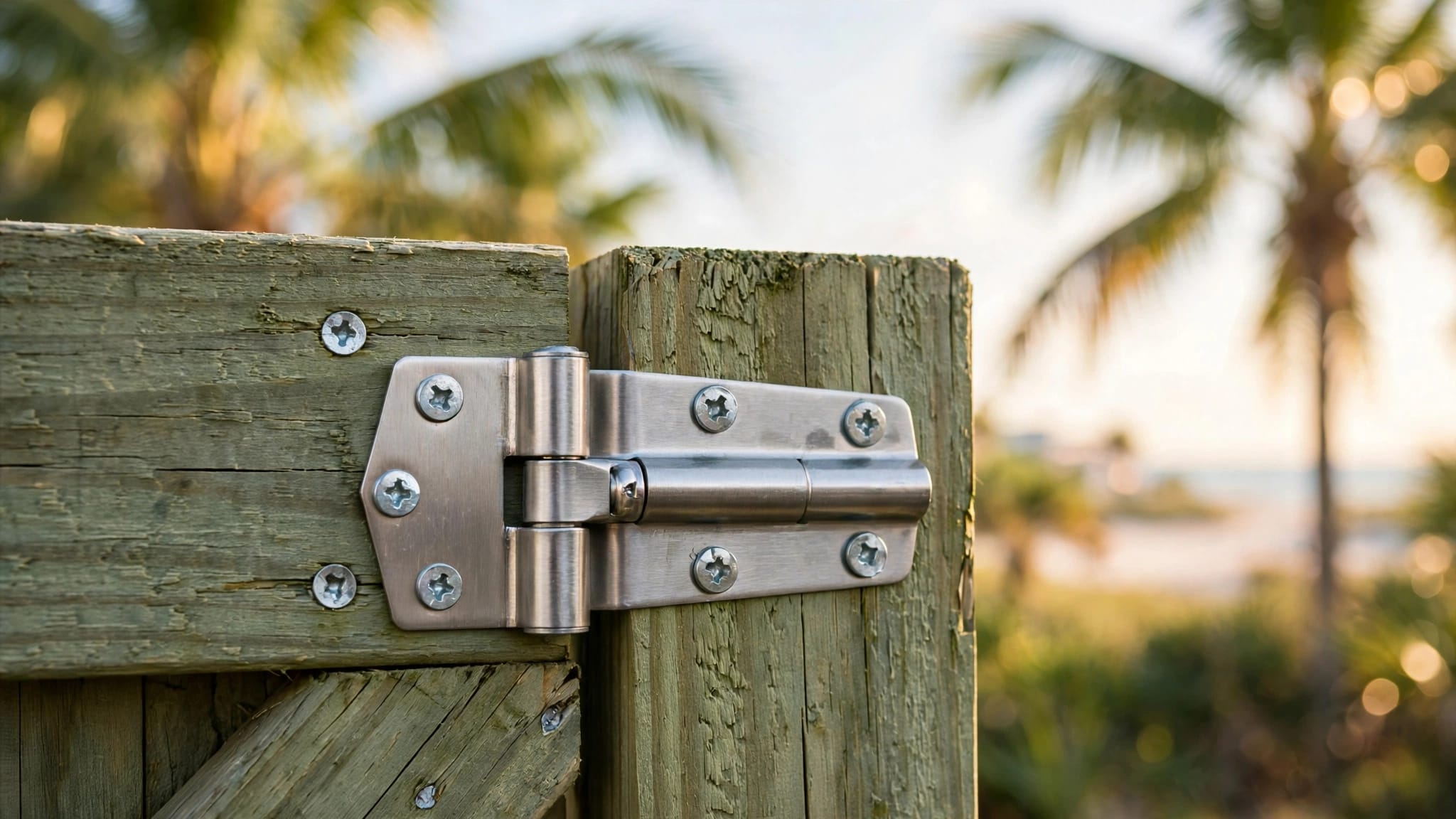
Gate hardware can deteriorate while the larger frame still looks sound. In Cape Coral and other coastal areas, moisture and salt air can affect exposed metal connections.
Look for orange staining, bubbling finishes, flaking metal, or missing fasteners. White oxidation on aluminum and connections that no longer appear square are also worth documenting. These signs help describe the gate's condition, but they don't identify the cause of a derailment by themselves.
Don't rely on lubricant to address visible structural damage. It can't restore lost metal or stabilize a post. For more background on materials suited to local exposure, see our guide to corrosion-resistant coastal fence hardware.
Impact and Wind Can Change a Gate's Position
A vehicle or piece of storm debris can strike a gate, track area, or supporting post. Strong wind can also put pressure on the gate and its connections. After either event, a gate may need attention even when the damage isn't obvious from the street.
Solid privacy gates expose more surface area to wind than open-picket designs. After strong winds, look at the frame, visible connections, and nearby fence sections before attempting normal operation. A gate can appear straight while a footing or connection has changed.
Wait until conditions are safe and standing water has receded enough to inspect the area. Cracked concrete, separated connections, or a visibly displaced post call for professional assessment. Our guide to hurricane fence damage in Southwest Florida covers additional warning signs around gates and posts.
Match the Symptoms to Your First Observations
The way a gate behaved before it shifted can help you describe the problem. It won't identify the cause on its own.
| What you noticed | What to document from a safe position |
|---|---|
| The gate scraped or stopped at the same spot | Debris, visible track damage, and the stopped position |
| A corner appeared lower over time | Changes in the frame, gaps, and nearby supports |
| The problem followed heavy rain | Pooling, washed-out soil, and exposed footing edges |
| The gate shifted after wind or an impact | Damage to the frame, connections, posts, or nearby fence |
| The gate stopped repeatedly before shifting | Its direction of travel and any scraping you heard |
Share the observations that fit your situation, even if they seem unrelated. Recent paving, landscaping, or fence work may also be useful context.
A gate that stops mid-cycle hasn't necessarily come off track. Our guide to why driveway gates stop during operation covers other conditions worth documenting.
When to Call a Gate Technician
Call a qualified gate technician if the gate is off track, appears unstable, or shows structural damage. Repeated stopping, scraping, a displaced post, and cracked concrete also warrant professional attention.
A technician can assess the gate's position alongside the surrounding structure. For an automatic system, powered-system diagnosis and safety testing belong with a qualified technician. Homeowners shouldn't adjust internal settings, work on live electrical components, or bypass protective devices.
When you contact a professional, share your photos and describe the last event before the problem. Mention whether the gate blocks access and whether rain, wind, or an impact preceded the issue.
Our fence repair service in Cape Coral can help with damaged fencing and gate concerns. The right scope of work depends on what an inspection finds.
Help Prevent Future Problems With Routine Checks
Regular observation can help you catch changes before the gate stops working. Once a month, look for debris along accessible areas, rubbing, loose bolts, and changes around the supporting posts.
After heavy rain, look for sediment across the driveway and water collecting near the track. Following a storm, inspect visible connections and the surrounding fence once conditions are safe. Keep your inspection outside the gate's movement area.
For a gate that's operating normally, our automatic driveway gate maintenance guidance recommends attention to rollers and safety devices every three to six months, plus yearly professional service for settings, wiring, and wear parts. Leave work inside pinch points and electrical equipment to a technician.
Frequently Asked Questions
Can I Push a Sliding Gate Back Onto Its Track?
Don't push or lift a gate that has come off track. Its weight may not be fully supported, and it can move unexpectedly. Keep the area clear and arrange a professional assessment.
Manual-release procedures for automatic gates vary. Use one only if you understand the manufacturer's instructions and can follow them safely. Otherwise, leave the gate inactive for the technician.
Does a Gate That Comes Off Track Need to Be Replaced?
A gate coming off track doesn't automatically mean the entire gate needs replacement. The condition of the gate, its supports, and the surrounding area determines what work is needed.
Photos and a description of the events leading up to the problem can help the technician assess it. Avoid using the gate while you wait for that assessment.
Keep the Gate Safe Until It's Assessed
A sliding driveway gate can shift out of position for several reasons, and the visible track is only one part of the inspection. Debris, changes around supports, and damage after a storm are all useful clues.
Keep the gate out of service if it has come off track. A careful inspection gives you a safer starting point than trying to force it back into place.