Best Salt Air Fence Hardware for Cape Coral Homes
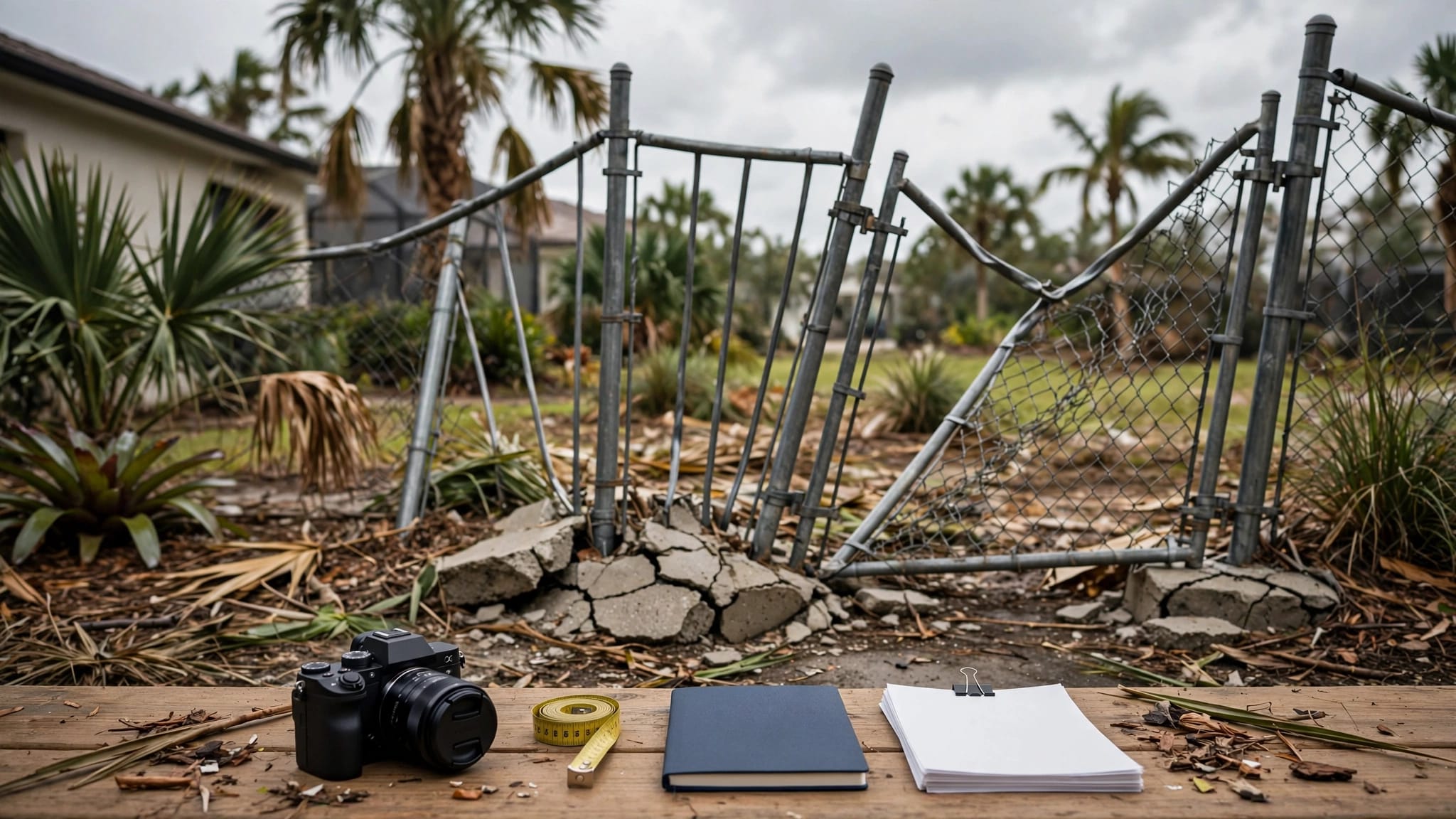
Salt air eats cheap fence hardware first. In Cape Coral, the panels often look fine while the screws, hinges, and latches start to pit, stain, and bind.
That's why salt air fence hardware matters as much as the fence material itself. If you buy the right hardware up front, your gate swings better, your posts stay tighter, and you replace fewer parts later. Here's what holds up best in coastal Florida, and where it's worth paying for the upgrade.
Why Cape Coral fences need better hardware from day one
Cape Coral's mix of humidity, salt, rain, and wind is rough on metal. Canal-front homes get hit harder, but even neighborhoods away from open water still deal with salty air. If your lot faces a canal or catches strong breezes, it helps to think through Canal-front fence choices for Cape Coral salt air and wind before you choose hardware.
Think of fence hardware like the joints in a skeleton. The panels may look solid, but weak joints make the whole fence limp. That's why hinges, latches, brackets, bolts, and screws deserve more attention than most homeowners give them.
As of 2026, 316 stainless steel is the best pick for harsh coastal exposure in Southwest Florida. It resists salt much better than 304 stainless because it handles pitting and surface damage more effectively. In plain terms, 316 stays cleaner and stronger longer.
304 stainless still has a place, but not near salt-heavy air if the part is exposed and working hard. It may look good at install, yet it can start showing rust spots and pits much sooner than 316 on gates, fasteners, and brackets.
Galvanized hardware is a step below stainless. Hot-dipped galvanized beats thin electro-galvanized parts, but it still falls behind 316 in Cape Coral salt air. If budget is tight, hot-dipped galvanized can work on lower-stress panel connections or less-exposed sections. It's a poor place to save money on gates.
In Cape Coral, the hinge and latch usually fail before the fence panel does.
Best hardware for gates, posts, panels, and fasteners
Gates need the best hardware on the whole fence. They move every day, catch wind, and put torque on the post. For walk gates and double gates, use 316 stainless adjustable hinges, a 316 stainless latch, and 316 stainless screws or through-bolts. On double gates, choose corrosion-resistant cane bolts or drop rods too.
If your fence surrounds a pool, don't treat that gate like a standard side gate. Use pool-rated self-closing hinges and a self-latching setup built for code. Before buying, review Cape Coral pool gate hardware and inspection tips, because latch placement and closing action matter as much as corrosion resistance.
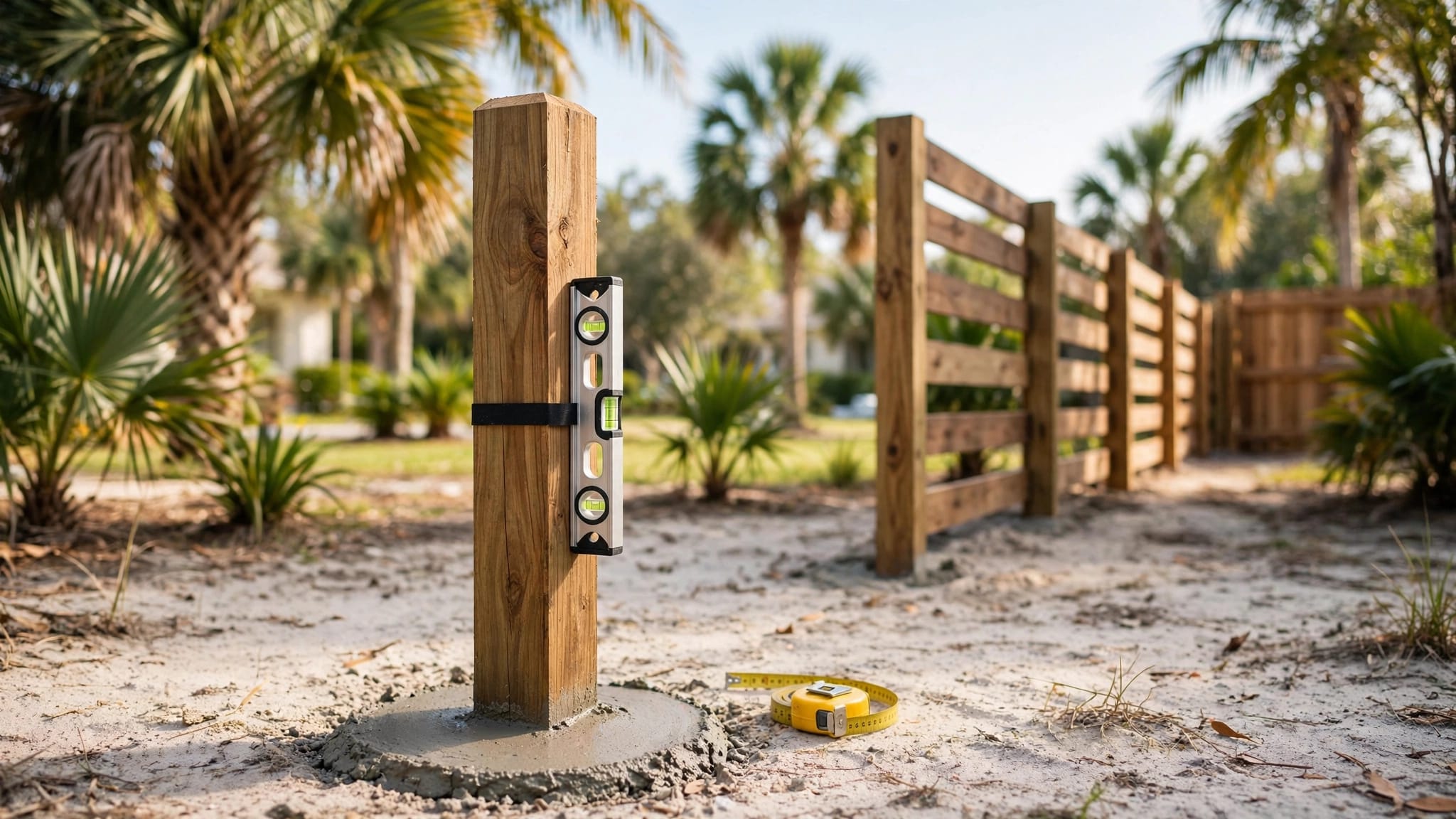
For posts, the key hardware is the connection point. That means brackets, bolts, post anchors, and reinforced gate-post hardware. Vinyl gates often need internal aluminum stiffeners, and those should pair with corrosion-resistant mounting screws. Wood gate posts usually do best with stainless structural screws or stainless through-bolts. Aluminum fences need compatible fasteners, plus isolators or coatings where dissimilar metals meet.
Here's the simple buying guide:
| Fence part | Best choice for Cape Coral salt air | Acceptable budget option | Skip if possible |
|---|---|---|---|
| Gate hinges and latches | 316 stainless | None for heavy exposure | 304 stainless, zinc-plated |
| Gate-post bolts and brackets | 316 stainless | Hot-dipped galvanized inland | Electro-galvanized |
| Panel brackets and clips | 316 stainless | Hot-dipped galvanized on low-exposure runs | Bare steel |
| Fasteners, screws, bolts | 316 stainless | Hot-dipped galvanized for basic panel work | Standard deck screws |
| Chain-link ties, bands, tension hardware | 316 stainless or high-quality coated hardware | Hot-dipped galvanized | Thin plated parts |
For chain-link fences, don't overlook the small parts. Tension bands, brace bands, hog rings, and ties often corrode before the fabric does. For wood fences, the fastener matters almost as much as the board. For vinyl, cheap gate hardware can turn a clean-looking fence into a sagging headache fast.
Also, don't mix metals carelessly. Steel hardware against aluminum fencing can speed up corrosion. Use compatible hardware and barriers where needed.
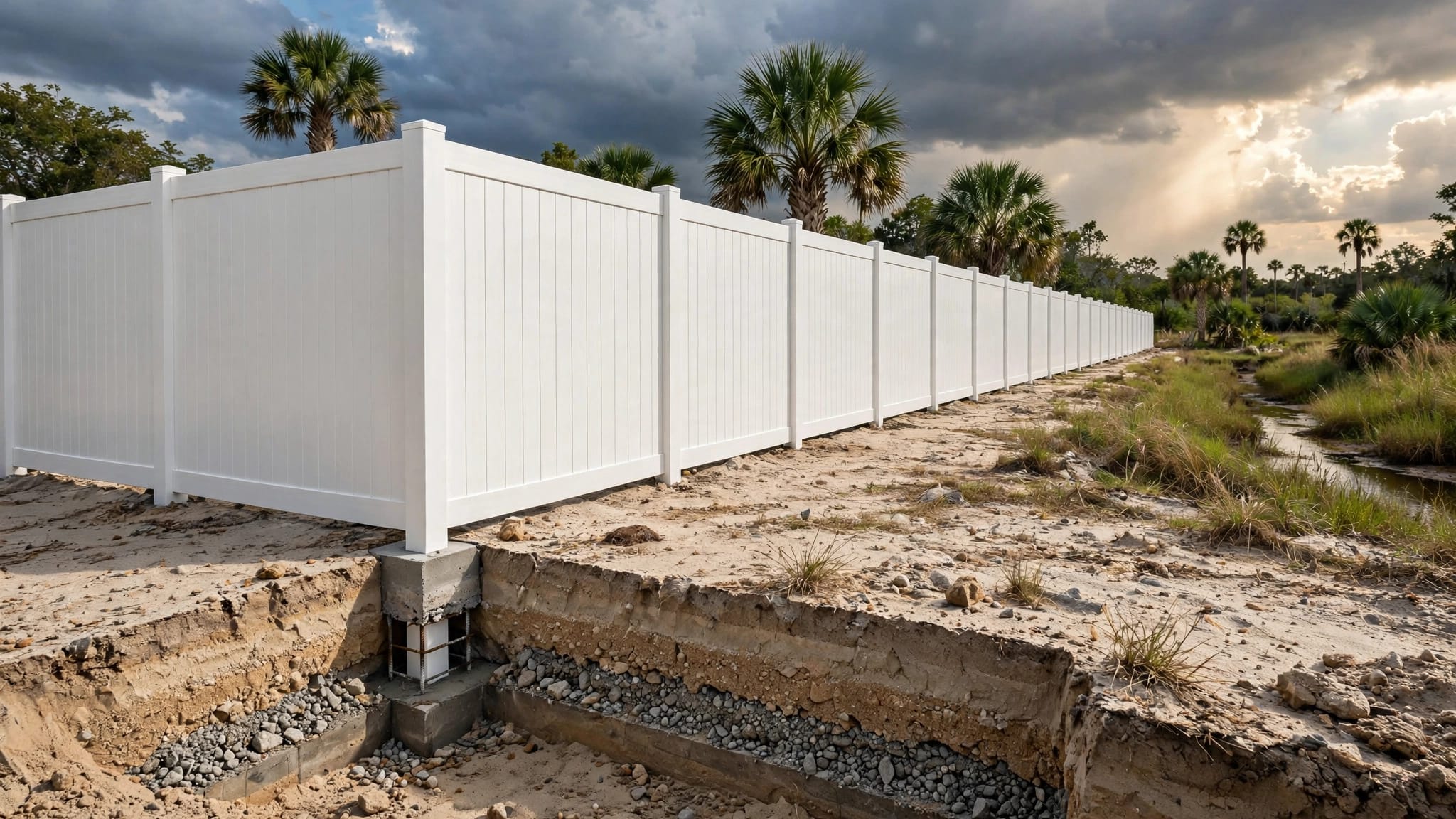
If you're also planning a new build, strong hardware works best when posts are set right. That's why Fence post footings concrete vs no concrete in SWFL matters, especially for gate posts.
How to make hardware last longer, and when to replace it
Even the best salt air fence hardware needs some care. Salt sticks to metal like a slow poison, so a simple rinse does more than most people think. Fresh water washes off buildup before it has time to work into the finish.
A practical routine works best. Rinse exposed hardware about once a month, especially after dry, windy stretches or storms. Use mild soap if the hardware feels gritty. Then inspect hinges, latches, screws, and brackets at least once a year.
A few mistakes shorten hardware life fast. First, don't buy "stainless" without checking the grade. If the box doesn't say 316, assume it isn't. Next, don't use plated interior screws outdoors. Also, don't let sprinklers hit the same hardware daily. Constant moisture speeds corrosion.
Watch for these signs that hardware should be replaced:
- Rust bleed or orange streaks below screw heads or brackets
- Pitting on hinges, latch bodies, or exposed bolts
- Gate sag or a latch that stops lining up
- Loose fasteners that won't tighten anymore
- White or crusty buildup where metals meet
- Sticking or grinding when the gate swings
If one hinge has failed, look at the full set. In salt air, parts often wear out as a group. Replacing one cheap piece in a worn system is like patching one shingle on a bad roof.
"Marine-grade" sounds great, but the real question is simple: is it 316 stainless or not?
Cape Coral fences last longer when the hardware matches the weather. That means spending more where movement, weight, and salt exposure meet, especially on gates and gate posts.
If you're comparing bids, ask for the hardware grade in writing. In this climate, 316 stainless isn't a luxury upgrade for key parts, it's often the smarter buy.