Fence Access Planning for Lawn Care Equipment
A fence can protect your yard and improve privacy, but a narrow gate can make routine lawn care frustrating. Fence access planning helps you move mowers, trimmers, carts, and service equipment through the property without scraping posts or damaging landscaping.
The right opening depends on more than the mower's listed width. You also need room to steer, account for uneven ground, choose a practical gate location, and preserve access for future repairs. Start with the largest equipment that may need to enter the yard.
What fence access planning should account for
Start with the widest equipment
Walk through your lawn care routine before choosing a fence design. List every machine that may need access, including your current equipment and anything you may rent later.
A push mower may fit through a standard walk gate, but a riding mower, zero-turn mower, utility cart, aerator, or small tractor needs more room. Measure the widest fixed point on each machine. Include the grass discharge chute, bagger, side mirrors, armrests, attachments, and any part that extends beyond the wheels.
Check the owner's manual, then confirm the measurement with a tape measure. Manufacturers may list the deck width instead of the machine's full operating width.
Your largest machine controls the gate opening. Designing for a push mower alone can leave you with an attractive fence that blocks the equipment you depend on most.
Add clearance beyond the equipment width
Use the measured width as a starting point, not the finished gate size. A practical planning rule is to add at least 12 inches to the equipment's widest measurement , leaving about 6 inches on each side during a straight approach.
For example, equipment measuring 48 inches wide needs at least a 60-inch clear opening for comfortable routine use. Add more room when the path includes a turn, slope, rough surface, or tight approach. An opening that is 18 to 24 inches wider than the machine may be easier to use in those conditions.
Remember that a gate's advertised width may describe the panel, not the clear space between posts and hardware. Ask for the finished clear opening with the gate fully open. Hinges, stops, latches, and post caps can reduce usable space.
A gate should fit the machine at its widest point, with enough room for the operator to correct direction without touching the fence.
Measure the complete equipment path
A wide gate can't solve an access problem if the route narrows immediately after the opening. Measure the full path from the driveway, street, or side access point to the lawn.
Measure equipment and route together
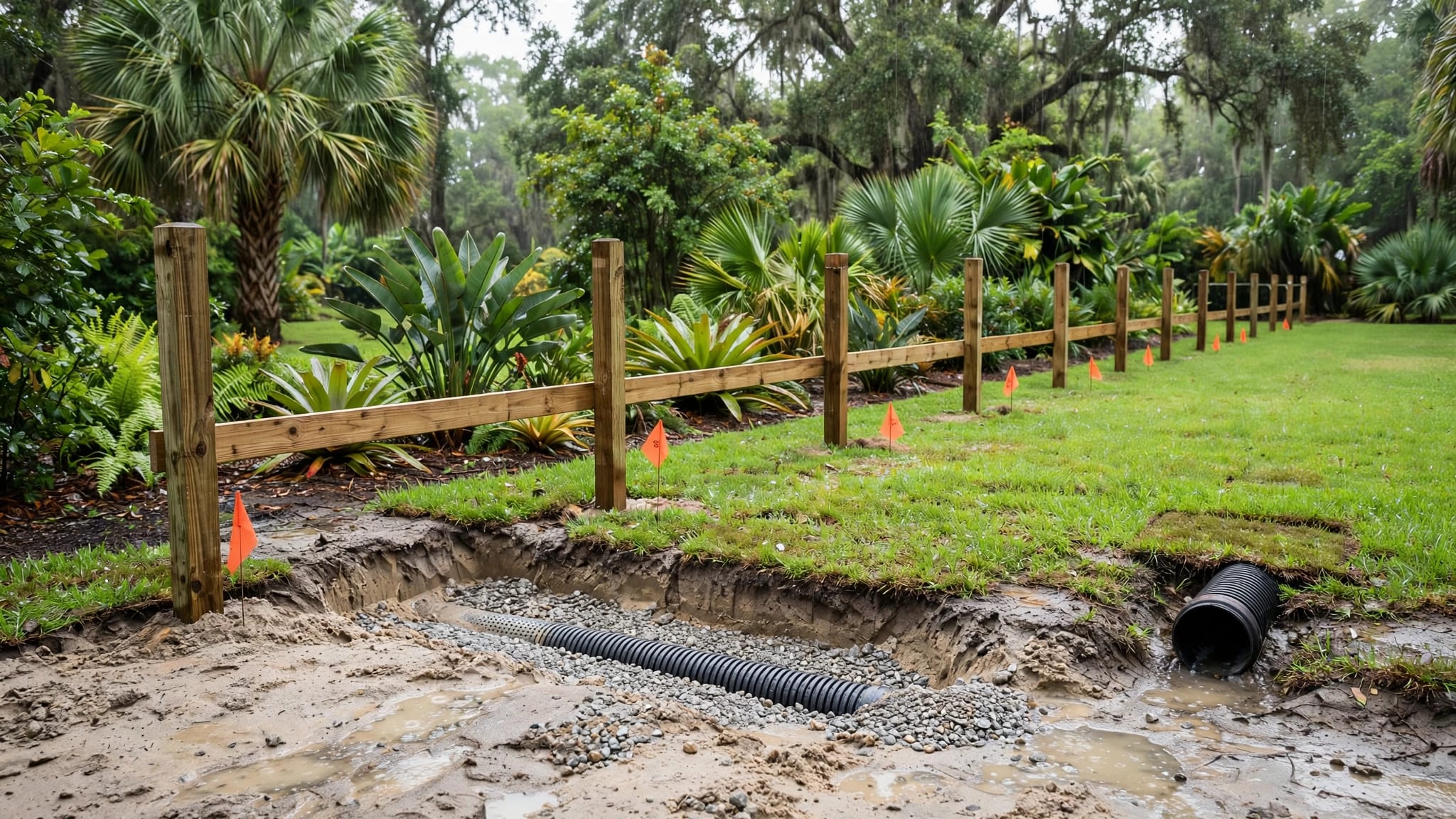
Place stakes or marking flags at the proposed fence line. Then walk the equipment along the intended route, if possible. Measure the narrowest point between walls, air-conditioning units, pool equipment, downspouts, landscaping, and existing fences.
Also check overhead clearance. Tree limbs, pergolas, gutters, low wires, and screened enclosures can interfere with tall equipment or a raised trailer ramp. Record the route's width at the gate, the first turn, and the narrowest point farther inside the yard.
If you plan to move a mower on a trailer, measure the trailer's width and turning path instead of measuring the mower alone. The trailer may need a wider opening and a longer approach.
A site sketch can prevent mistakes during the quote. Include property lines, structures, gates, equipment areas, and the direction each gate will swing. Homeowners in Cape Coral can also review this Cape Coral fence permit checklist before finalizing a layout.
Leave room for steering
Straight-line width is only one part of access. A riding mower may fit through a gate but still need several feet to turn toward the lawn. Zero-turn mowers can pivot tightly, yet their rear corners and front deck still need space around posts, walls, and plant beds.
Measure the approach angle. If the gate sits at the end of a narrow side yard, you may need to enter at an angle rather than straight on. In that case, widen the opening and keep the area directly outside and inside the gate free of fixed objects.
Avoid placing a gate where the operator must make a sharp turn immediately after entering. A wider opening is helpful, but a short, clear approach is better. When possible, create a level staging area where equipment can pause, turn, or reverse without contacting the fence.
Place the gate where lawn care is easiest
Gate placement affects every future mowing visit. The best location usually connects the widest accessible part of the property with the shortest route to the grass.
Use side access when it provides a direct route
A side-yard gate often works well when the driveway runs beside the home. It lets equipment travel from the driveway to the backyard without crossing the house or passing through a narrow interior gate.
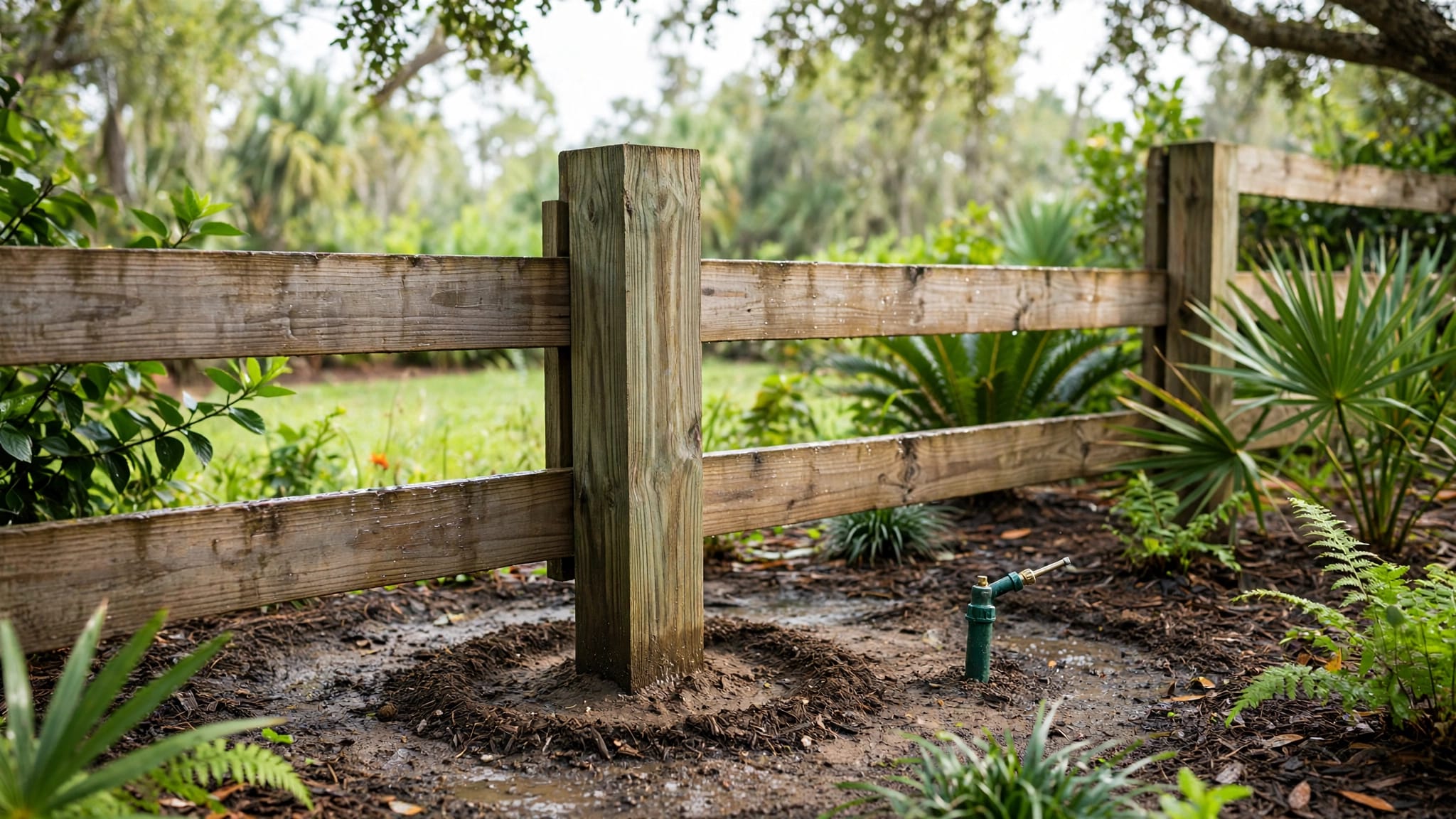
Keep the gate away from downspouts and areas where roof runoff collects. Water can soften soil around posts and create ruts under mower tires. In Southwest Florida yards, drainage swales and easements can also limit where a fence and gate can go. Review these Cape Coral fence line and easement guidelines before placing a gate near a property line or corner.
For a corner lot, visibility and front-yard rules may affect the available gate location. The most convenient route still needs to fit the approved fence layout.
Choose single or double gates based on use
A single gate may work for a walk-behind mower or narrow cart. Larger riding equipment often benefits from a double gate because each leaf is lighter and the opening can be wider.
Double gates need enough space for both leaves to open fully. Consider where the leaves will rest, especially if they swing into a driveway, sidewalk, planting bed, or drainage area. Out-swinging gates may interfere with public walkways or vehicles, while in-swinging gates can reduce the usable yard area.
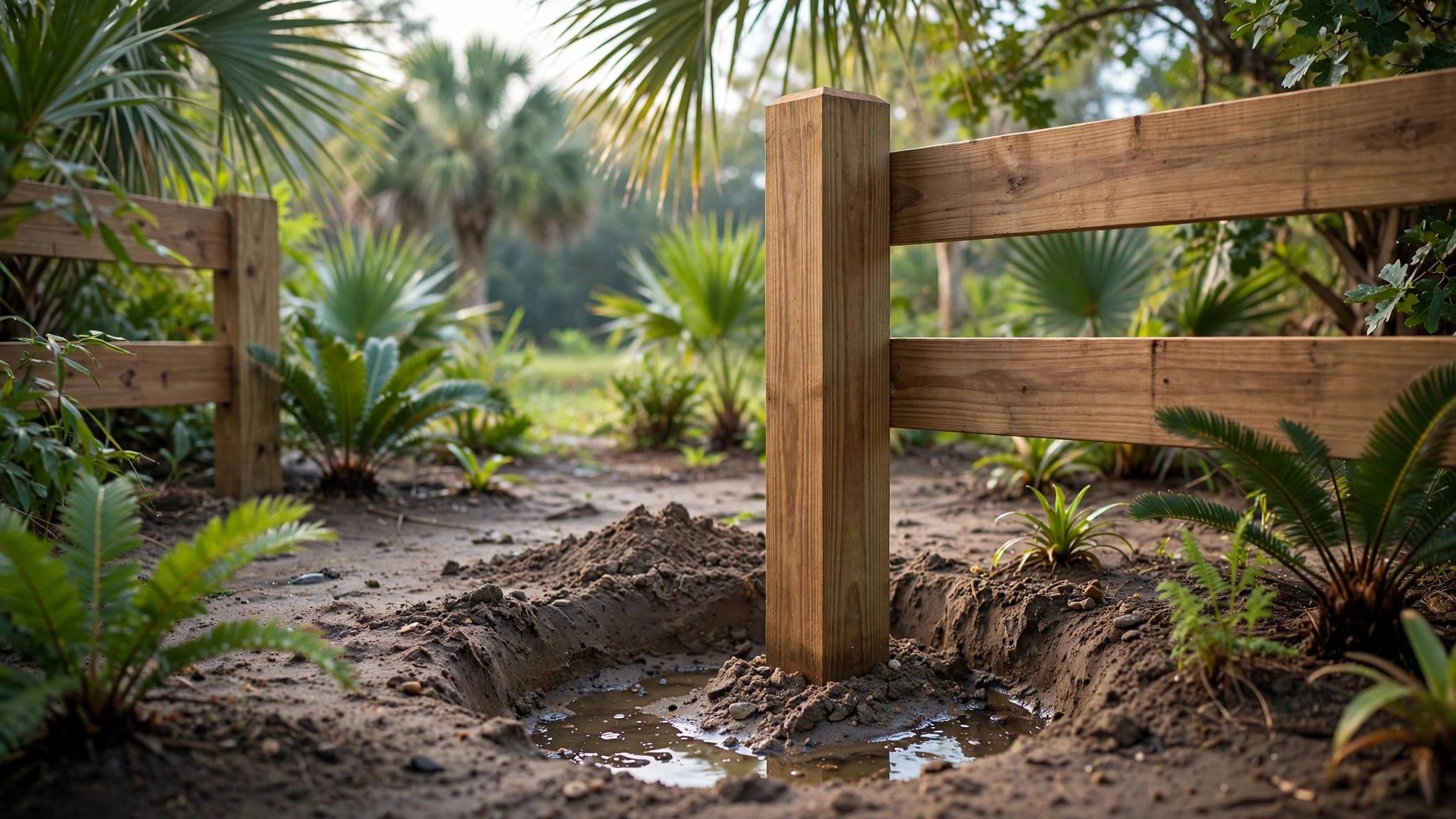
Use sturdy posts sized for the gate's weight and width. Large gates place more stress on hinges, especially during wind. A center drop rod or ground receiver can help hold closed double gates in position, but it should remain easy to operate.
Leave access to the latch from the side where you normally approach. A gate that requires reaching through shrubs or stepping into a muddy area will become a daily annoyance.
Plan around Southwest Florida yard conditions
Heat, heavy rain, sandy soil, and fast-growing vegetation can change how a gate works after installation. Access planning should account for the yard's condition during wet weather, not only when the ground is dry and freshly maintained.
Account for slopes, swales, and uneven ground
Measure the grade on both sides of the gate. Equipment can lose traction on a slope, and a gate leaf may drag if the ground rises near its swing path. A mower also needs enough underside clearance to cross the threshold without scraping the deck.
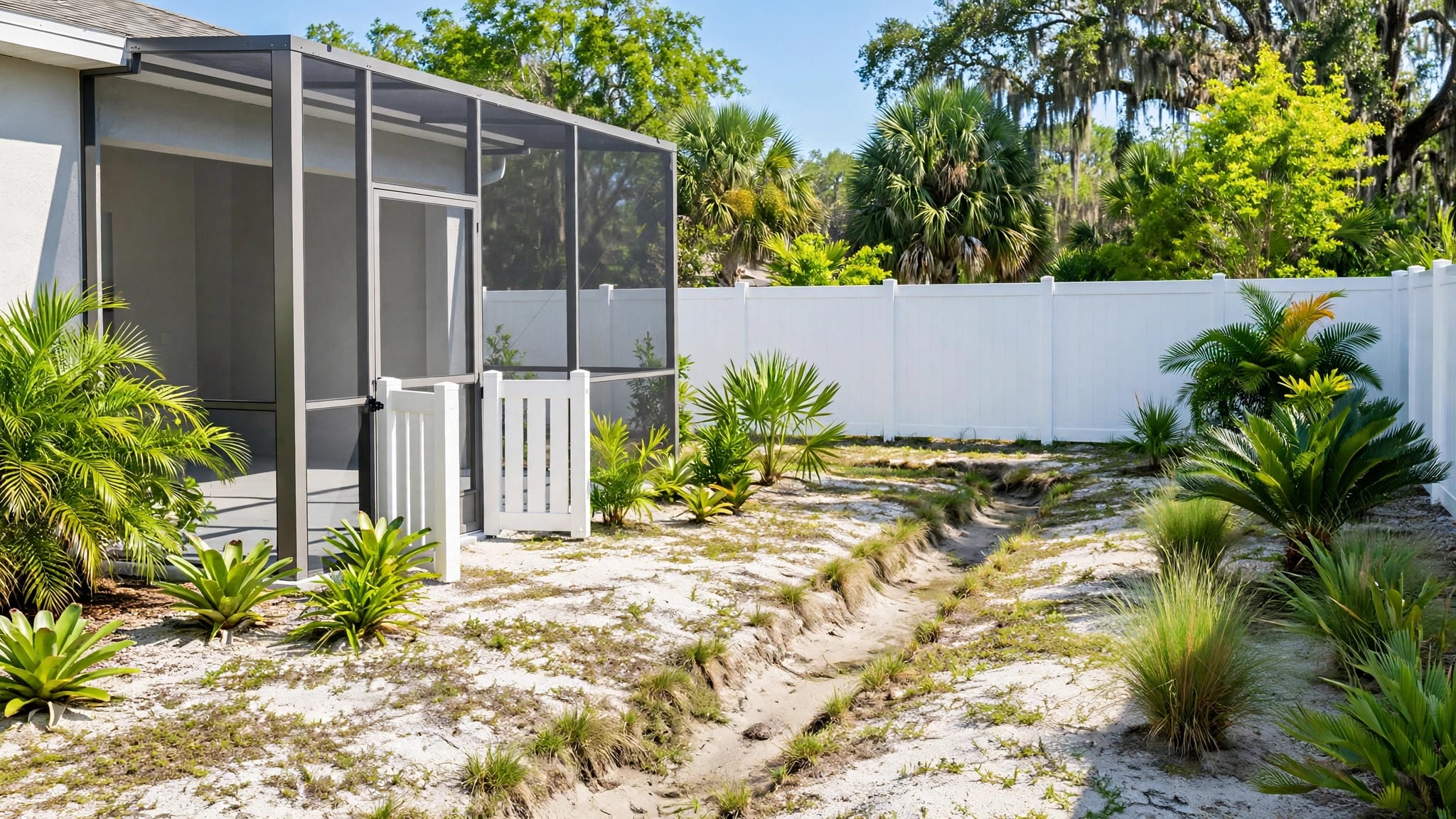
Avoid placing the gate at the bottom of a swale or where water crosses the equipment route. A gate can block drainage if the fence line or posts interrupt the flow. Depending on the site, the layout may need a wider opening, a raised bottom, or a different fence alignment.
Cape Coral homeowners should review local information about drainage swale fence rules before building near a swale. A contractor can evaluate the grade, post locations, and equipment route together.
Protect plants, irrigation, and utility access
Keep the equipment path clear of fragile shrubs, sprinkler heads, landscape lighting, and low-voltage wiring. Mark irrigation lines before digging. A mower route that passes within inches of a sprinkler head can damage it repeatedly, even when the gate itself fits.
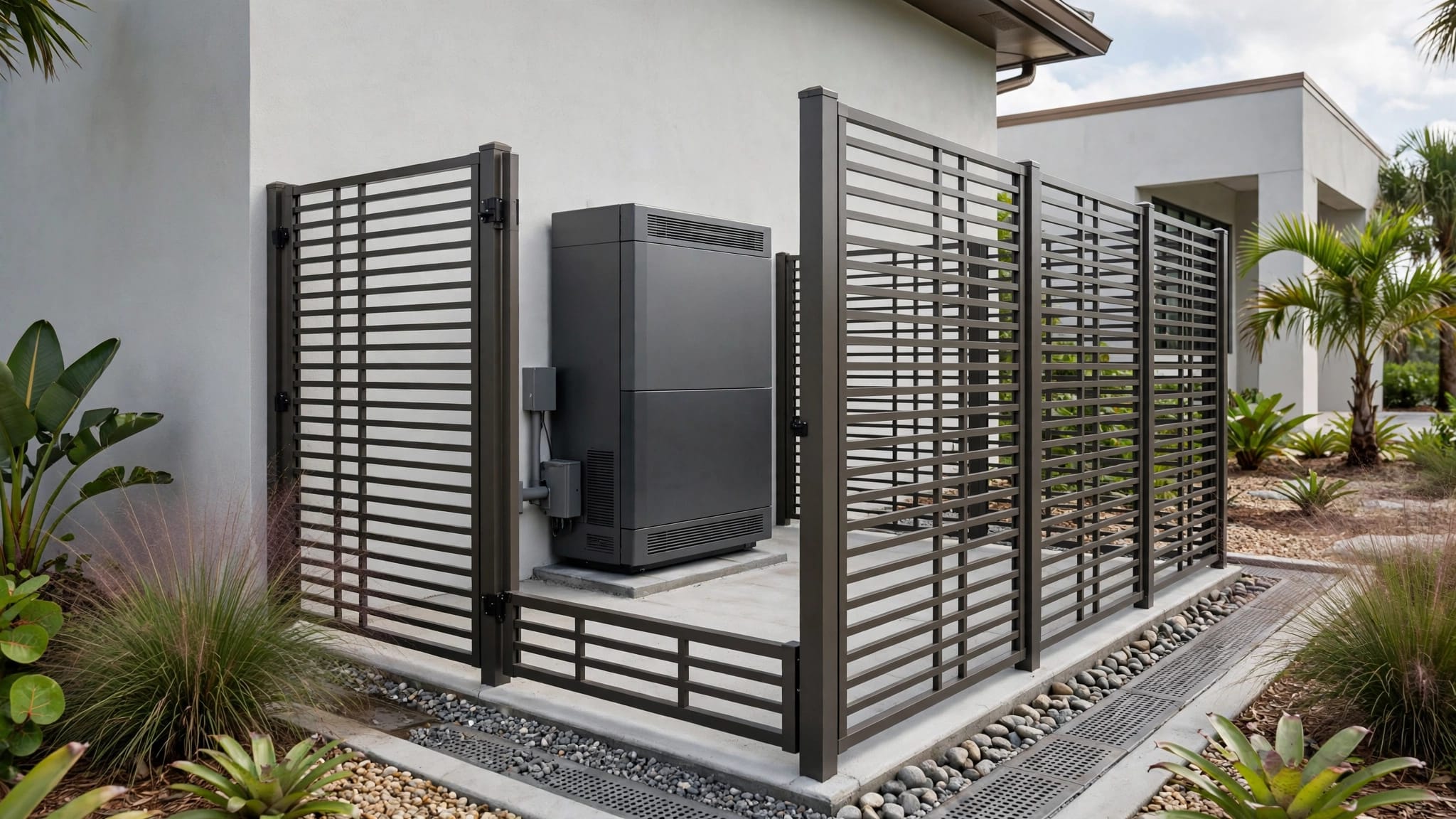
Leave access around pool equipment, generators, water softeners, and air-conditioning units. These systems may need service vehicles, replacement parts, or technicians with hand trucks. A fence should protect the property without blocking the equipment that maintains it.
Check the survey for utility, drainage, access, and canal easements. If the fence needs to sit near an easement, confirm the requirements before setting posts. On properties with a septic tank or drain field, preserve a route for pumping and repairs. This Southwest Florida septic fence access guide covers common access concerns around those systems.
Use removable fence sections for occasional access
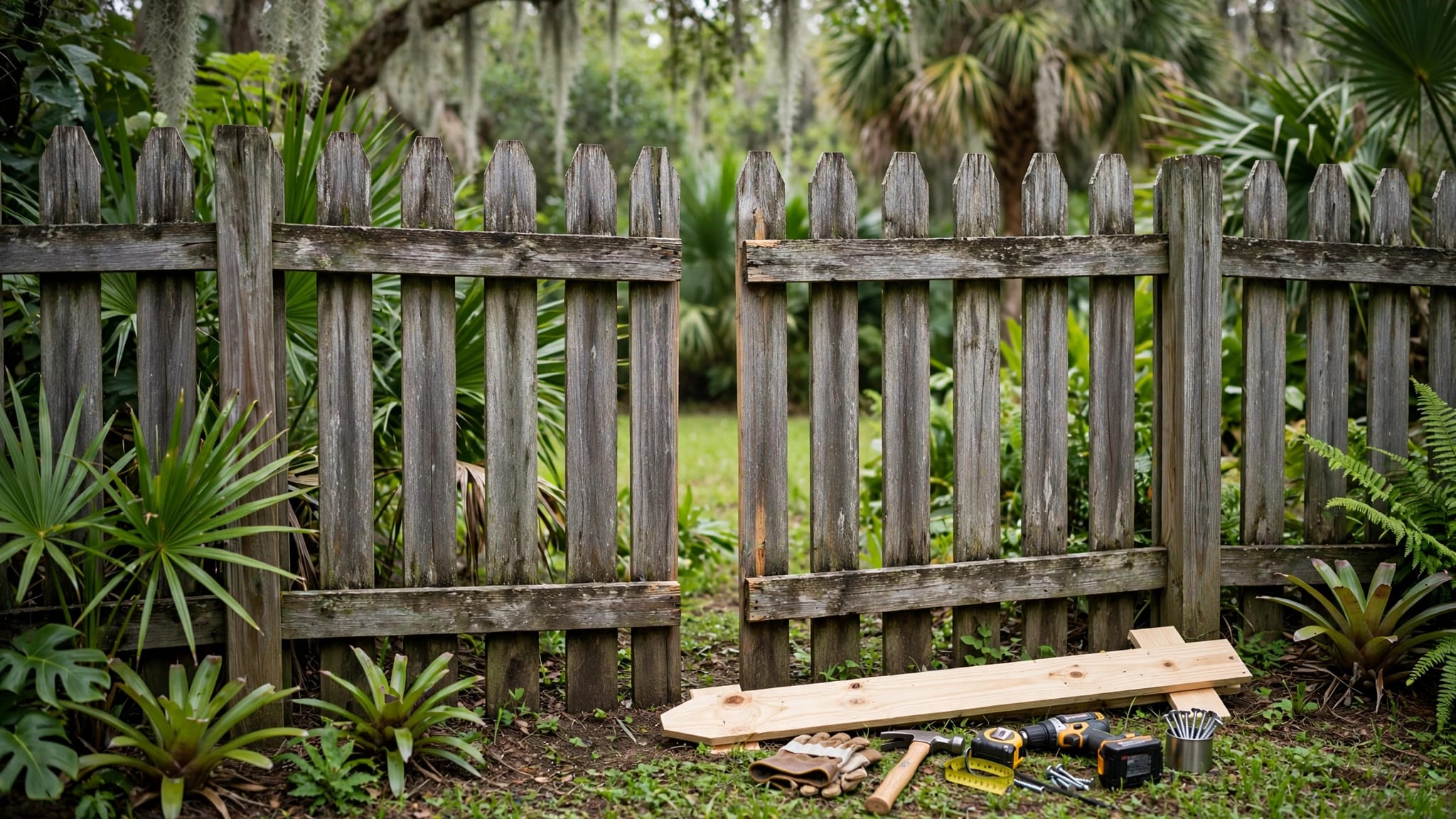
Some equipment doesn't need to pass through every week. A delivery vehicle, stump grinder, tree service truck, or large repair machine may need access only once every few years. A removable fence section can provide that access without leaving a permanently oversized opening.
Make the panel practical to remove
A removable section should have a clear attachment method and enough room for two people to handle it safely. Mark the panel in a way that makes its position obvious, then store the required hardware in a labeled container.
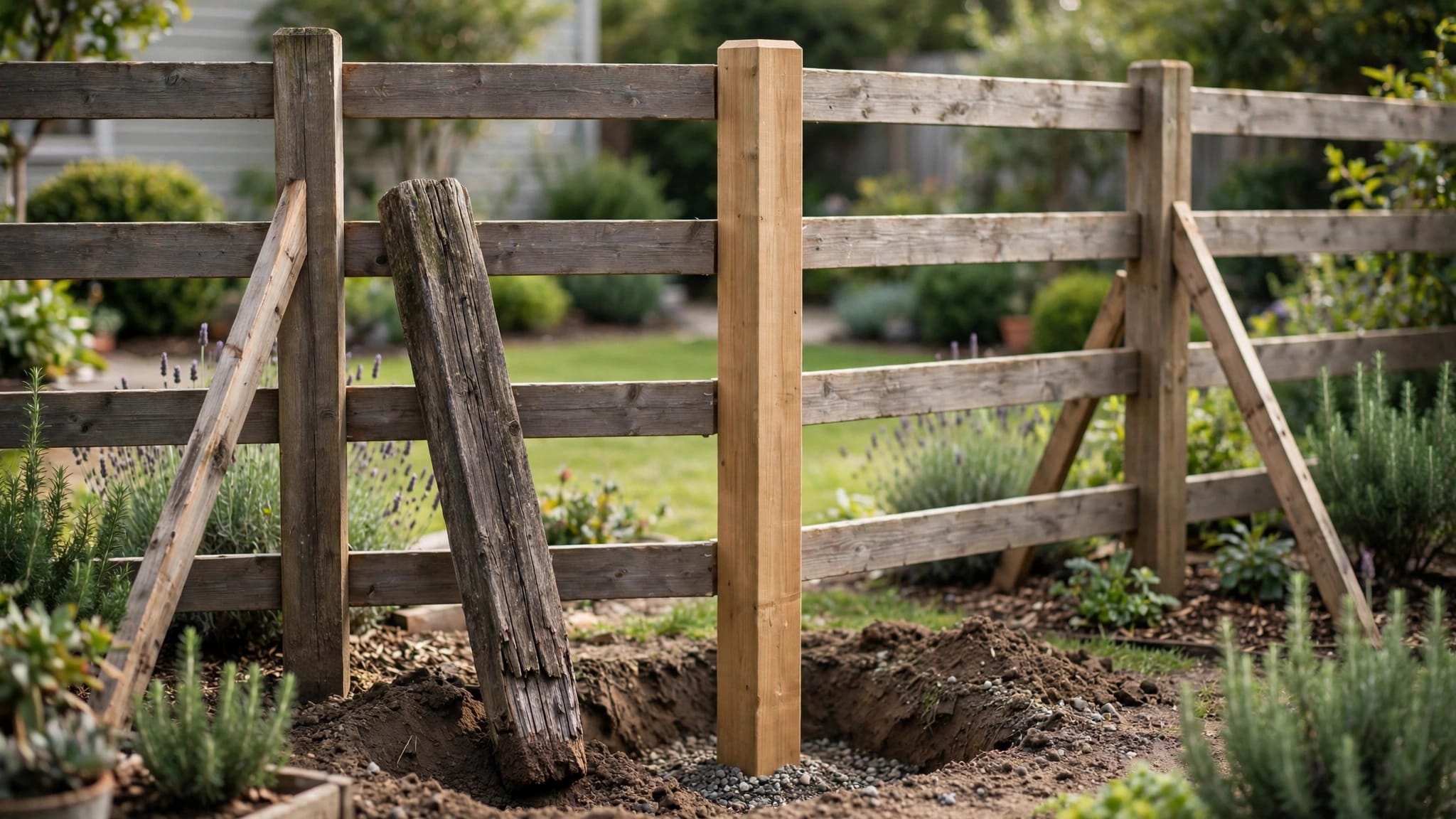
The posts must remain stable after the panel comes out. Avoid designs that require cutting fence boards, bending wire, or removing buried concrete. Ask the installer how the section will detach and how long reinstallation should take.
For vinyl, wood, aluminum, composite, or chain link fences, the removable design should match the rest of the enclosure. A temporary opening that leaves sharp edges or loose hardware creates a safety problem.
Plan for repairs and replacement
Access needs can change. You may replace a push mower with a riding mower, install a pool, add a shed, or need a tree removed. During the initial fence project, ask whether one section can be converted later without rebuilding the entire line.
Include gate width, swing direction, latch type, and removable sections in the written agreement. A detailed Southwest Florida fence contract checklist can help you confirm that access details are recorded before work begins.
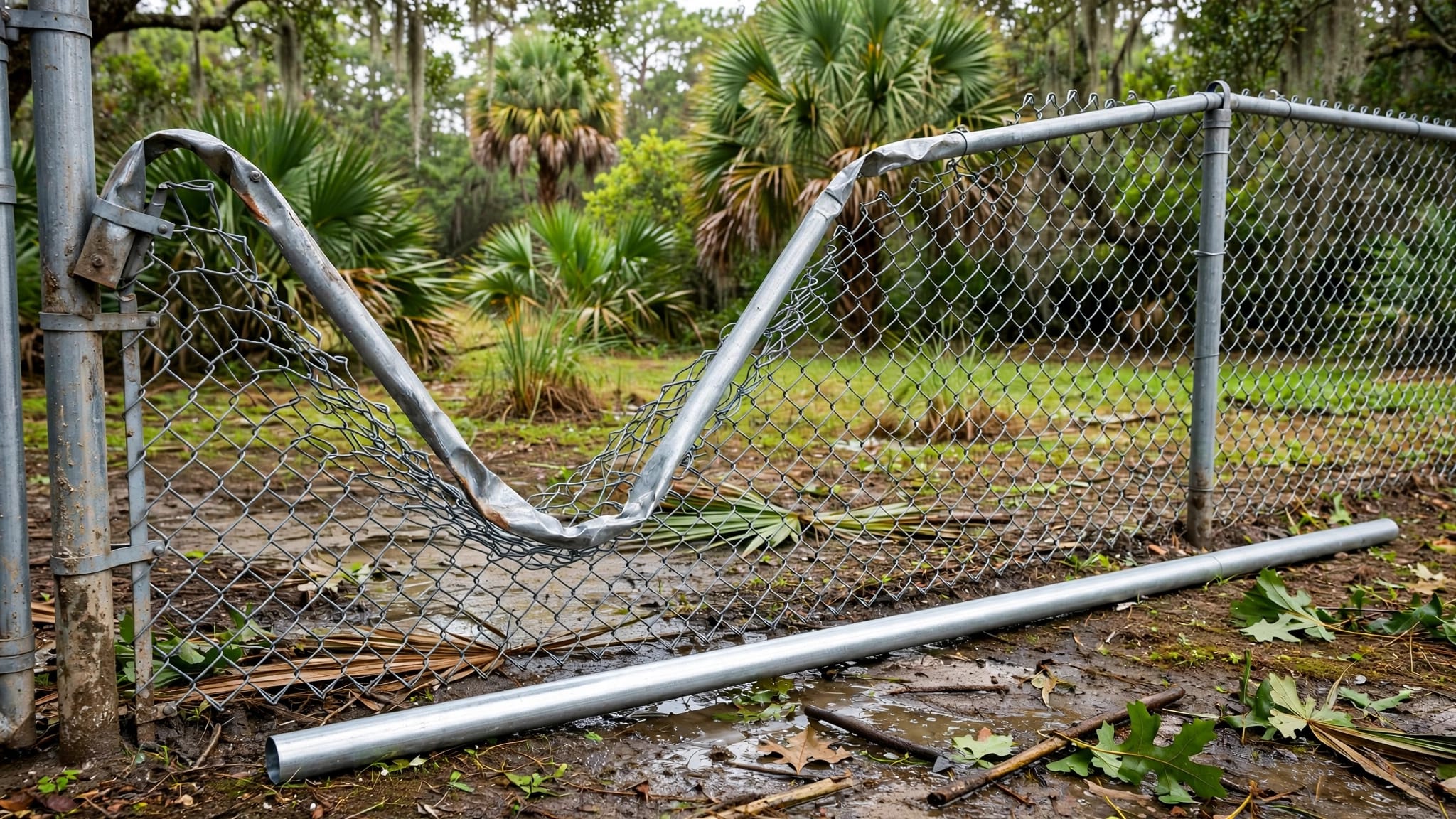
Inspect the gate several times each year. Clear leaves and sand from the bottom, tighten loose hardware, check post movement, and lubricate hinges according to the hardware manufacturer's instructions. Trim vines and shrubs before they press against the gate or block the approach.
Final fence access planning checklist
Use this list before approving a fence layout:
- Measure the widest lawn care machine, including attachments and side extensions.
- Add at least 12 inches to that width for a straight, level route.
- Add 18 to 24 inches when the gate has a turn, slope, rough ground, or difficult approach.
- Confirm the actual clear opening between posts, hinges, stops, and latch hardware.
- Measure the narrowest point along the entire equipment route.
- Check turning space inside and outside the gate.
- Confirm that the gate swing won't block a driveway, sidewalk, swale, planting bed, or service area.
- Choose a double gate when large equipment needs a wider opening or frequent access.
- Mark irrigation lines, utility features, septic components, and drainage paths.
- Verify property lines, easements, HOA rules, and local permit requirements.
- Consider a removable panel for rare access by large service equipment.
- Record the gate size, swing, hardware, and access plan in the fence contract.
- Test the finished route with the largest machine before adding permanent landscaping.
Conclusion
Good fence access planning begins with the largest machine, then follows the full route through the yard. Measure the equipment, add clearance, allow space for turns, and place the gate where the ground and drainage work in your favor.
A fence should support the way you use your property every season. When the layout also preserves service access and future equipment options, lawn care stays convenient instead of becoming a daily obstacle.