Pickleball Court Fencing for Southwest Florida Backyards
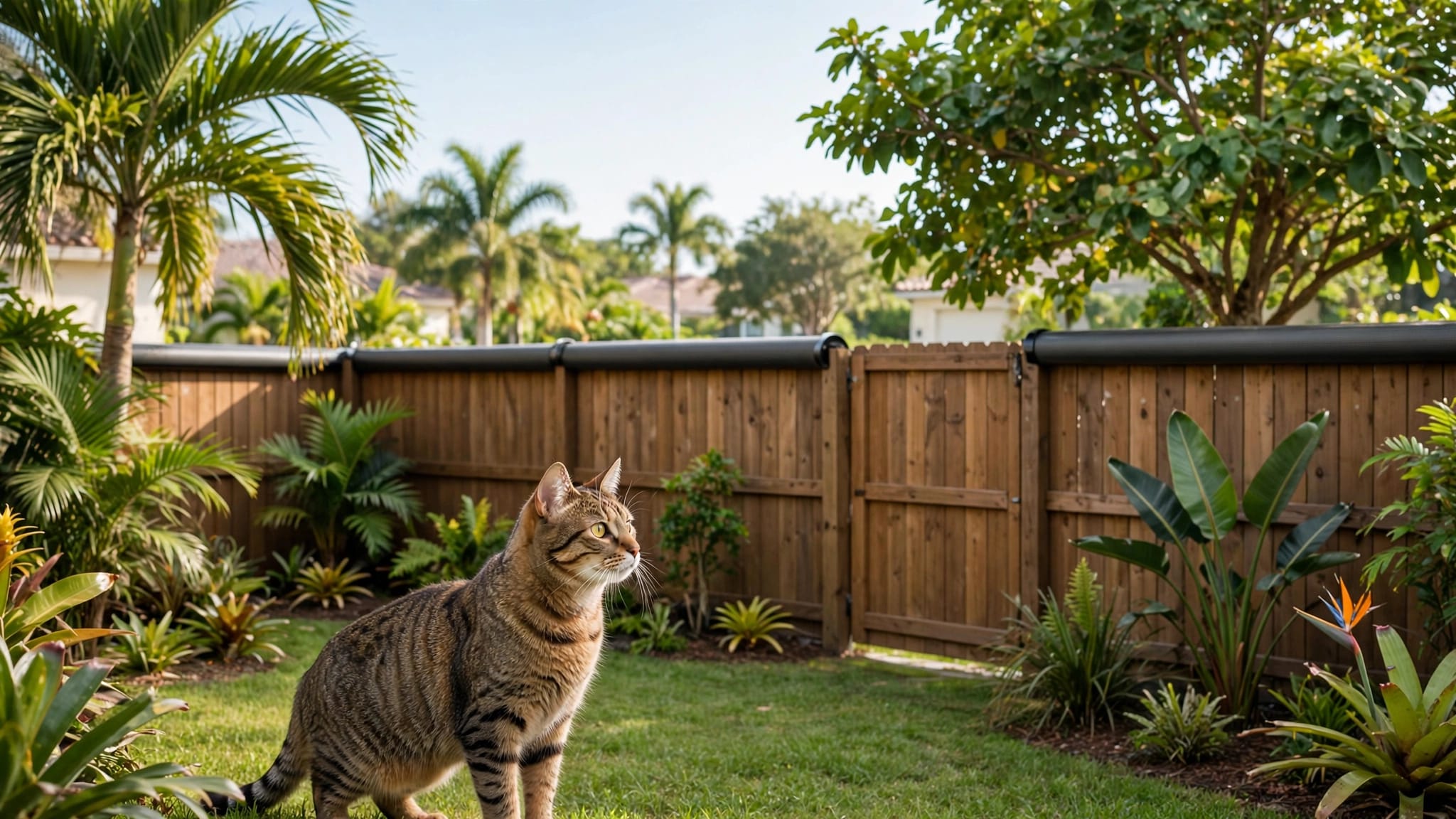
A backyard pickleball court should keep rallies in play, not send balls into a canal, pool cage, or neighbor's yard. The right pickleball court fencing contains the game while holding up to Southwest Florida's heat, rain, salt air, and storm seasons.
Your fence also has to suit the lot. Property lines, drainage paths, HOA rules, and local permits can shape the design long before the first post goes in. Start with court layout and site conditions, then match the fence system to how your family will use the space.
Plan the Court and Fence as One Project
A regulation pickleball court measures 20 by 44 feet. However, players need room beyond the boundary lines to move safely. USA Pickleball lists a 30-by-60-foot playing area as a minimum, while a 34-by-64-foot area gives players more comfortable runoff space.
The fence sits outside that playing area, so it adds to the total footprint. A tight yard may still accommodate a court, but the design may need lower side fencing, taller backstops, or a partial enclosure.
Leave room around the court lines
Don't place a fence directly against the painted court boundary. Players chase lobs, reset their footing, and swing wider near the corners. A fence too close to the line can turn a fun backyard court into a collision risk.
Measure the full area for the slab, drainage, gate swing, and fence posts. Also account for nearby palms, roof overhangs, air-conditioning equipment, irrigation heads, and pool cages. Moving a post location on paper costs nothing. Moving it after concrete has cured is another matter.
Confirm property and approval limits first
Before ordering materials, review your survey and identify utility easements, setbacks, and property boundaries. A fence installed beyond the line can create a costly dispute, even when a neighbor initially agrees with the placement.
Local requirements vary by jurisdiction. Homeowners in Cape Coral can use a Cape Coral fence permit checklist to prepare for common application details, including site plans and fence specifications. If your home is in an HOA, submit the court and fence design for architectural approval before scheduling installation.
Permanent Pickleball Court Fencing Options
Permanent pickleball court fencing works well for homeowners who play often and want a defined recreation area. These systems use set posts, durable panels or fabric, and purpose-built gates. They cost more upfront than portable barriers, yet they offer better ball control and hold their shape through daily use.
The material should match both the court layout and your exposure to wind, rain, and salt.
Chain link offers strong ball containment
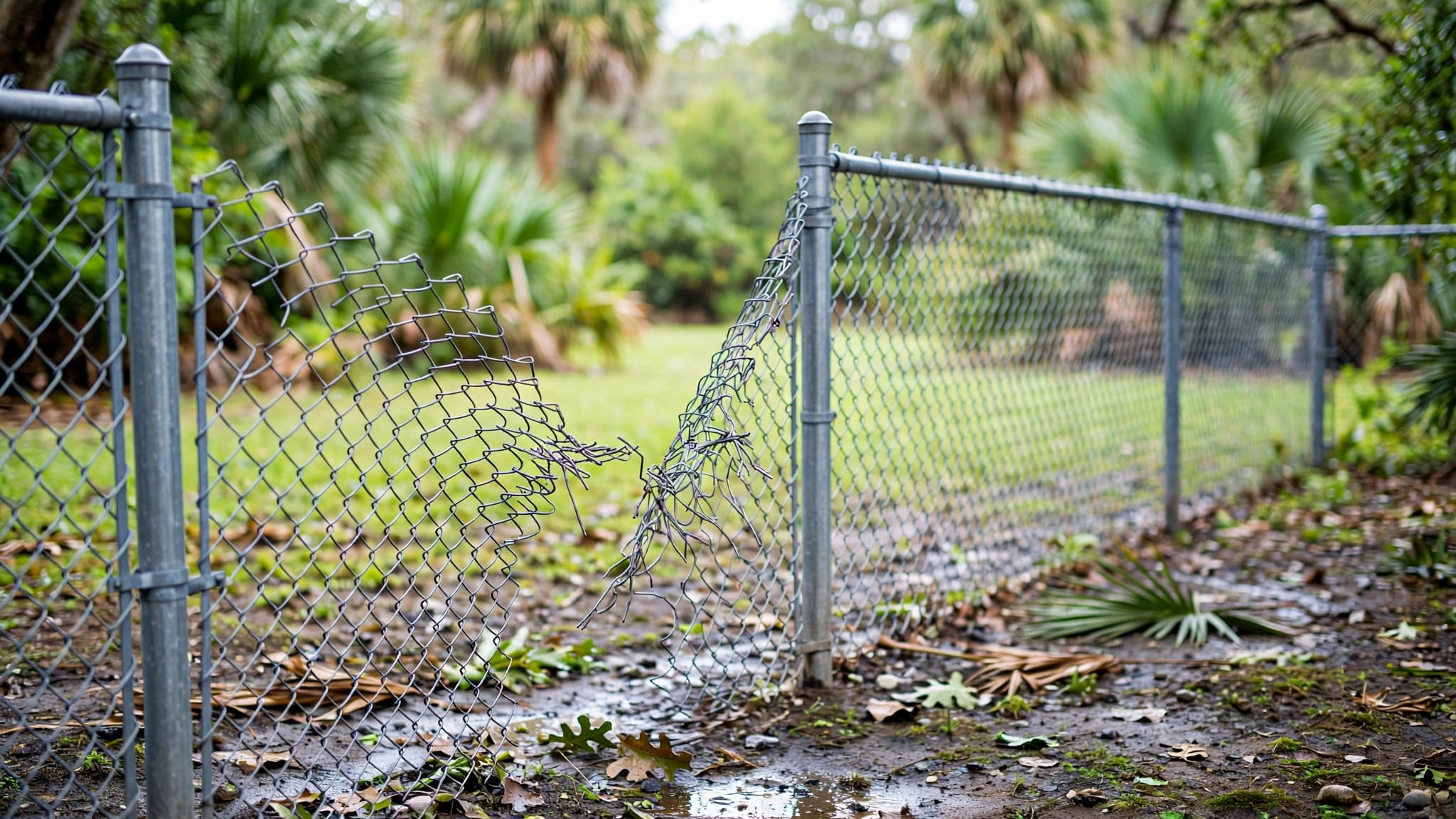
Chain link is a practical choice for full court enclosures. Its open mesh allows wind to pass through, which reduces pressure on posts during strong gusts. It also stops pickleballs without blocking the view of the yard.
For a Southwest Florida home, ask about galvanized components, vinyl-coated fabric, and corrosion-resistant hardware. Near the coast or canals, exposed metal can show wear sooner. Dark green or black vinyl-coated chain link often blends more naturally with landscaping than bright galvanized fabric.
Chain link can also pair well with a taller backstop and shorter side sections. That layout keeps high shots contained without making the entire court feel boxed in.
Aluminum and vinyl solve different problems
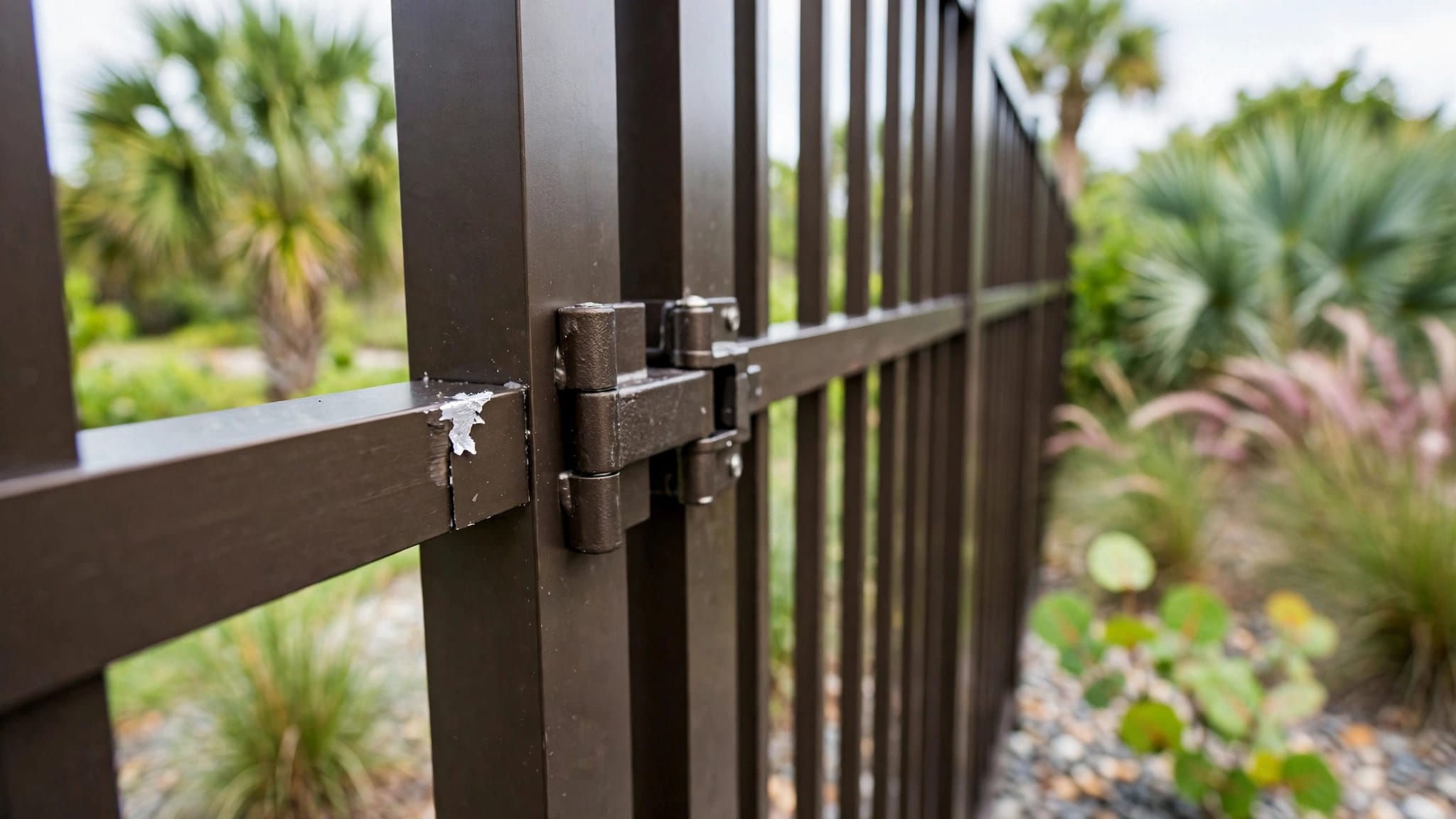
Aluminum fencing gives a cleaner residential look and works well around patios, pools, and landscaped yards. However, standard aluminum pickets may leave gaps wide enough for a pickleball to pass through. Adding compatible mesh on the court side can improve containment while keeping the open look.
Solid vinyl panels provide privacy and can block visual distractions. Yet solid sections catch more wind than open fencing. A contractor should review post depth, spacing, reinforcement, and site-specific wind requirements before using vinyl around a court.
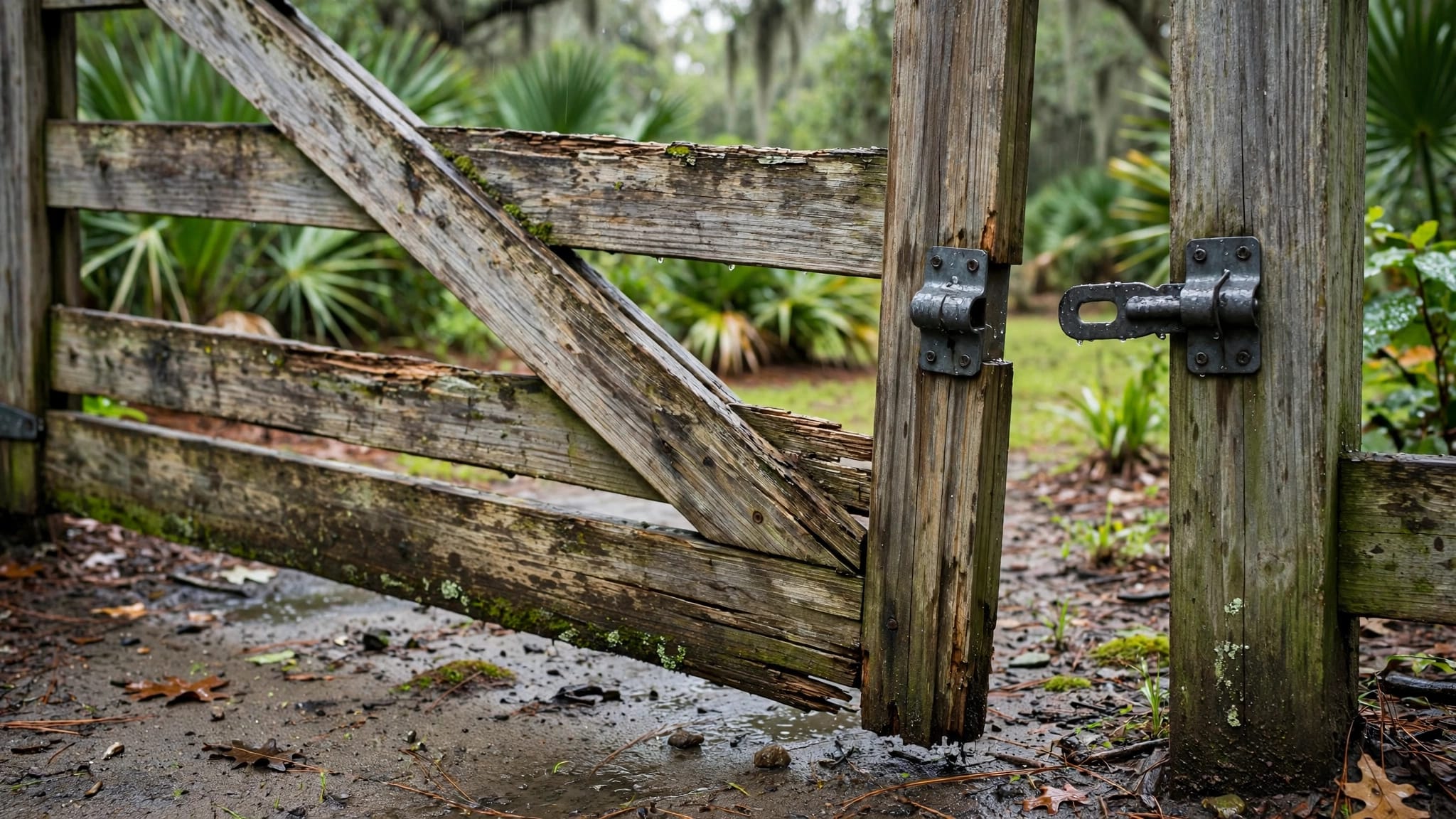
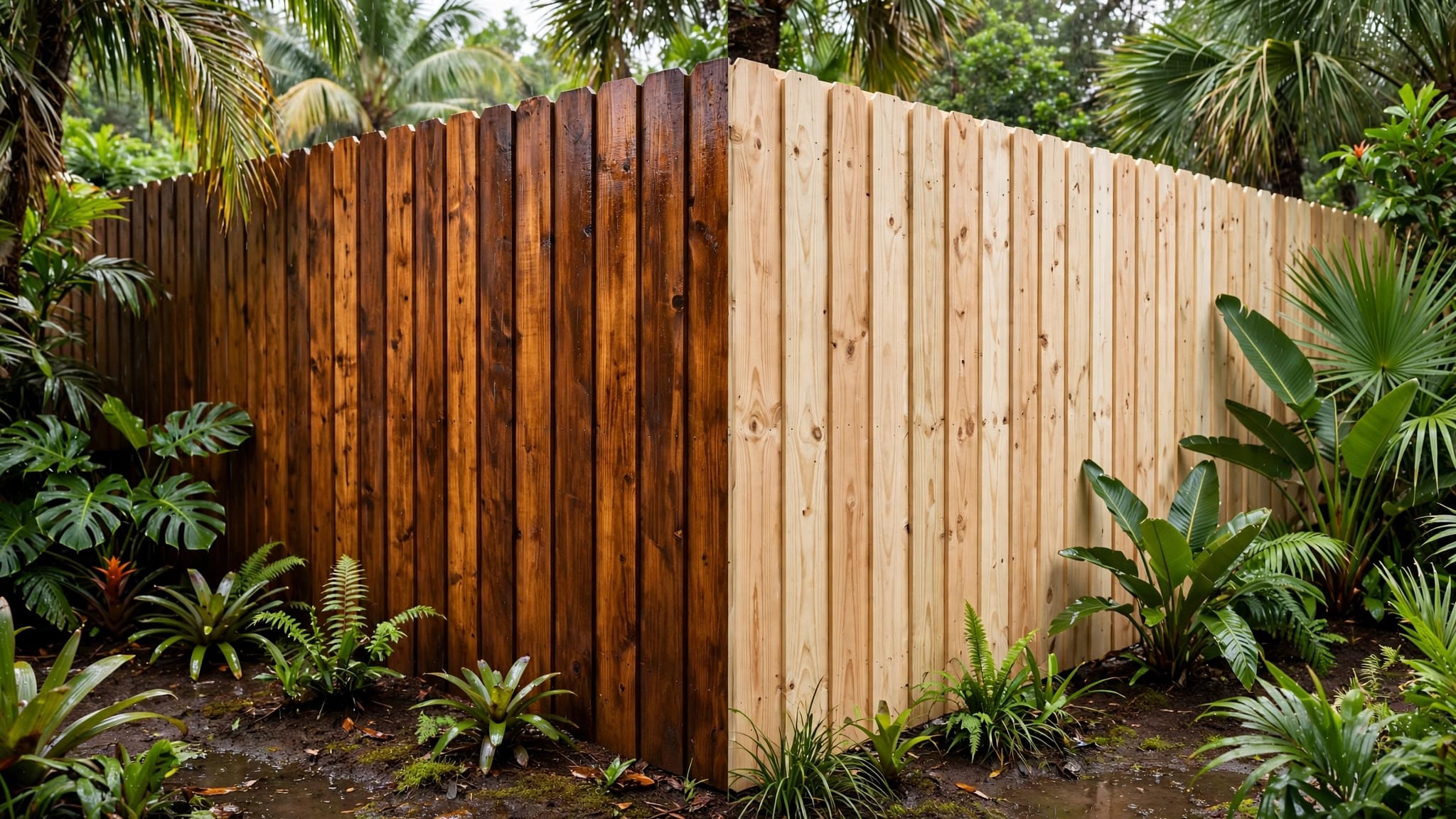
Wood can look warm beside a traditional home, but humidity, insects, wet soil, and repeated rain make it a higher-maintenance choice. Homeowners weighing materials can benefit from comparing vinyl, aluminum, wood, and chain link fences before settling on a court enclosure.
Temporary and Semi-Permanent Court Enclosures
Not every backyard court needs a fixed fence. Temporary and semi-permanent systems suit multi-use driveways, seasonal homes, or families still deciding how often they will play.
These options need extra care in Florida weather. A lightweight barrier that performs well on a calm afternoon may become unsafe when a summer storm develops.
Portable barriers work for casual play
Portable ball barriers use freestanding frames, tensioned netting, or weighted bases. They can protect nearby windows, patio furniture, and garden beds during a game, then come down when the space is needed for another activity.
They are useful for driveways and compact patios, but they don't offer the stability of anchored fencing. Wind can shift them, especially on smooth concrete. Remove portable barriers when storms are expected, and don't rely on them as a property boundary or pool-safety barrier.
Semi-permanent systems need secure anchoring
Semi-permanent setups often use removable posts in ground sleeves, modular fence panels, or tensioned net systems fixed to permanent anchors. They provide more order than portable barriers while preserving the option to open the space later.
A modular design can work beside a patio or lawn court where a full enclosure would feel too permanent. Still, the anchors, posts, and hardware need a professional review if the system will remain in place through hurricane season.
A removable fence system is not automatically designed for hurricane-force wind. Its rating depends on the complete installation, including anchors, posts, fabric, and surrounding exposure.
Build for Heat, Rain, Salt Air, and Wind
Southwest Florida's climate changes the fence conversation. High sun can fade lesser coatings. Heavy rain can soften soil near posts. Coastal air and canal-front conditions can speed up corrosion on metal components.
The fence material matters, but the installation details matter just as much.
Posts and corners carry the highest loads
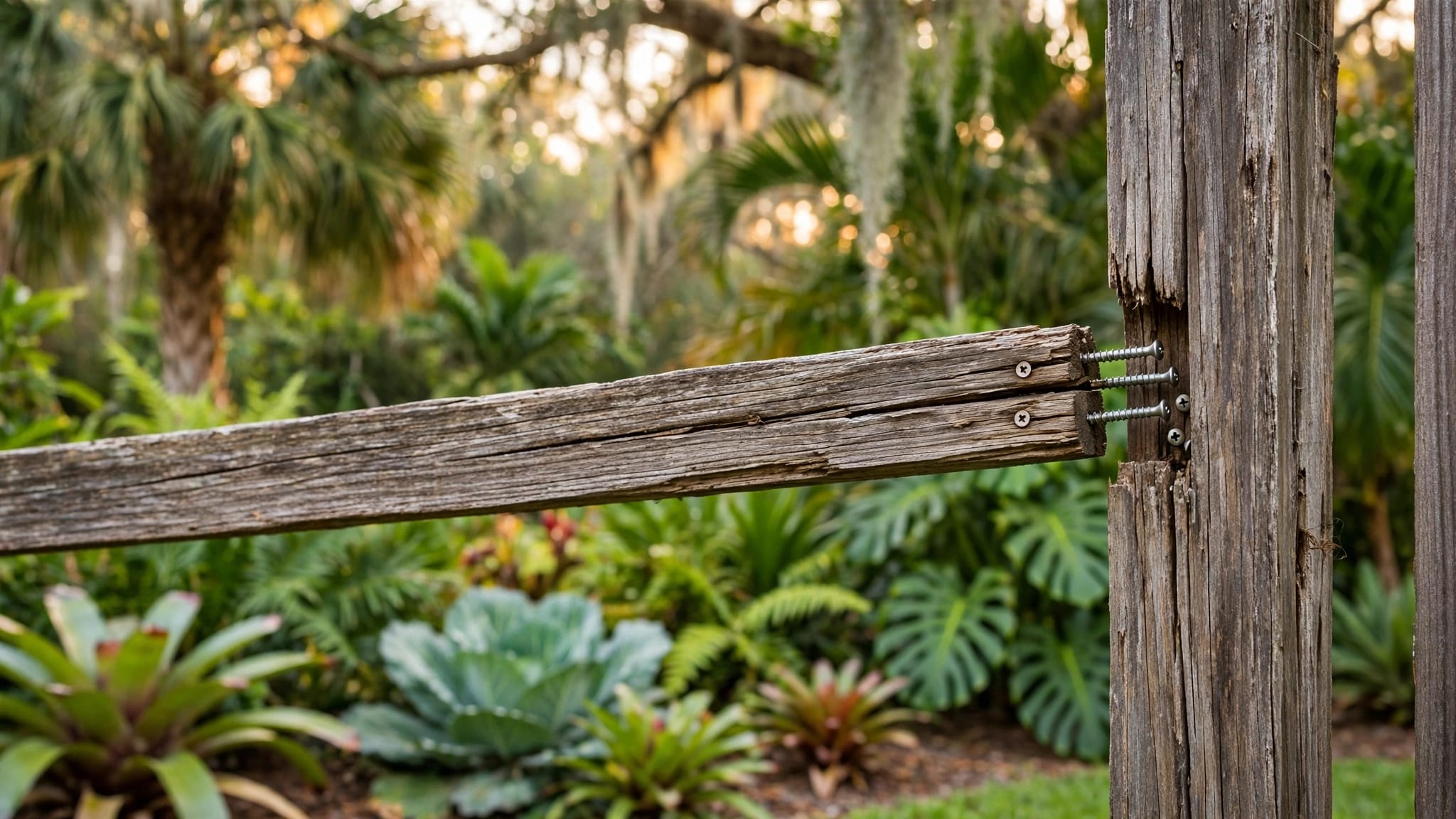
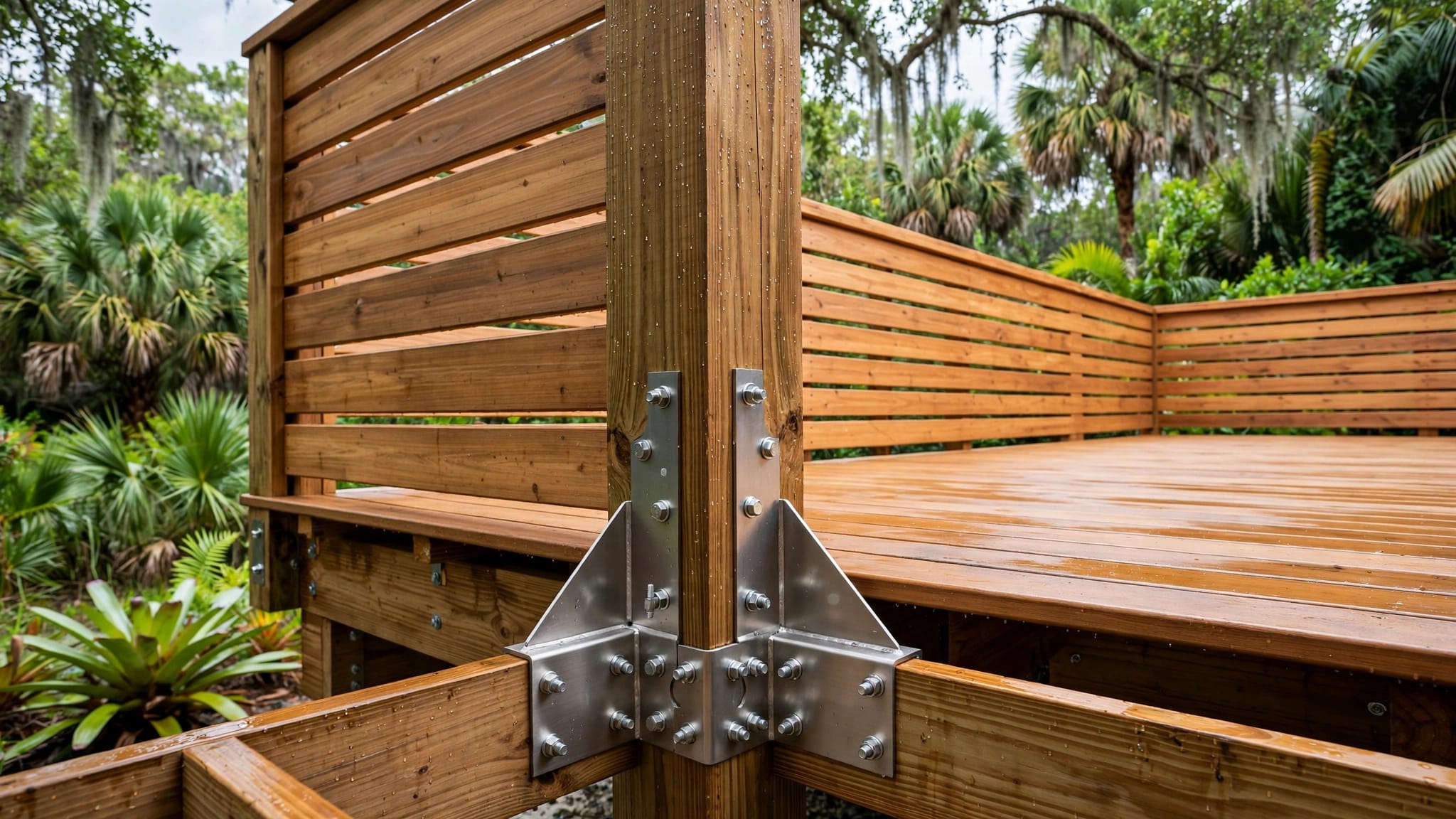
Wind pushes against fabric, privacy panels, gates, and any attached windscreen. Corners, end posts, and gate posts take more force than a straight run of fence. A weak corner can pull out of alignment and leave the entire enclosure loose.
Ask your contractor how the design accounts for fence height, panel type, soil conditions, and wind exposure. A court near open water, a large vacant lot, or a wide backyard may face stronger gusts than a sheltered interior lot. Site-specific wind requirements should guide the post and footing plan.
Avoid attaching court fencing to a pool cage, lanai frame, or existing structure unless a qualified professional confirms that structure can handle the added load.
Drainage protects posts and playing surfaces
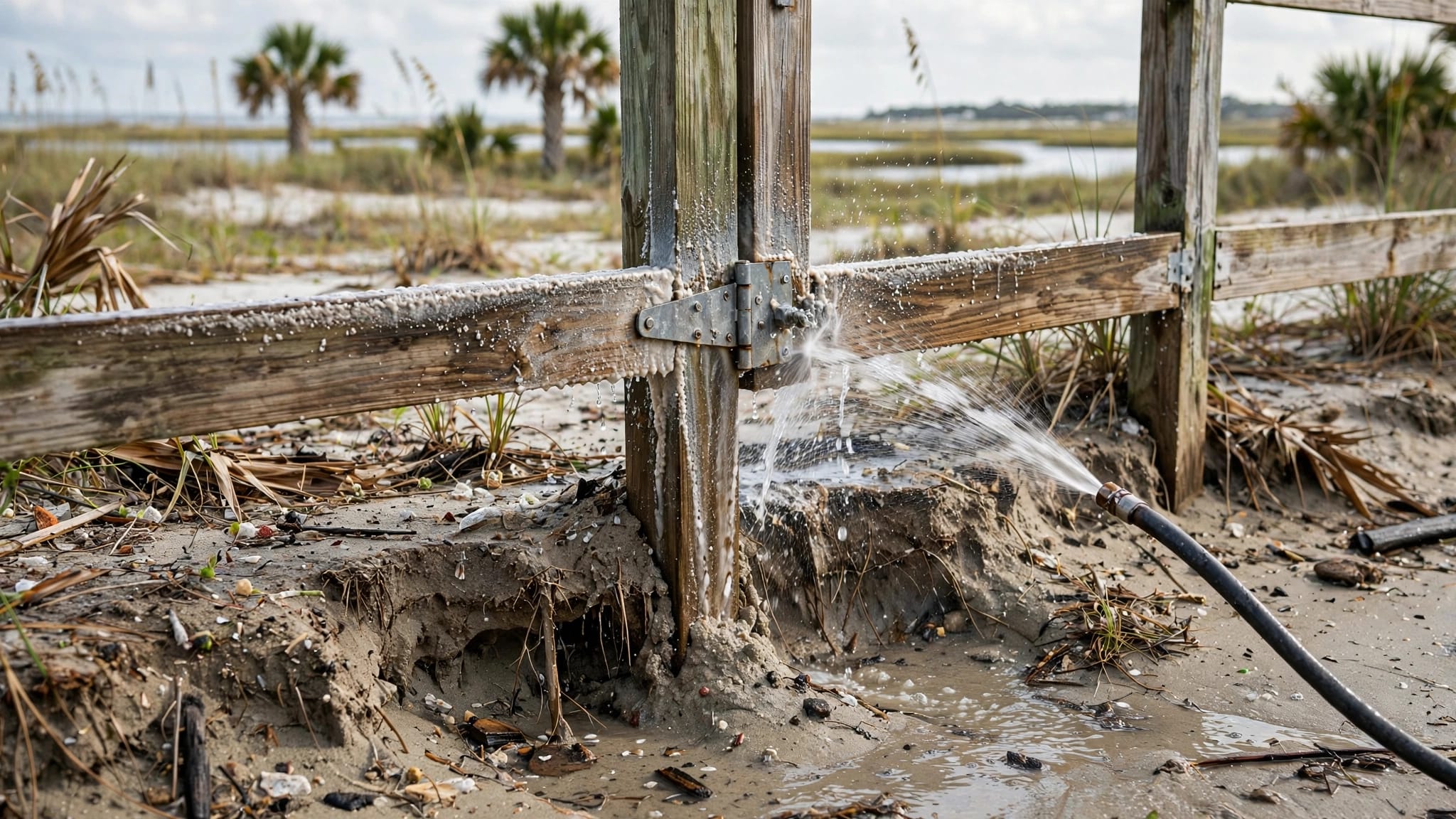
Water needs a clear path away from the court and fence line. Roof runoff, downspouts, and irrigation can keep soil wet around post bases. Over time, standing water may weaken soil support, stain surfaces, and increase corrosion risks.
A court slab should drain without sending runoff toward the home, neighboring lot, or fence corners. Before construction, identify low spots and swales. Your installer may need to adjust fence placement so posts don't sit where water collects after heavy rain.
A fence can look fine during dry season, yet fail early when roof runoff or irrigation keeps the post bases wet for months.
Choose Fence Height and Gate Placement Carefully
Fence height affects containment, appearance, wind load, and local compliance. A taller fence catches more high shots, although it also needs a stronger support system. The right answer depends on available space and what surrounds the court.
A thoughtful gate location also makes the court easier to use and maintain.
Use height where balls are most likely to escape
Four-foot fencing may work along sidelines where you have generous space beyond the court. Taller fencing is often more useful behind baselines, especially near a neighbor's yard, a pool, parked vehicles, or glass doors.
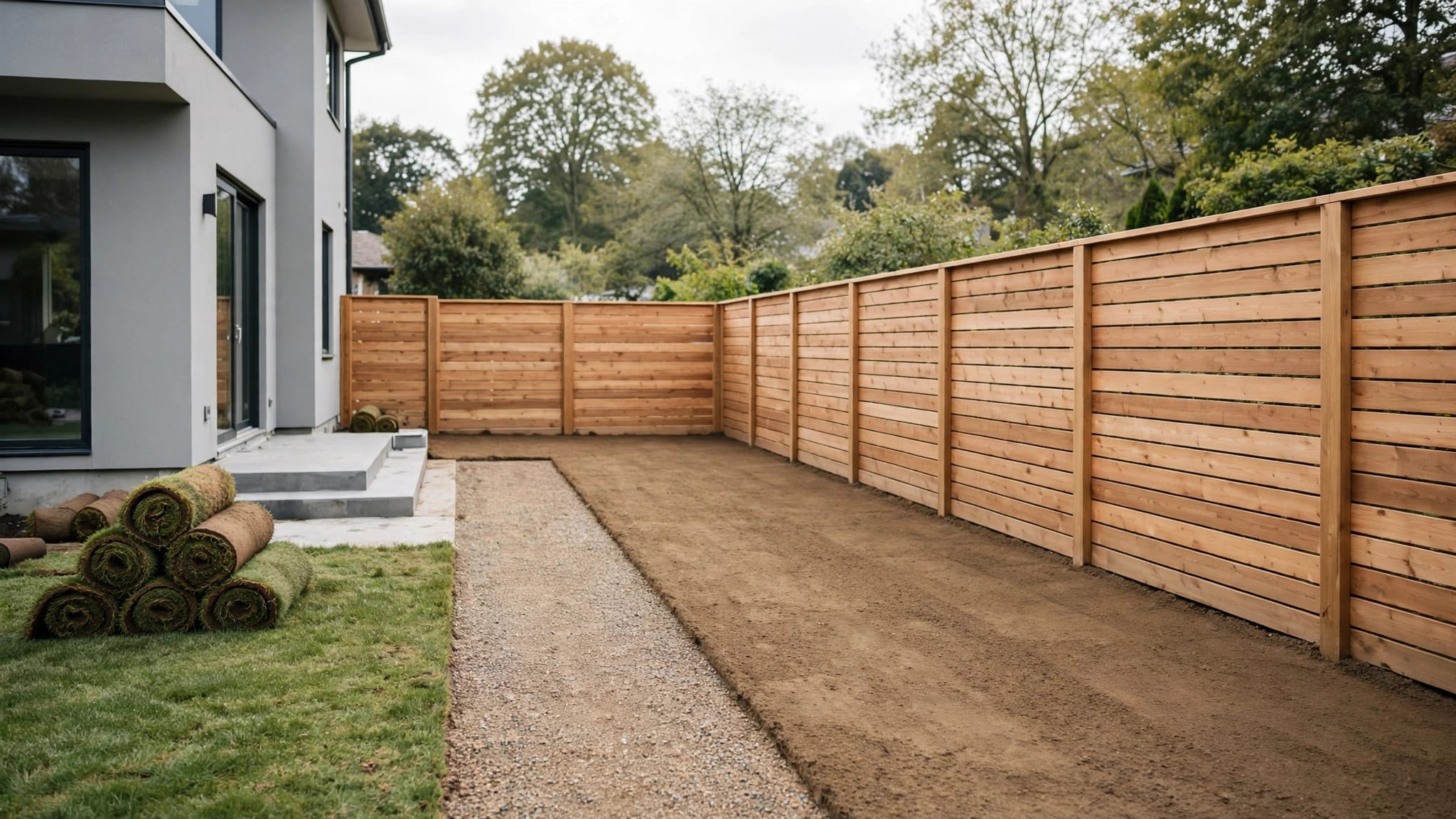
Some homeowners use a lower open fence around most of the court and a taller backstop at one or both ends. This can reduce visual bulk while limiting the most common ball escapes. Check local height limits and HOA rules before finalizing the layout, since front, side, and rear yard allowances may differ.
Put gates away from active play zones
Place the entry gate where players can walk in without crossing a likely ball path. A side entry near a corner often works better than a gate centered behind the baseline. It also gives you easier access for cleaning, equipment storage, and landscaping.
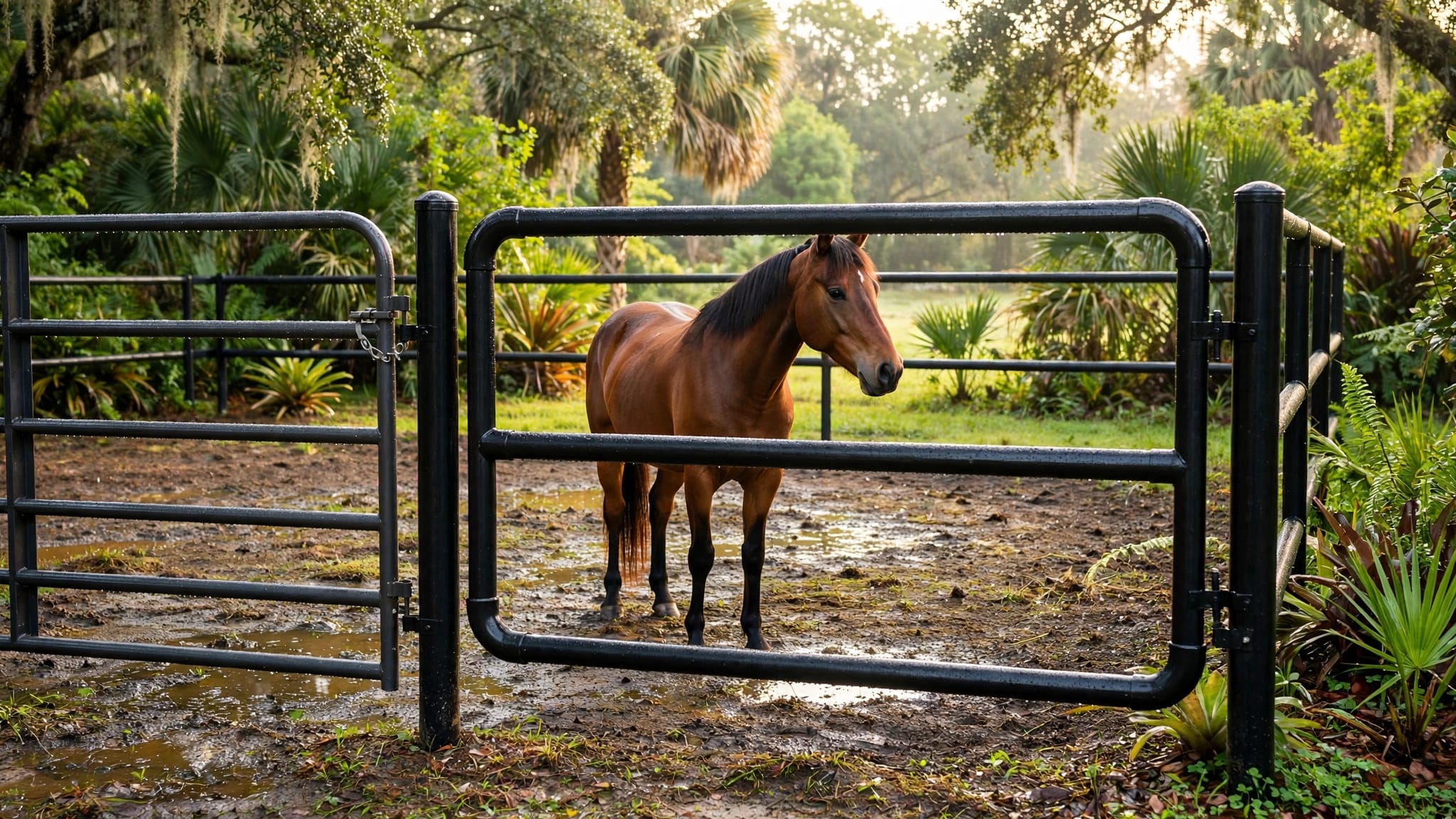
Use reliable hinges and a latch that stays closed during play. If the court sits near a pool, review the pool barrier requirements before selecting a gate or changing an existing enclosure. The court fence should never create an opening that compromises required pool protection.
Account for the Full Installation Cost
Court fencing costs depend on more than material by the foot. The overall price changes with fence height, total footage, gate count, post size, soil conditions, access for equipment, and whether the crew works around a finished slab or pool deck.
Permits, HOA submittals, surveys, utility markings, demolition, and drainage corrections may add to the project. For budgeting, review current Southwest Florida fence permit fees along with your local building department's requirements.
A site visit should cover more than measurements
A good contractor looks at the court location, grade, access path, existing structures, and nearby utilities. They should also discuss how the fence will tie into an existing property fence, pool enclosure, or gate system.
Before digging begins, call 811 to request utility locating. Then ask for a written scope that identifies the material, height, posts, gates, hardware, and any removal work. Details prevent misunderstandings when the project moves from estimate to installation.
Match the installer to the material
Court enclosures need accurate layout and strong post work. That matters even more with aluminum systems, custom-height chain link, or fencing near a finished concrete pad. A professional aluminum fence installation in Cape Coral can help homeowners assess whether an open metal design fits the court and the rest of the property.
Choose a licensed and insured contractor who understands local conditions. Ask how they handle drainage, salt exposure, wind-prone locations, and HOA documentation before you sign a contract.
A Fence That Keeps the Game in Your Backyard
The most practical pickleball court fence fits the size of your yard, contains balls where they tend to escape, and holds up through Southwest Florida weather. Chain link offers dependable containment, aluminum can suit a polished residential design, and vinyl works best where privacy outweighs wind exposure.
Check local codes, HOA rules, and site-specific wind requirements before installation. With sound layout, proper drainage, and durable materials, your pickleball court fencing can support years of backyard play without becoming another Florida maintenance headache.